


Understanding recent sleep science facts completely transforms how you approach your nightly rest. Scientists have pushed past the old ideas of sleep as a passive shutdown state, uncovering a dynamic recovery process that physically washes your brain and recalibrates your emotional center. Armed with these new sleep research findings, you can make practical changes to your routine that boost cognitive performance and protect your long-term health. The latest discoveries reveal that everything from temperature fluctuations to light exposure fundamentally alters your cellular repair mechanisms. By applying these fascinating sleep discoveries to your daily life, you take direct control over your energy levels, focus, and overall well-being.

Fast Facts
Exploring recent sleep science facts reveals that during deep sleep, your brain shrinks slightly to allow cerebrospinal fluid to wash away toxic proteins; researchers only recently visualized this glymphatic clearance process in living humans. This nightly biological power wash clears out amyloid-beta plaques associated with cognitive decline, making deep sleep your primary defense against neurodegenerative diseases. You can optimize this fluid clearance by sleeping on your side, which studies suggest is the most efficient physical position for brain waste removal.
Sleep regularity—going to bed and waking up at the exact same time every day—actually predicts longevity and cardiometabolic health far better than total sleep duration. New sleep research reveals that a highly consistent six-hour sleep schedule reduces your risk of premature mortality significantly more than a chaotic, unpredictable eight-hour schedule. Maintaining a rigid sleep-wake window anchors your circadian rhythm, optimizing everything from daytime insulin sensitivity to nighttime cellular repair.
Listening to continuous pink noise throughout the night physically increases the amplitude of your slow-wave sleep brain activity. Unlike white noise, which features equal energy across all audible frequencies, pink noise balances higher frequencies with deeper, rumbling low frequencies that mimic steady rain or a heartbeat. Scientists discovered that syncing this specific acoustic stimulation to your brain waves deepens your restorative sleep and noticeably enhances your overnight memory consolidation.
Your gut microbiome diversity directly correlates with your sleep efficiency and total sleep time; specific bacterial strains actively produce sleep-regulating neurotransmitters like serotonin and gamma-aminobutyric acid. Fascinating sleep discoveries confirm that a diet rich in diverse plant fibers feeds these beneficial microbes, which in turn signal your brain to initiate deeper sleep cycles. Improving your digestive health through targeted nutrition offers a powerful, non-pharmacological strategy to cure restless nights.
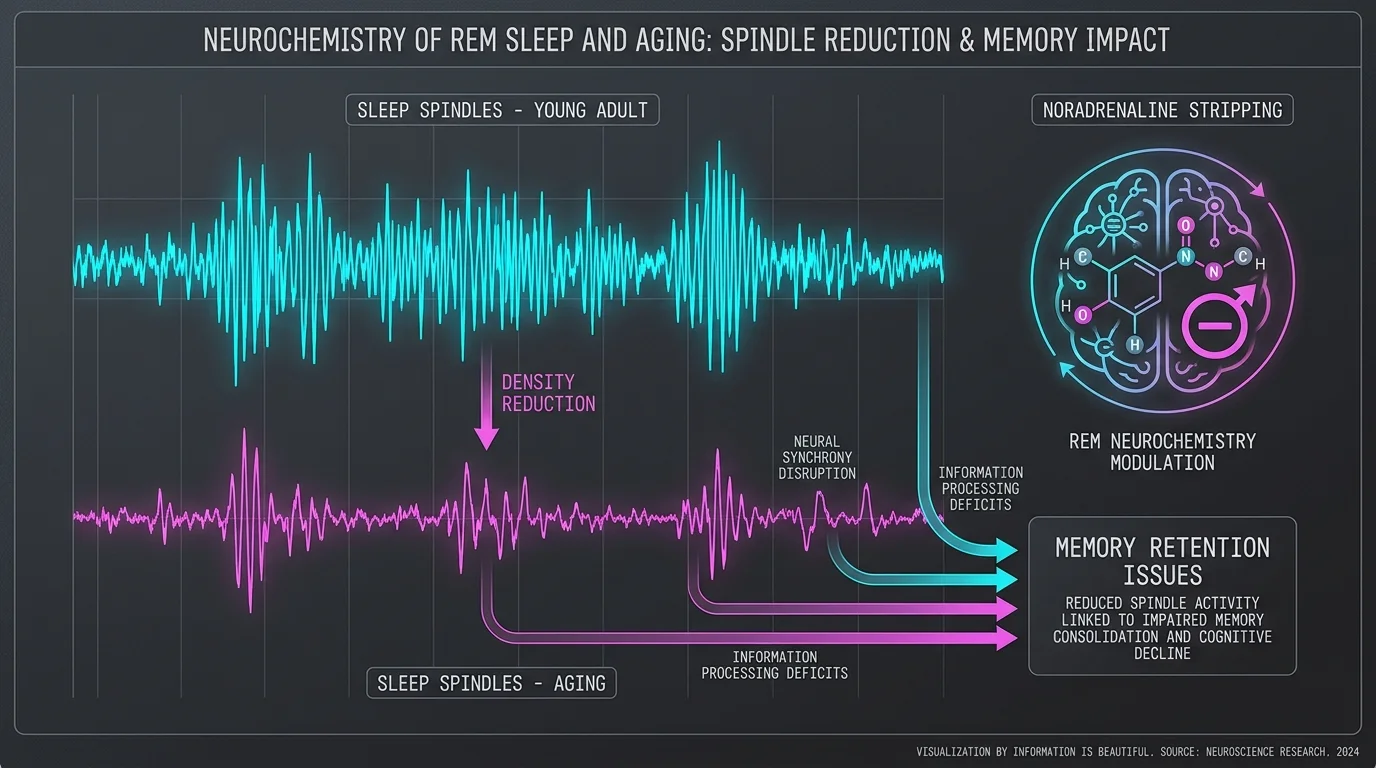
Rapid Eye Movement sleep acts as a form of overnight emotional therapy by stripping the stress chemical noradrenaline from your brain while you dream. Scientists recently demonstrated that this neurochemical suppression allows you to process traumatic or emotionally charged memories without experiencing the accompanying visceral physical stress response. By protecting your REM sleep blocks in the early morning hours, you actively lower your daytime anxiety levels and improve your emotional reactivity.
The science of sleep seniors reveals that as you age, your brain generates significantly fewer sleep spindles—the rapid bursts of electrical activity responsible for transferring short-term memories into long-term storage. This structural change explains exactly why older adults often experience memory retention issues even after a seemingly full night of rest. Researchers now explore non-invasive brain stimulation and targeted evening exercise regimens to artificially boost sleep spindle density in aging populations.
Unconscious micro-arousals fragment your sleep architecture and predict cardiovascular distress far more accurately than clinically diagnosed insomnia. These brief, three-second awakenings often go entirely unnoticed by your conscious mind, yet they repeatedly spike your heart rate and aggressively trigger your sympathetic nervous system. You can minimize these dangerous micro-arousals by eliminating hidden ambient light sources and maintaining a cool, heavily oxygenated bedroom environment.
Exposure to bright artificial blue light in the two hours before bed immediately induces next-day insulin resistance, regardless of what you choose to eat. This specific spectrum of digital light tricks your suprachiasmatic nucleus into halting melatonin production, which sequentially disrupts your pancreas’s ability to regulate morning blood glucose. Wearing amber-tinted, blue-light-blocking glasses and dimming overhead lights provides a highly actionable way to protect your metabolic health while improving your sleep latency.
Your core body temperature must drop by approximately two to three degrees Fahrenheit to initiate and successfully sustain the deepest stages of non-REM sleep. Scientists recently confirmed that a hot bedroom blocks this necessary thermal plunge, actively trapping you in lighter, non-restorative sleep stages throughout the night. Taking a warm shower before bed paradoxically cools your core by drawing blood to the surface of your skin, rapidly accelerating your sleep onset.
You can deliberately manipulate your learning retention through a recently discovered biological phenomenon called targeted memory reactivation. If you play a specific, subtle sound while studying a complex subject and play that exact same sound while you sleep, your brain prioritizes the consolidation of those specific neural pathways. This acoustic hacking technique effectively allows you to reinforce new physical skills and foreign languages passively while you rest.
Binge sleeping on the weekends fails completely to reverse the cumulative metabolic damage and cellular aging markers caused by weekday sleep deprivation. New sleep research proves that the concept of a biological “sleep debt” is fundamentally flawed; you cannot retroactively heal your cardiovascular system by oversleeping on Sunday morning. You must build daily sleep consistency to maintain metabolic homeostasis and prevent permanent, dangerous shifts in your baseline blood pressure.
Engaging in slow, resonance-frequency breathing before bed shifts your autonomic nervous system from sympathetic dominance to parasympathetic rest in under five minutes. Researchers measured the physiological impact of intentionally extending your exhales, discovering that this simple mechanical action directly lowers your heart rate variability and commands your brain to initiate sleep. Implementing a strict routine of deep diaphragmatic breathing acts as a powerful behavioral intervention for stress-induced insomnia.
The latest sleep health facts 2026 indicate that personalizing your sleep schedule to match your genetic chronotype produces measurable gains in executive function and athletic performance. Forcing a natural night owl to wake up at dawn completely disrupts their unique cortisol rhythm, creating a state of chronic circadian misalignment that mimics permanent jet lag. You achieve peak physiological performance only when you align your work schedule and light exposure with your internal biological clock.
Context and Background
Your understanding of sleep likely rests on outdated scientific models that viewed the brain as a machine simply powering down for the night. For decades, medical professionals treated sleep as a passive void—a period of quiet vulnerability required merely to rest tired muscles and restore basic energy reserves. The advent of high-resolution functional magnetic resonance imaging and advanced wearable encephalogram technology completely shattered this passive paradigm. Scientists now observe sleep as a fiercely active, highly choreographed sequence of biological processes that dictate your survival. During these crucial nighttime hours, your brain consumes nearly as much metabolic energy as it does when you are fully awake, directing complex cellular repair protocols and robust immune system fortification.
Modern sleep science facts emphasize that the quality of your nightly rest fundamentally re-engineers your brain’s physical architecture. Researchers recently mapped the specific neural pathways responsible for synaptic pruning, a remarkable physiological process where your brain actively deletes redundant or unnecessary neural connections formed during your waking hours. This nighttime pruning clears valuable cognitive real estate, ensuring your mind remains sharp, adaptable, and primed for new learning the following day. When you consistently truncate your sleep, you physically prevent this neural optimization, leading directly to brain fog, poor decision-making, and profound emotional volatility. Understanding this active maintenance shifts your perspective; you no longer view sleep as a luxury, but rather as an essential daily medical treatment that you self-administer.
The rapid evolution of chronobiology—the scientific study of biological rhythms—has profoundly influenced the latest sleep health facts 2026. Scientists recognize that your body operates on a rigid twenty-four-hour internal clock managed by a tiny cluster of thousands of specialized cells in your hypothalamus called the suprachiasmatic nucleus. This master clock regulates the precise timing of your hormone release, digestion, and core temperature fluctuations based almost entirely on your visual light exposure. By tracking these biological markers, researchers confirmed that modern society’s constant exposure to artificial lighting creates a devastating state of chronic circadian disruption. You effectively confuse your master clock every time you stare at a bright digital screen after sunset, forcing your body to delay the critical release of melatonin.
You possess the remarkable ability to manipulate this biological clock using highly practical, science-backed behavioral interventions. Establishing a robust light-viewing routine stands as the most effective tool in your sleep optimization arsenal. Viewing natural sunlight outside within thirty minutes of waking triggers an immediate spike in healthy cortisol, aggressively clearing adenosine—the chemical responsible for sleep pressure—from your brain. This early morning natural light exposure also starts a biological timer, guaranteeing that your melatonin production begins roughly twelve to fourteen hours later. You can consult the National Institutes of Health for further clinical reading on circadian rhythm regulation, chronobiology, and the physiological impact of light manipulation.
Interesting Connections
Fascinating sleep discoveries continuously highlight the inescapable web connecting your sleep quality to every other facet of your physical health. The intricate relationship between your immune system and your sleep architecture represents one of the most vital scientific breakthroughs of the last decade. While you sleep, your immune system synthesizes and releases specialized protective proteins called cytokines, which target active infections and widespread inflammation throughout your body. When you deprive yourself of deep sleep, your body drastically reduces this cytokine production, leaving you highly susceptible to common viral infections and significantly prolonging your recovery time from illness. You build an incredibly resilient, fast-acting immune system simply by prioritizing a consistent seven to eight hours of uninterrupted rest.
Your dietary choices manipulate your sleep architecture just as powerfully as your sleep quality dictates your daily appetite. Researchers successfully isolated the direct biological pathway between sleep deprivation and the hormonal regulation of hunger, proving that a lack of sleep spikes ghrelin—the hormone that drives intense hunger—while simultaneously suppressing leptin, the hormone responsible for signaling fullness. This severe neuroendocrine disruption drives uncontrollable cravings for high-calorie, carbohydrate-heavy foods following a poor night of rest. Conversely, adopting a diet rich in magnesium, tart cherry juice, and lean proteins actively supplies your brain with the raw amino acids required to synthesize sleep-inducing neurotransmitters. You can break the vicious cycle of exhaustion and weight gain by synchronizing your meal times with your circadian rhythm, ensuring you stop eating at least three hours before bed.
The connection between chronic sleep fragmentation and the accelerated onset of neurodegenerative diseases commands significant attention in modern clinical neuroscience. The science of sleep seniors clearly demonstrates that the toxic amyloid-beta plaques associated with Alzheimer’s disease accumulate aggressively when you consistently lose your slow-wave sleep. Because the brain’s glymphatic waste clearance system operates almost exclusively during these deep sleep stages, chronic insomnia literally allows metabolic trash to pile up between your delicate neurons. You protect your long-term cognitive health by treating conditions like obstructive sleep apnea immediately, as the constant oxygen deprivation and micro-awakenings physically block your brain from performing its nightly power wash. Engaging in regular, intense cardiovascular exercise dramatically increases your ratio of slow-wave sleep, serving as a potent preventative measure against age-related cognitive decline.
Your mental health and emotional resilience rely heavily on the therapeutic psychological processing that occurs during the Rapid Eye Movement stage of sleep. Psychiatrists previously viewed sleep disturbances strictly as a secondary symptom of depression and severe anxiety disorders. New sleep research flips this clinical paradigm entirely, revealing that disrupted REM sleep frequently acts as the primary root cause of these psychological conditions. By isolating your brain from circulating stress chemicals during dream cycles, REM sleep actively recalibrates your amygdala—the primary emotional control center of your brain. You drastically improve your daily mood regulation and emotional intelligence by extending your total sleep time, allowing your brain to complete its vital emotional therapy sessions completely uninterrupted. Visit the American Psychological Association to explore deeper clinical insights into sleep’s profound structural impact on emotional regulation.
Frequently Asked Questions
How does age fundamentally alter my nightly sleep architecture?
The science of sleep seniors shows that aging physically changes the structure of your sleep cycles, heavily diminishing your total time spent in restorative deep sleep. As you grow older, your brain gradually loses the dense neural networks responsible for generating high-amplitude slow brain waves. You will likely experience more frequent nighttime awakenings and a natural shift in your circadian rhythm that pushes you to sleep and wake much earlier in the day. Despite these structural changes, your fundamental biological need for sleep remains relatively constant throughout your adult life. You can actively combat these age-related changes by aggressively managing your daytime light exposure and engaging in daily physical activity to artificially increase your sleep pressure.
Can I train my body to require less sleep without suffering negative health consequences?
No credible scientific evidence supports the idea that you can train your biology to thrive on less sleep. Fascinating sleep discoveries consistently prove that attempting to adapt to a five-hour sleep schedule only desensitizes you to your own cognitive impairment. You may feel subjectively fine after weeks of restricted sleep, but objective performance tests will show massive, undeniable deficits in your reaction time, memory recall, and emotional regulation. A very rare genetic mutation allows a tiny fraction of the population to survive on short sleep naturally, but the vast majority of human beings absolutely require seven to nine hours of rest to maintain cellular health. You severely damage your cardiovascular and metabolic systems when you persistently force yourself to sleep less than your body demands.
What exact room temperature provides the optimal environment for restorative sleep?
Sleep experts and recent biological studies pinpoint the ideal bedroom temperature for adults strictly between sixty and sixty-seven degrees Fahrenheit. Your core body temperature must initiate a significant drop to signal to your brain that it is time to transition into deep, slow-wave sleep. If your room remains too warm, your body struggles to shed excess heat, which chemically blocks the release of sleep-promoting hormones and heavily fragments your sleep cycles. You can optimize your thermal environment by using breathable organic bedding, running a quiet fan, and utilizing specialized cooling mattress pads that actively pull heat away from your body. Maintaining a distinct contrast between a cool room and warm blankets provides the perfect physical microclimate for sustained, uninterrupted rest.
How does artificial light exposure manipulate my circadian rhythm and hormone production?
Your eyes contain specialized photosensitive ganglion cells that directly hardwire into your brain’s master biological clock. When these specific cells detect the blue and green light spectrums commonly emitted by digital screens and LED bulbs, they immediately send a powerful daytime signal to your hypothalamus. This daytime signal aggressively suppresses your pineal gland’s production of melatonin, the crucial hormone that coordinates your physical transition into sleep. You must implement a strict digital curfew at least ninety minutes before bed to allow your natural melatonin levels to rise properly. Swapping your standard bedroom lighting for warm, red-toned bulbs completely bypasses these light-sensitive cells, protecting your natural hormone production while still allowing you to read or relax safely.
Does tracking my sleep with wearable technology actually improve my rest?
Wearable sleep trackers provide highly actionable baseline data regarding your sleep duration, heart rate variability, and nighttime physical movement patterns. By analyzing these sleep health facts 2026 on your smartphone, you can easily identify destructive behavioral habits, such as how late-night alcohol consumption heavily suppresses your restorative REM sleep. However, fixating obsessively on achieving perfect digital sleep scores occasionally triggers a newly identified anxiety disorder called orthosomnia, which ironically causes profound, stress-induced insomnia. You achieve the absolute best results when you use sleep trackers temporarily to test the effectiveness of new habits—like adjusting your room temperature or changing your diet—rather than treating the device as a nightly judge of your health. You should consult clinical organizations like the Sleep Foundation to learn exactly how to interpret your wearable sleep data responsibly.
Keywords: fascinating sleep discoveries, new sleep research
Meta Description: Discover 13 new sleep science facts and learn how recent research can help you optimize your nightly rest, boost cognition, and improve overall health.
