

World War II reshaped the globe through immense devastation, but beyond the well-documented battles lie bizarre and horrifying incidents that completely defy belief. You will discover obscure military history where the absolute truth outpaces Hollywood screenplays, featuring secret biological weapons, relentless animal attacks, and catastrophic friendly fire. Understanding these terrifying historical events provides a stark reminder of the extreme measures desperate nations take during total war. By examining these twelve unbelievable World War II anomalies, you gain deeper insights into the raw chaos and unpredictable terror that defined the mid-twentieth century. Uncovering these lesser-known war facts ensures you comprehend the full, unfiltered scope of human ingenuity and immense cruelty unleashed worldwide between 1939 and 1945.
Fast Facts
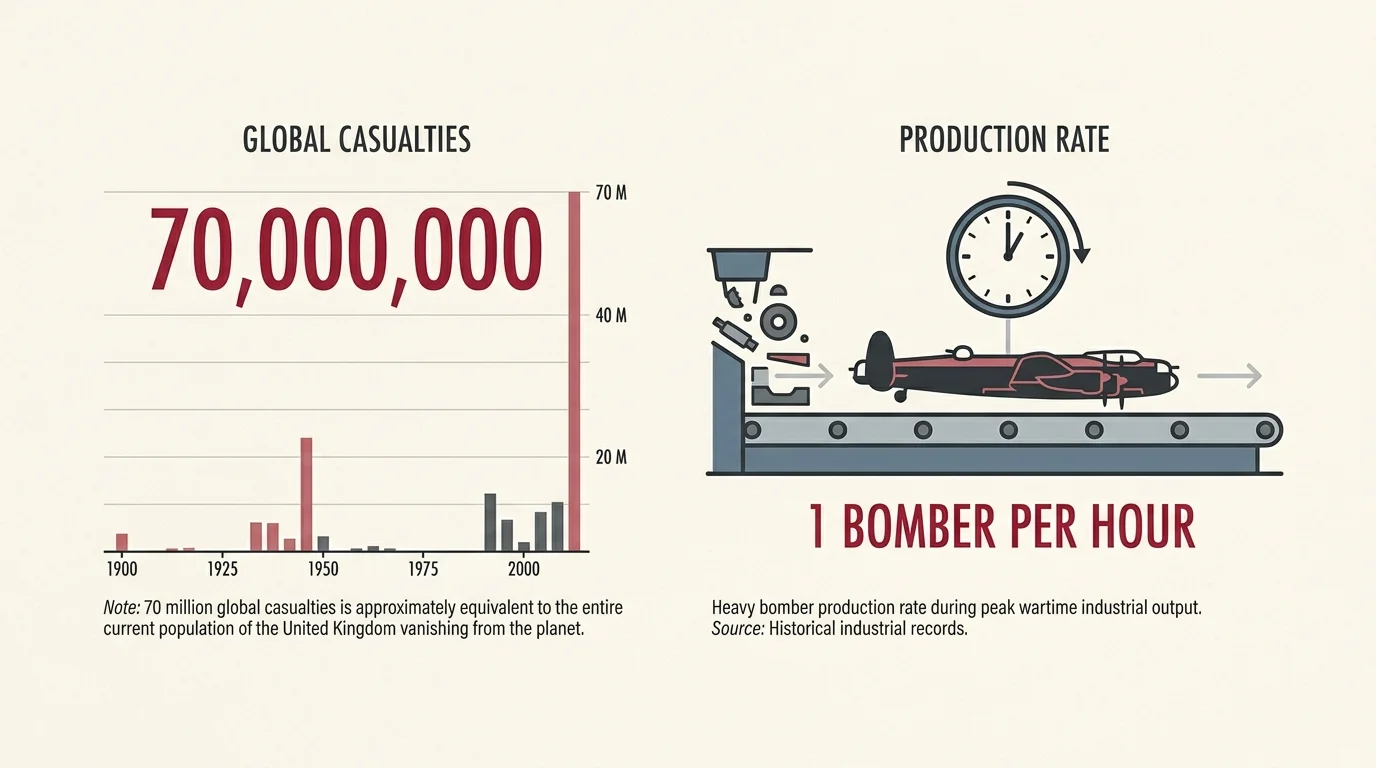
Global casualty numbers force you to grapple with the sheer scale of World War II history, as over seventy million people perished across multiple continents. You can visualize this staggering loss by imagining the entire modern population of the United Kingdom vanishing in just six short years. Analyzing these figures reveals that civilian deaths drastically outnumbered military casualties due to widespread famine, disease, and deliberate targeting of urban centers.
The relentless pace of wartime production fundamentally transformed global industries; American factories churned out a new bomber aircraft every hour at the height of the conflict. You see the legacy of this massive industrial shift in modern manufacturing efficiencies and complex supply chain logistics today. Managers and engineers collaborated to strip away inefficiencies, establishing assembly line techniques that dictate current global commerce.
Strategic bombing campaigns completely decimated major urban centers, rendering traditional front lines obsolete while putting millions of innocent civilians directly in the crosshairs of military history. Your understanding of modern aerial warfare stems directly from these indiscriminate area bombing strategies utilized heavily by both the Allied and Axis powers. Entire historic districts vanished overnight under the intense heat of incendiary munitions.
National governments aggressively weaponized propaganda on an unprecedented scale, using persistent radio broadcasts and dramatic film reels to manipulate public perception and dehumanize enemy combatants. By closely examining these psychological operations, you uncover the early blueprints for contemporary mass media influence and state-sponsored disinformation campaigns. Psychologists worked alongside military brass to craft messages designed explicitly to break civilian morale.
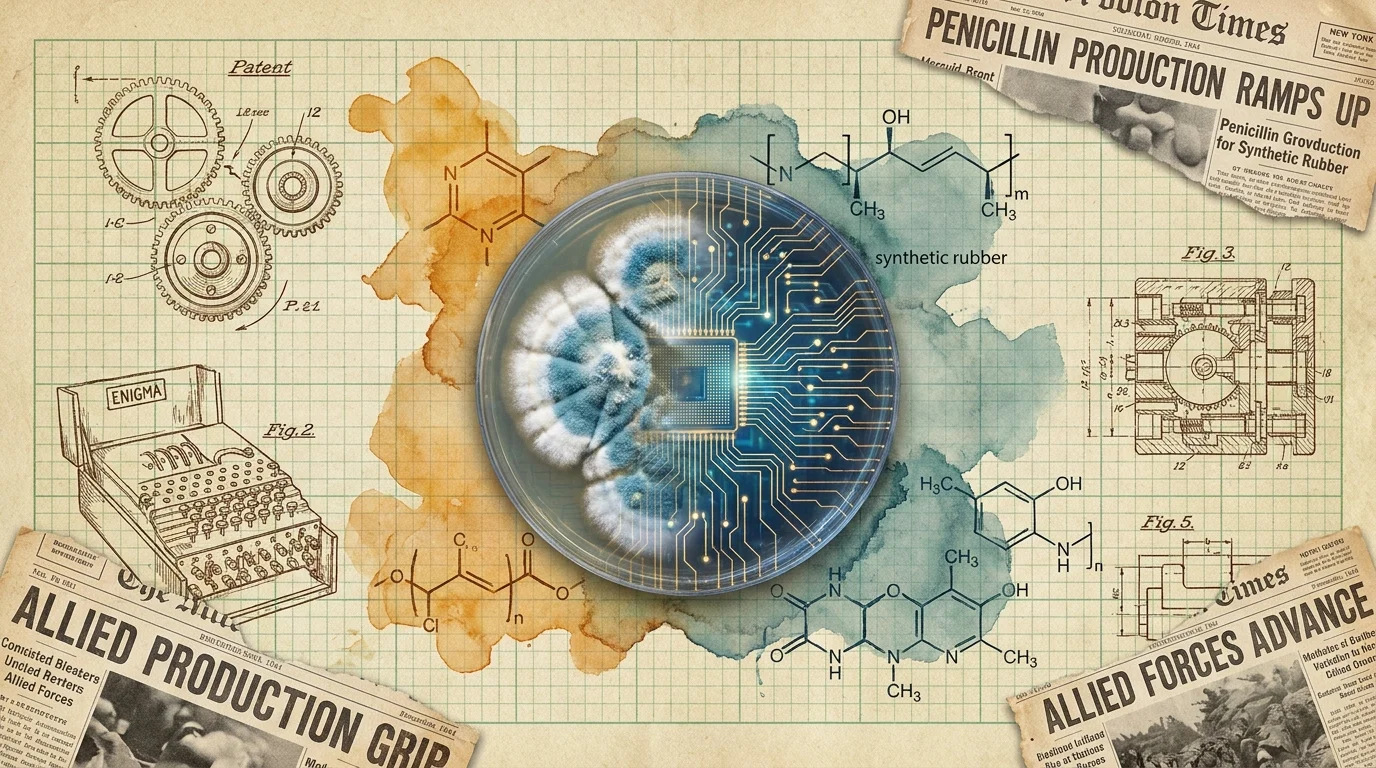
Medical advancements accelerated drastically under the gruesome pressure of constant battlefield casualties; the sudden mass production of penicillin saved millions of lives that would have otherwise ended in simple bacterial infections. You directly benefit from these desperate wartime medical innovations every time you receive a common antibiotic treatment at your local pharmacy. Surgeons also pioneered early reconstructive plastic surgery techniques to treat severe burn victims and shrapnel wounds.
The urgent development of synthetic rubber kept the vast Allied war machine rolling forward after Axis forces systematically captured key natural rubber plantations throughout the Pacific theater. You drive your daily commute on tires today that utilize the very chemical engineering techniques born out of this desperate wartime necessity. Scientists worked around the clock to polymerize petroleum byproducts into durable tread material.
Allied intelligence agencies successfully cracked complex cryptographic codes, shortening the global conflict by several years and actively paving the way for the modern digital age. When you use a modern laptop or smartphone, you interact directly with the sophisticated descendants of the primitive mechanical brains built to decipher intercepted enemy transmissions. Mathematicians broke the German Enigma machine through sheer perseverance and groundbreaking computational theory.
The vast deployment of hidden naval mines created massive underwater minefields that still pose a highly lethal threat to civilian shipping routes and fishing vessels today. You can track ongoing maritime clearing operations in European waters that routinely uncover and carefully detonate these lingering explosive hazards. Naval engineers designed these horrific devices with magnetic and acoustic triggers that remain sensitive decades later.
Strict domestic rationing systems completely overhauled civilian diets and local economies, forcing everyday families to innovate with heavily limited resources and minimal fresh meat supplies. Your modern concept of community victory gardens and neighborhood self-reliance directly originates from these intense periods of mandatory civilian conservation. Governments issued complex coupon books to strictly regulate the consumption of sugar, butter, and gasoline.
Desperate military leaders drafted millions of animals into combat service, widely employing horses, dogs, and pigeons for heavy transport, base defense, and secure message delivery. Acknowledging this massive animal draft gives you a much more comprehensive view of how desperate factions mobilized absolutely every available resource to secure total victory. Handlers trained these animals to perform unnatural tasks under the terrifying noise of constant artillery fire.

Context and Background
To fully grasp the magnitude of these terrifying historical events, you must dive deeply into the specific operational details and catastrophic failures that defined the mid-twentieth century. The following six events demonstrate how military desperation breeds scenarios far more frightening than any fictional horror story.
1. The USS Indianapolis Shark Attacks
You face true nautical terror when analyzing the tragic sinking of the USS Indianapolis on July 30, 1945. Japanese torpedoes struck the unescorted heavy cruiser just days after it secretly delivered crucial components for the first atomic bomb; the massive vessel subsequently sank in merely twelve minutes. Approximately nine hundred frightened sailors plunged into the pitch-dark Philippine Sea, where they helplessly drifted in oil-slicked waters for four agonizing days before a patrol aircraft accidentally spotted them. During this agonizing wait, hundreds of opportunistic oceanic whitetip sharks swarmed the exhausted survivors, pulling helpless men beneath the surface in one of the deadliest coordinated shark attacks recorded in human history. You must study the maritime survival protocols and severe communication failures stemming from this disaster, as naval command completely lost track of a capital ship carrying a crew of nearly twelve hundred men.
2. The Battle of Ramree Island Crocodile Massacre
Military history takes a deeply unsettling turn when you review the grim Battle of Ramree Island in February 1945. Advancing British forces successfully cornered approximately one thousand Japanese soldiers, aggressively forcing them to retreat through dense, unpredictable Burmese mangrove swamps rather than formally surrender. As the tropical night fell, British troops stationed at the swamp edges reported hearing relentless sporadic gunfire accompanied by the frantic, blood-curdling screams of men being violently pulled underwater. Massive saltwater crocodiles native to the remote swamps successfully ambushed the retreating infantry, effectively turning a standard military envelopment into a prehistoric slaughter. While modern historians occasionally debate the exact final death toll, the visceral terror of armed troops fighting invisible reptilian predators in the pitch black remains a chilling historical reality. You can draw a stark lesson here regarding the absolute necessity of factoring local ecology and severe terrain hazards into any modern tactical planning.
3. Unit 731 and Biological Atrocities
You confront the absolute darkest depths of human depravity when uncovering the strictly classified operations of Imperial Japan’s Unit 731. Operating covertly out of the Pingfang district in occupied China, General Shiro Ishii commanded a massive biological and chemical warfare research and development facility. Researchers systematically subjected thousands of helpless prisoners of war and innocent civilians to horrific lethal experiments, including unanesthetized vivisections and deliberate exposure to weaponized bubonic plague. Operators dropped experimental plague-infested fleas over Chinese cities, artificially triggering localized epidemics that claimed hundreds of thousands of civilian lives. You will find it equally terrifying that the United States government actively granted Ishii and his top researchers full immunity from war crimes prosecution in direct exchange for their extensive biological data. This grim transaction forces you to critically evaluate the heavy moral compromises victorious nations routinely make in the name of advancing national security.
4. The Disastrous Exercise Tiger
The hidden lethal reality of friendly fire and catastrophic training accidents becomes painfully clear when you examine Exercise Tiger. In late April 1944, Allied forces conducted a massive, highly classified live-fire rehearsal for the upcoming D-Day invasion on the coastal beaches of Slapton Sands in Devon, England. A tragic communication error regarding radio frequencies left a vulnerable convoy of slow-moving American landing ships entirely unprotected in the English Channel. A stealthy patrol of heavily armed German E-boats intercepted the convoy in the dark, swiftly launching a devastating barrage of torpedoes that sank two vessels and heavily damaged a third. Plunged into the freezing water wearing improperly secured life jackets, 749 American servicemen drowned or succumbed to hypothermia in a matter of hours. Allied command immediately ordered survivors into total silence, burying this massive loss of life to prevent widespread public panic before the crucial Normandy landings.
5. The SS Richard Montgomery Ticking Time Bomb
You can still directly observe the lingering physical terror of World War II by visiting the Thames Estuary, where the exposed, rusted masts of the SS Richard Montgomery eerily break the ocean surface. In August 1944, this American liberty ship grounded hard on treacherous sandbanks near Sheerness while carrying approximately 1,400 tons of highly volatile high explosives meant for the Allied advance in France. Instead of attempting a highly dangerous salvage operation, authorities essentially abandoned the fractured vessel, leaving a catastrophic ticking time bomb resting dangerously close to heavily populated areas. Maritime authorities continuously monitor the decaying wreck today, strictly enforcing a heavily restricted exclusion zone around the submerged hull. You must recognize that if this massive cargo detonates, experts project it will generate a localized tsunami wave capable of devastating nearby coastal communities and severely damaging critical port infrastructure.
6. The Soviet Anti-Tank Dog Program
You witness the heartbreaking extremes of military desperation when analyzing the Soviet Union’s incredibly controversial anti-tank dog program deployed in 1941. Facing the unstoppable mechanized blitzkrieg of the invading German army, Soviet engineers cruelly strapped specialized canvas pouches filled with high explosives onto the backs of starving dogs. Handlers utilized operant conditioning, aggressively training the hungry animals to seek out food cleverly hidden directly underneath stationary armored vehicles. In the chaotic heat of actual combat, the terrifying noise of artillery and heavy machine-gun fire severely panicked the animals, causing the strategy to backfire catastrophically. The terrified dogs frequently retreated rapidly back to the Soviet trenches, seeking safety among their handlers and tragically detonating their explosive payloads among friendly troops. You quickly realize that this desperate program fundamentally failed because the dogs recognized the familiar smell of Soviet diesel tanks rather than the foreign gasoline utilized by the advancing German Panzers.
Interesting Connections
Beyond isolated incidents of terror, the global conflict birthed incredible anomalies that directly influenced modern technological development and strategic military doctrine. The following six terrifying events demonstrate how bizarre wartime strategies deeply interconnected with contemporary warfare and mass civilian displacement.
7. The Devastating Firebombing of Tokyo
When you study the strategic bombing campaigns of the Pacific theater, you discover that Operation Meetinghouse unleashed a level of fiery destruction that vastly eclipsed the immediate death tolls of the atomic bombs. On the night of March 9, 1945, a massive fleet of American B-29 Superfortresses heavily saturated Tokyo with incredibly lethal napalm and magnesium incendiary cluster bombs. The intense inferno rapidly generated a localized firestorm that brutally sucked the oxygen directly out of the atmosphere, violently boiling the city’s rivers and canals where terrified civilians sought desperate refuge. Over one hundred thousand people perished in a single horrifying night, effectively turning sixteen square miles of the densely populated capital into smoldering ash. You must acknowledge that modern urban planning and stringent contemporary fire safety codes trace their fundamental origins directly back to the terrifying vulnerability of tightly packed wooden architecture demonstrated during this catastrophic event.
8. The Tragic Cap Arcona Incident
The immense chaos of the war’s final days created a perfect storm for one of maritime history’s most terrifying and ironic tragedies. In early May 1945, retreating SS guards rapidly emptied several massive concentration camps, aggressively forcing thousands of severely emaciated prisoners aboard the luxury ocean liner Cap Arcona and several surrounding cargo vessels anchored in the Baltic Sea. British RAF Typhoon fighter-bombers spotted the stationary fleet and, operating under severely flawed intelligence that the ships carried escaping high-ranking Nazi officials, launched a relentless aerial assault using unguided rockets and heavy cannons. The burning vessels quickly capsized in the freezing water, resulting in over seven thousand horrific casualties just mere days before the official German surrender. You gain critical insight from this disaster regarding the deadly fog of war, where delayed intelligence updates frequently lead to devastating, irreversible consequences for innocent civilians.
9. The Japanese Fugo Balloon Bombs
You will find the origins of modern intercontinental weapon systems in an incredibly bizarre and terrifying project conceived by the Japanese military. Seeking a method to strike the American mainland directly, engineers cleverly mapped the high-altitude Pacific jet stream and subsequently launched over nine thousand massive hydrogen balloons heavily laden with incendiary and anti-personnel explosives. These silent, completely unguided Fugo balloons drifted for thousands of miles across the ocean, silently dropping randomly over the vast forests of the Pacific Northwest. In May 1945, a pregnant woman and five innocent children tragically perished in an Oregon forest when they accidentally triggered a downed balloon bomb, becoming the only known casualties of enemy action on the continental United States during the war. You observe how the American government enforced a strict, immediate media blackout regarding these balloon landings, successfully preventing Japanese commanders from confirming the weapon’s terrifying intercontinental reach.
10. The Soviet Night Witches
You uncover an incredible blend of psychological terror and sheer bravery when examining the legendary combat record of the 588th Night Bomber Regiment. This all-female Soviet military unit flew entirely obsolete, highly flammable Polikarpov Po-2 canvas biplanes on relentless harassment bombing missions against heavily fortified German encampments. To avoid early detection by sophisticated enemy listening posts, the daring pilots intentionally cut their loud engines miles away from the target, gliding completely silently through the pitch-black night sky to manually drop their explosive payloads. German soldiers stationed on the ground reported hearing only a soft, eerie “whooshing” sound resembling a witch’s broomstick moments before the devastating bombs aggressively detonated around them. By studying their incredibly risky tactics, you recognize how sheer tactical ingenuity easily transforms outdated, inferior technology into a profoundly terrifying psychological weapon that severely degrades enemy morale.
11. Project X-Ray and the Bat Bombs
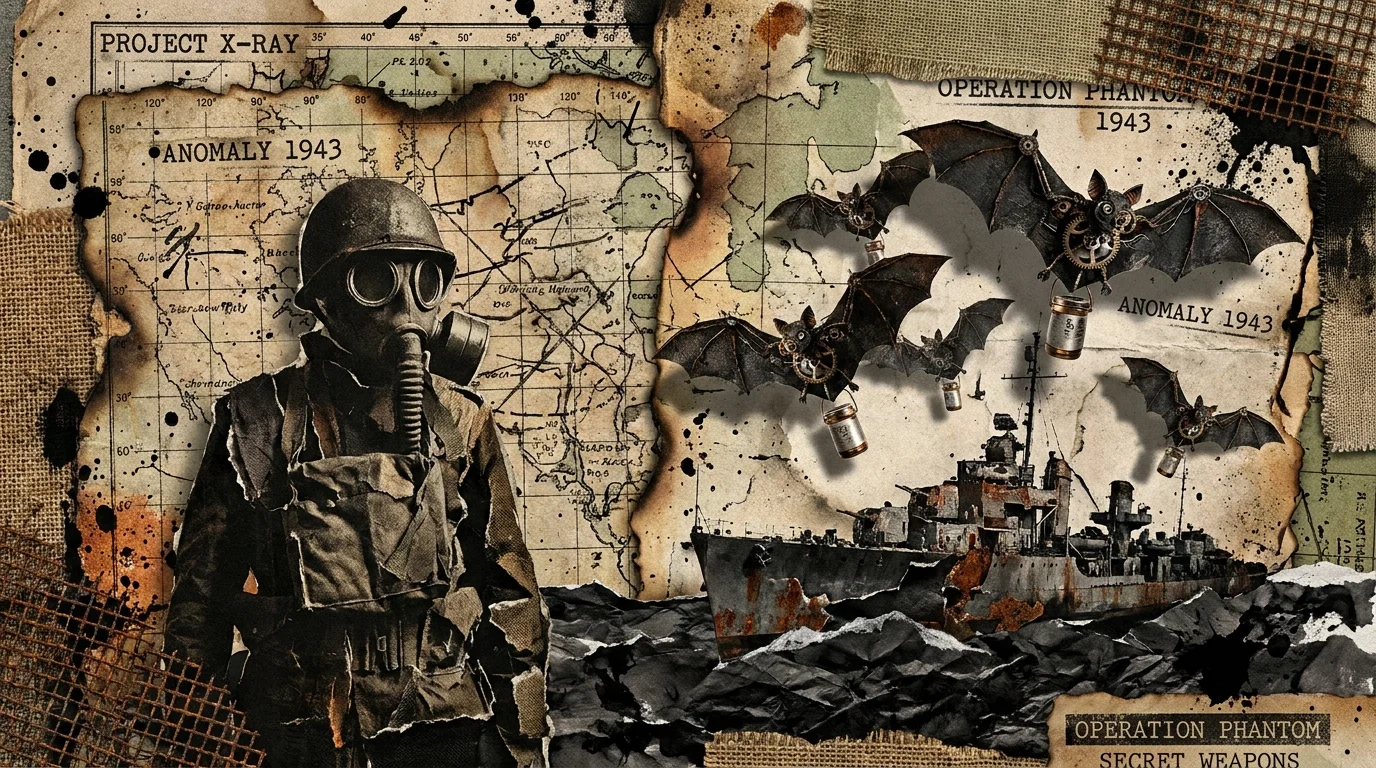
Bizarre military research bridges the unexpected gap between biology and structural engineering when you analyze the absolutely terrifying concept of Project X-Ray. Conceived by an eccentric American dental surgeon, the military aggressively funded a highly classified project to attach tiny, timed incendiary bombs directly to thousands of hibernating Mexican free-tailed bats. Planners intended to drop massive specialized canisters over Japanese cities; the canisters would deploy mid-air, allowing the bats to instinctively roost securely inside the vulnerable eaves of highly flammable wooden buildings before detonating simultaneously. The unpredictable project abruptly derailed when armed, escaped test bats accidentally roosted under the fuel tanks of the Carlsbad Army Airfield in New Mexico, spectacularly burning the entire auxiliary military base to the ground. You witness here the terrifying, unpredictable nature of weaponizing live biological assets, a strategy that military planners eventually abandoned only upon the successful completion of the much more reliable Manhattan Project.
12. The MV Wilhelm Gustloff Sinking
You face the undisputed largest maritime disaster in human history when investigating the tragic final voyage of the MV Wilhelm Gustloff in January 1945. As the vengeful Red Army aggressively pushed into East Prussia during Operation Hannibal, desperate German civilians and retreating military personnel violently packed the massive cruise ship, ignoring all safe capacity regulations in a frantic bid to cross the freezing Baltic Sea. A stalking Soviet submarine aggressively fired three fatal torpedoes into the ship’s vulnerable hull, plunging the completely overloaded vessel into the dark, sub-zero waters in less than fifty minutes. Frightened passengers aggressively trampled one another in heavily blocked stairwells, and severely frozen lifeboats completely failed to launch from their icy davits. Over nine thousand men, women, and children ultimately perished in the freezing waves, forcing you to recognize how mass civilian panic drastically amplifies the inherent terror of modern industrialized warfare.
Frequently Asked Questions
Why do so many terrifying historical events remain completely obscure today? Post-war governments intentionally classified severe operational failures, massive friendly fire incidents, and controversial weapon programs to protect fragile national security interests and actively maintain a unified public narrative of righteous victory. You frequently find that extensive intelligence files regarding these bizarre war facts only became declassified decades after the conflict officially ended.
How do modern historians aggressively verify these bizarre war facts? Researchers meticulously cross-reference highly classified declassified military logs, authentic personal diaries, official casualty reports, and newly discovered physical evidence from international archives. You must rely on this rigorous academic peer review process to separate actual terrifying historical events from heavily embellished wartime rumors and intentional propaganda campaigns.
What lasting impact did these terrifying events have on modern military history? You quickly see that catastrophic failures actively forced commanders to drastically overhaul strict maritime survival protocols, severely restrict biological warfare research, and completely reinvent combat communication systems. The unpredictable terror of events like the Fugo balloon bombs directly inspired the creation of highly sophisticated modern early warning radar networks and contemporary aerospace defense commands.
Can you still safely visit the physical locations of these extreme historical events? While you can safely visit many well-preserved memorial sites and public historical markers, certain active locations remain strictly off-limits due to incredibly persistent lethal hazards. Authorities strictly prohibit you from directly approaching the highly unstable SS Richard Montgomery wreck in the Thames, and maritime clearing agencies aggressively monitor European coastal zones for lingering unexploded ordnance.
Keywords: World War II, WWII history, historical events, military history, war facts
