

Aging does not mean trading your independence, passion, and ambition for a rocking chair. Society often mischaracterizes senior life as a period of inevitable cognitive decline, technological isolation, and institutionalization, but the modern reality tells a completely different story. Today’s older adults are launching high-growth startups, mastering the latest smart devices, and reporting higher levels of happiness than younger generations. You will discover that life after sixty-five is increasingly defined by entrepreneurship, vibrant romantic relationships, and lifelong learning. Understanding the true data behind aging helps you better prepare for your own future and dismantle outdated stereotypes. Forget everything you thought you knew about getting older; the golden years are far more dynamic, independent, and fulfilling than popular culture suggests.
Fast Facts
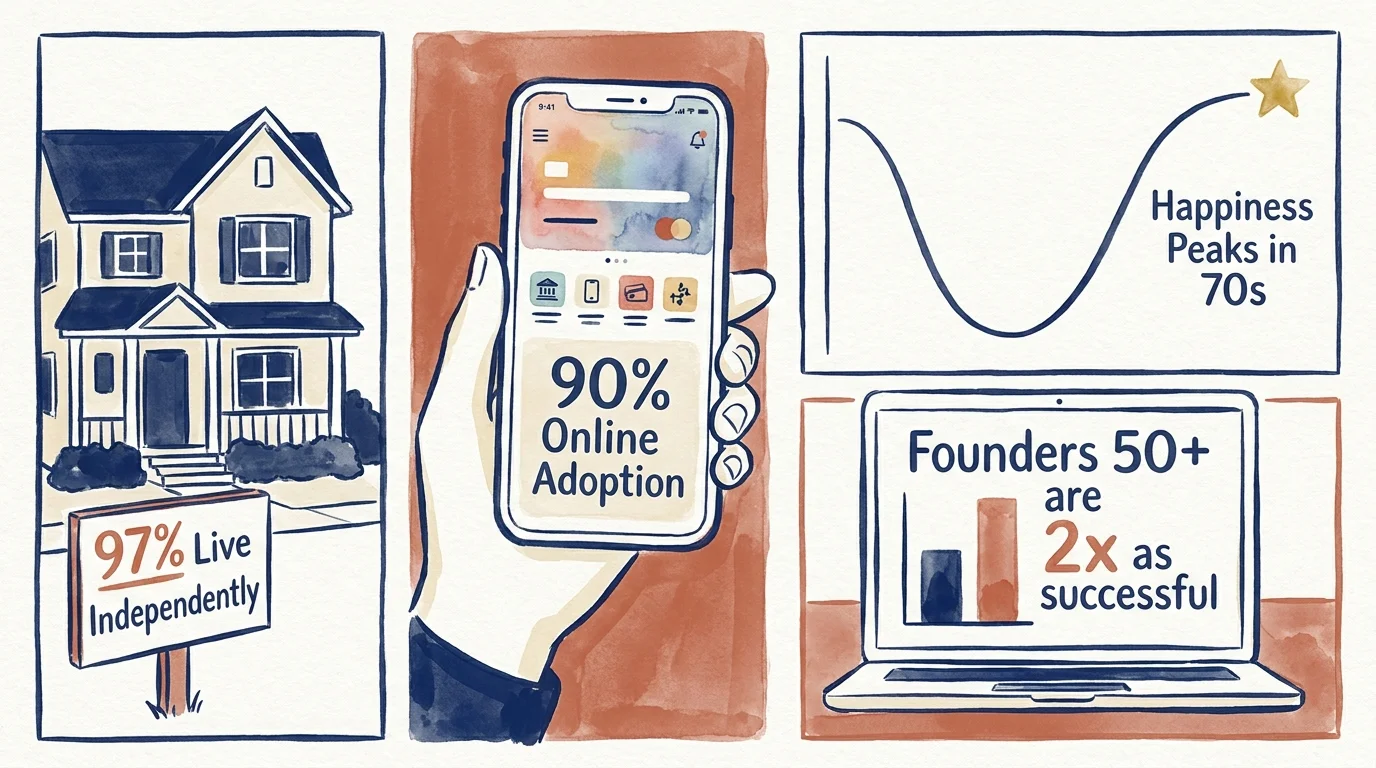
1. Institutional living is incredibly rare. The vast majority of older adults live entirely independently. Recent data reveals that over 97 percent of adults aged 65 and older reside in private homes, fully debunking the myth that aging automatically requires moving into a nursing facility.
2. Happiness peaks later in life. Psychological research tracking the U-shaped happiness curve shows that human life satisfaction typically hits its lowest point in the late forties. After this midlife dip, happiness and emotional stability steadily climb, peaking in your seventies and beyond.
3. Seniors are highly connected online. Older adults actively embrace modern digital tools. Current statistics show that 90 percent of adults aged 65 and older use the internet, while the vast majority own and regularly use smartphones for banking, communication, and telehealth.
4. The brain retains lifelong plasticity. You never lose the biological capability to learn new skills. Neuroplasticity—the brain’s ability to forge new neural pathways—persists into advanced age, allowing older adults to acquire complex knowledge and adapt to entirely new environments.
5. Entrepreneurship thrives after fifty. The most successful startup founders are not young college dropouts. Research demonstrates that founders over the age of fifty are statistically twice as likely to build successful, high-growth companies compared to entrepreneurs under the age of thirty.
6. Romantic intimacy remains a priority. Physical passion does not vanish as you age. Studies of older online daters show that 97 percent consider sexual intimacy a vital component of romantic relationships, with many labeling its absence a strict dealbreaker.
7. Workforce participation is actively climbing. Seniors are completely redefining traditional retirement. Approximately one in five adults over 65 remains engaged in the labor market, utilizing their vast experience to continue contributing professionally and securing additional financial stability.
8. Older consumers drive the economy. The silver economy represents a massive, influential financial force. Older adults hold a significant portion of global wealth and consistently outspend younger demographics in sectors like travel, leisure, and healthcare innovation.
9. Physical decline is not a sudden cliff. Muscle mass and cardiovascular health can improve late in life. Consistent strength training and aerobic exercise help older adults rebuild bone density and prevent frailty, allowing for highly active lifestyles well into their nineties.
10. Companionship takes diverse forms. Singlehood and alternative partnerships are rising rapidly among older demographics. With extended life expectancies, many seniors embrace decades of independence, prioritizing deep friendships and non-cohabiting romantic partners over traditional marriage structures.
Context and Background
You might assume that reaching your seventies or eighties automatically means packing up and moving into an assisted living facility or a nursing home. The hard data firmly rejects this pessimistic narrative. In reality, the overwhelming majority of older adults maintain their independence and continue living actively in their own communities. As of 2021, a staggering 97.5 percent of adults aged 65 and older resided in private homes. Rather than surrendering their autonomy, seniors are aggressively adapting their environments to support aging in place. Home modifications, smart health monitors, and community-based support systems allow you to retain absolute control over your daily routine. Understanding this reality fundamentally changes how you should plan for your own retirement. Instead of exclusively saving for institutional care, you can invest proactively in making your current home senior-friendly. By prioritizing home accessibility early, you guarantee your independence for decades to come.
Popular culture often portrays aging as a steady descent into grumpiness and dissatisfaction, yet psychological data reveals the exact opposite. Researchers have extensively documented the U-shaped happiness curve, demonstrating that human life satisfaction typically reaches its absolute lowest point in midlife—usually between the ages of 47 and 50—before experiencing a sustained and powerful upward trajectory. As you move past middle age, you naturally develop better emotional regulation and a profound sense of perspective. You stop sweating the small stuff and begin prioritizing meaningful relationships and deep personal fulfillment. This upward slope of happiness means your later decades frequently become the most emotionally rewarding times of your entire life. Acknowledging this psychological pattern allows you to look forward to your senior years with genuine optimism rather than dread. The heavy burdens of career building and child-rearing fade, leaving room for pure, unadulterated life satisfaction.
The tired stereotype of the confused older adult struggling to send an email or operate a television is completely outdated. Today’s seniors are rapid, eager adopters of digital technology, seamlessly integrating smartphones, tablets, and wearable health monitors into their daily lives. According to recent surveys, 90 percent of adults aged 65 and older actively use the internet, and technology adoption rates among this demographic continue to climb at record speeds. You will find older adults managing complex investment portfolios via mobile apps, participating in virtual telehealth consultations, and maintaining active, curated presences on social media. The recent global shift toward remote services served as a powerful catalyst, forcing many to overcome initial learning curves to stay connected with loved ones. Now, high-level digital literacy is a standard, expected component of modern senior life. If you assume older adults are disconnected, you drastically underestimate their daily reality.
Forget the media-driven image of the hoodie-wearing twenty-something tech founder; the real powerhouse of the modern startup ecosystem is the middle-aged and older entrepreneur. Studies from leading institutions, including the Massachusetts Institute of Technology, reveal that the average age of a successful, high-growth startup founder is actually 45. Furthermore, founders over the age of fifty are statistically twice as likely to build successful companies compared to their younger, less experienced counterparts. This massive success stems directly from decades of industry experience, extensive professional networks, and strong financial stability. When you start a business later in life, you bring a wealth of practical knowledge and refined emotional intelligence to the table. You already know how to manage people, navigate complex industry regulations, and survive devastating economic downturns. For anyone contemplating a bold career pivot in their fifties or sixties, the data clearly supports taking the leap into entrepreneurship.
Age does not extinguish the fundamental human desire for passion, intimacy, and deep romantic connection. A recent, comprehensive study out of the University of New Hampshire focused heavily on single adults between the ages of 60 and 83 who actively use online dating platforms. The findings were striking and undeniable: 97 percent of these older adults consider sexual intimacy a highly vital part of a romantic relationship. Many even reported that a relationship lacking physical intimacy felt more like a platonic friendship and constituted a strict dealbreaker. With rising divorce rates among the baby boomer generation and significantly longer life expectancies, the senior dating pool is larger and more active than ever before. However, this romantic vitality brings necessary practical responsibilities. Rates of sexually transmitted infections have risen among older demographics, highlighting the critical need for continued sexual health awareness. Navigating romance later in life requires the exact same open communication and safety precautions you practiced in your younger years.

Interesting Connections
The biological reality of lifelong neuroplasticity directly fuels the high rates of technology adoption seen among older adults. Your brain remains fundamentally capable of forming new synaptic connections throughout your entire lifespan. When you force yourself to learn a new operating system or navigate a complex smartphone application, you provide your brain with the exact type of cognitive stimulation required to maintain that neuroplasticity. This relationship creates a powerful, positive feedback loop. Engaging with modern technology acts as a digital workout for your mind. The challenge of mastering new digital environments strengthens your cognitive reserves, which in turn makes it much easier to learn subsequent new skills. You can actively protect your cognitive health by embracing, rather than actively avoiding, rapid technological advancements.
The upward swing of the happiness curve in later life correlates strongly with the modern trend of delayed retirement and senior entrepreneurship. Staying professionally engaged provides a profound sense of purpose, daily structure, and essential social interaction—three critical pillars of psychological well-being. When you launch a business or continue working past traditional retirement age, you maintain your identity and professional relevance. This continued engagement prevents the feelings of deep isolation and aimlessness that historically plagued traditional retirees. The financial security generated by extending your career also eliminates a major source of late-life anxiety, freeing you to fully enjoy the emotional stability that naturally develops after midlife. Work, when pursued on your own terms, serves as a powerful catalyst for sustained happiness.
Maintaining physical independence in a private home directly enables a thriving romantic life in your later years. Living independently provides the privacy, autonomy, and confidence necessary to date and cultivate intimate relationships. When you age in place rather than moving into a communal or institutional setting, you retain total control over your social schedule and personal space. This environmental autonomy allows older adults to navigate the modern dating scene without the logistical hurdles or perceived loss of dignity often associated with assisted living facilities. Furthermore, the physical vitality required to successfully maintain a private household often translates directly to the energy and stamina needed to pursue new relationships. Protecting your housing independence is fundamentally linked to protecting your social and romantic freedom.
Frequently Asked Questions
Do most seniors eventually need to move into nursing homes?
The perception that aging inevitably leads to a nursing home is entirely false. Statistical data shows that only a very small percentage of adults over the age of sixty-five reside in institutional care facilities. The vast majority live completely independently in private homes or apartments. With the rapid rise of in-home care services, smart home modifications, and mobile health monitoring, aging in place has become the standard rather than the exception. You have vastly more resources available today than ever before to ensure you can safely and comfortably remain in your own community as you get older.
Is it harder to learn new things as you get older?
While certain highly specific aspects of cognitive processing speed may slow down slightly, your fundamental ability to learn remains robustly intact throughout your entire life. The human brain retains its neuroplasticity, allowing it to continuously form new neural connections and adapt to fresh challenges. Older adults frequently excel at learning because they can attach new information to a vast, highly organized repository of existing knowledge and lived experiences. If you consistently challenge your brain with complex, novel tasks—such as learning a new language or mastering a musical instrument—you actively stimulate this plasticity and preserve your overall cognitive function.
Why are older entrepreneurs more successful than younger ones?
Sustainable business success heavily depends on deep industry experience, extensive professional networks, and strong financial foundations—areas where older adults naturally possess a massive, insurmountable advantage. Studies consistently indicate that startup founders over the age of fifty have a significantly higher success rate than those in their twenties. When you start a company later in life, you rely on decades of practical problem-solving and refined emotional intelligence. You deeply understand market dynamics and know how to manage risk effectively, making your ventures far more resilient and much more likely to achieve rapid, high-level growth.
Are seniors really adopting modern technology?
Older adults are currently among the fastest-growing demographics for advanced technology adoption. The overwhelming majority of seniors use the internet on a daily basis, and smartphone ownership among this specific group is exceptionally high. From managing chronic healthcare conditions through sophisticated telehealth platforms to staying intimately connected with family via social media and video calls, older adults have seamlessly integrated digital tools into their daily routines. Assuming that seniors cannot understand or stubbornly refuse to use new technology is a costly, outdated misconception for both software developers and family members trying to communicate effectively.
Does the desire for romantic relationships fade after a certain age?
Intimacy and passionate romantic connection remain deeply important throughout the entire human lifespan. Recent academic research focused on older singles demonstrates that the vast majority still highly prioritize both physical and emotional connection in their partnerships. In fact, many older adults consider active sexual intimacy an absolute, non-negotiable requirement for a successful romantic relationship. As divorce rates rise among baby boomers and life expectancies stretch further, the senior dating pool remains highly active and vibrant. You should fully expect your innate desire for meaningful, passionate companionship to endure well into your golden years.
