

Experiencing nature’s living light transforms an ordinary night into an extraordinary journey across glowing water travel destinations. You can witness vibrant turquoise waves, gleaming underground caverns, and electric blue coastlines produced by chemical reactions inside living organisms. Microscopic dinoflagellates, specialized squid, and glowing larvae turn specific ecosystems into radiant displays under dark skies. From the hyper-concentrated waters of Mosquito Bay in Puerto Rico to the subterranean cave networks of New Zealand, these unique ecosystems require specific environmental conditions to thrive. Understanding where to see bioluminescent waves and living light allows you to plan unforgettable eco-tours while protecting these delicate marine and terrestrial environments.
Fast Facts
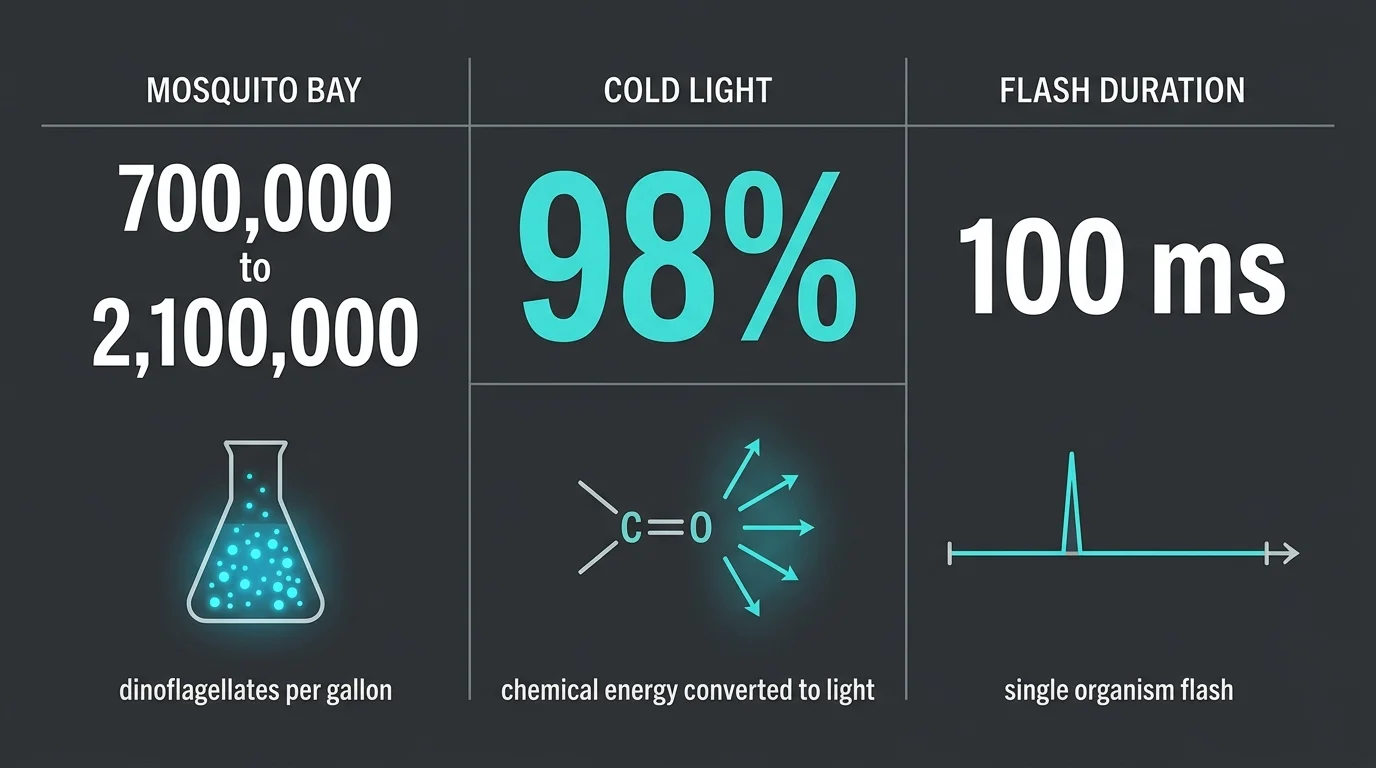
Mosquito Bay on the Puerto Rican island of Vieques holds the official Guinness World Record as the brightest bioluminescent bay on Earth. The water contains astounding concentrations ranging between 700,000 and 2,100,000 single-celled dinoflagellates per gallon of water.
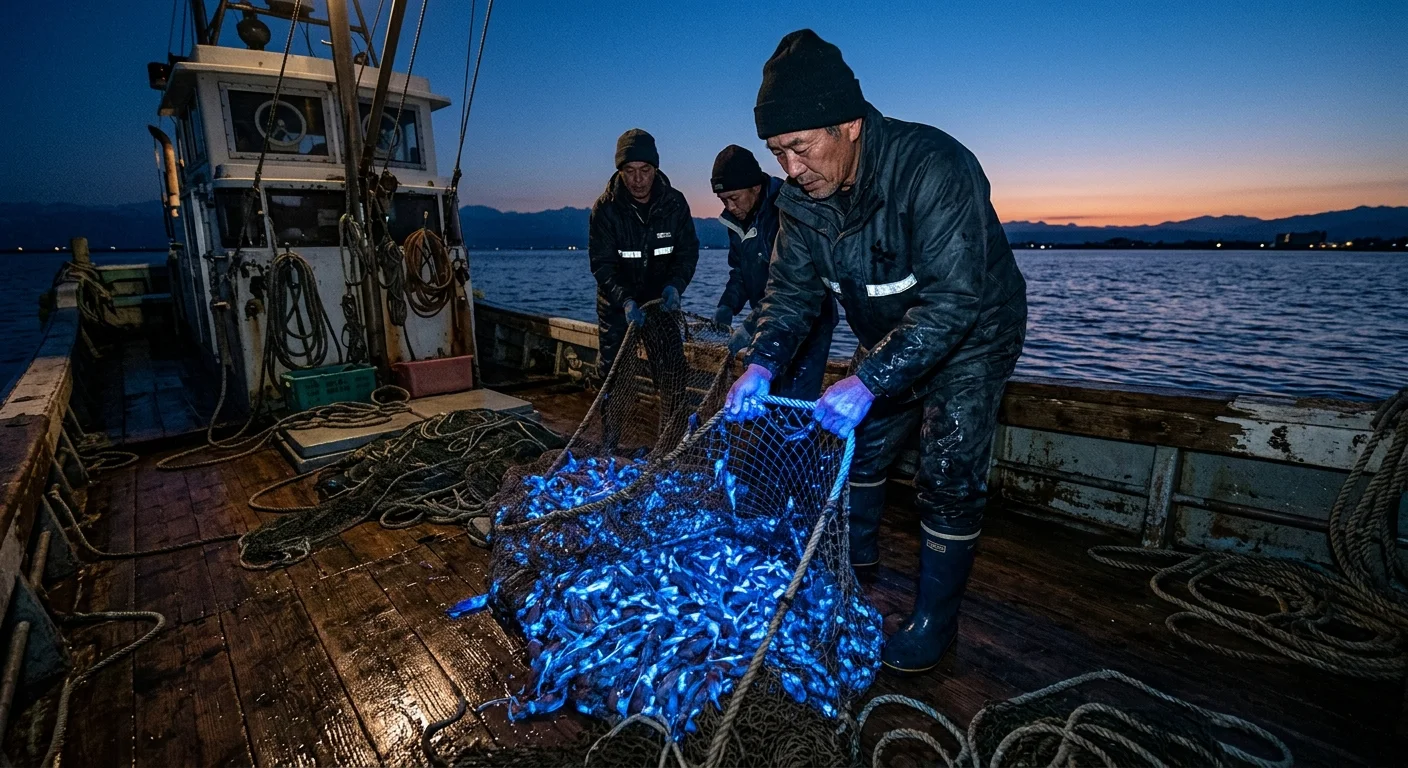
The dazzling blue light display in Toyama Bay, Japan, stems from millions of firefly squid that rise from deep ocean trenches during their brief spring spawning season. You can observe this phenomenon up close between mid-March and late May through early morning boat tours that depart directly from Namerikawa Port.
New Zealand’s Waitomo Glowworm Caves showcase a purely terrestrial form of living light generated by endemic glowworm larvae. Thousands of these tiny creatures line the cave ceilings and emit a steady blue-green glow to attract flying insects into sticky silk threads.
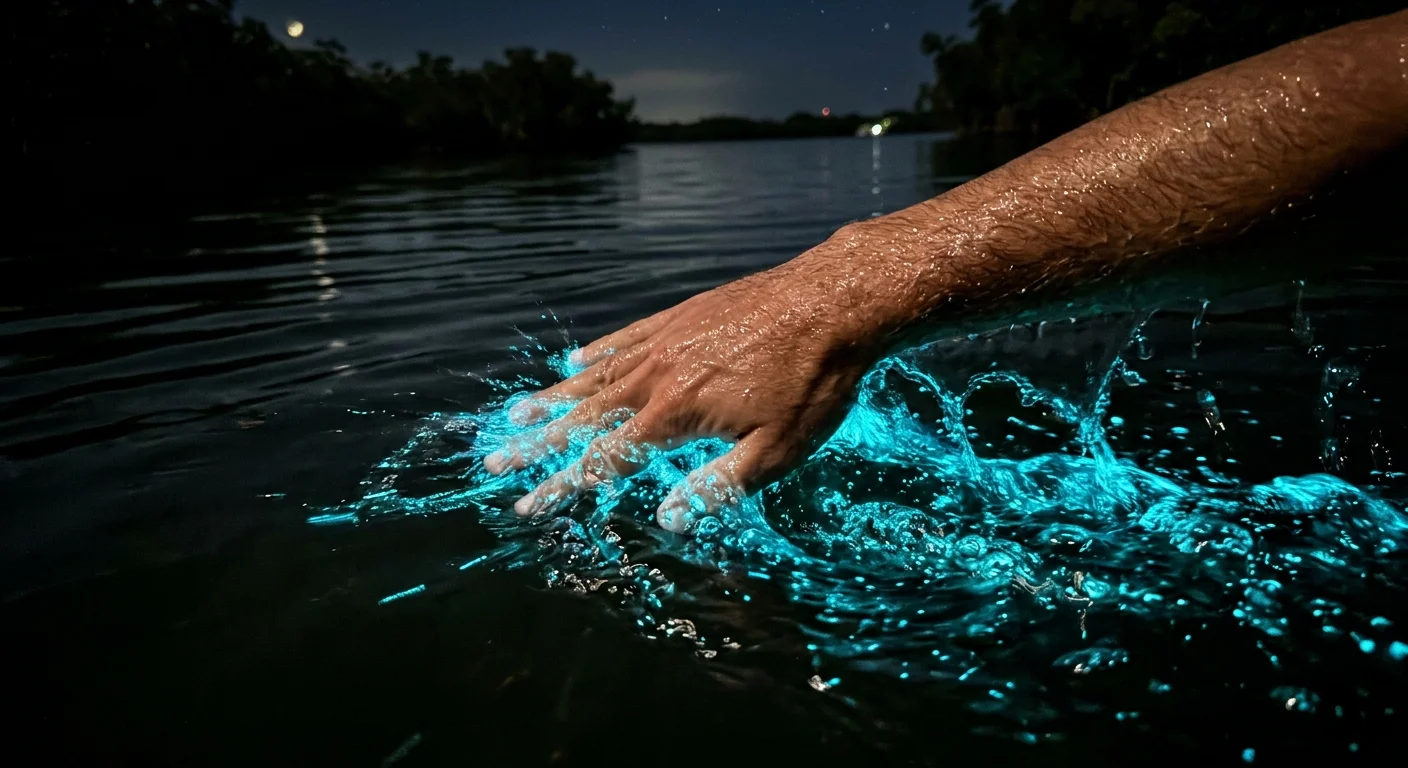
Jamaica’s Luminous Lagoon stands out as one of the few natural bioluminescent phenomena locations where guided swimming is explicitly permitted. Swimmers trigger immediate bursts of glowing green-blue light around their limbs as they move through the brackish water.
The famous Sea of Stars on Vaadhoo Island in the Maldives reaches its peak brilliance between July and December. Southwest monsoon currents deliver nutrient-dense warm water to the surrounding coral reefs, fueling massive dinoflagellate populations near the shoreline.
Tour operators along the Pacific coastline of the United States schedule bioluminescent night kayaking trips strictly around the new moon phase. Operating from June through October in Tomales Bay and the San Juan Islands, these tours maximize visual contrast against pure darkness.
Australia’s Jervis Bay experiences vibrant blooms of sea sparkle dinoflagellates primarily during the southern hemisphere’s spring and early summer months. Rising water temperatures from September through December prompt these single-celled organisms to accumulate along sandy shorelines.
Bioluminescence represents an amazingly efficient energy conversion process known as cold light. The biological reaction converts nearly ninety-eight percent of its total chemical energy into light, generating virtually zero heat in the process.
A single dinoflagellate organism emits a flash of light that lasts only about one hundred milliseconds when mechanically agitated. Millions of these microscopic organisms flashing simultaneously produce the continuous glowing wave effect you observe from the shore.
Chemical compounds found in everyday sunscreens, insect repellents, and synthetic lotions can quickly disrupt the cell membranes of bioluminescent plankton. Environmental agencies establish strict protected areas to shield these fragile marine micro-ecosystems from chemical contamination.
Context and Background
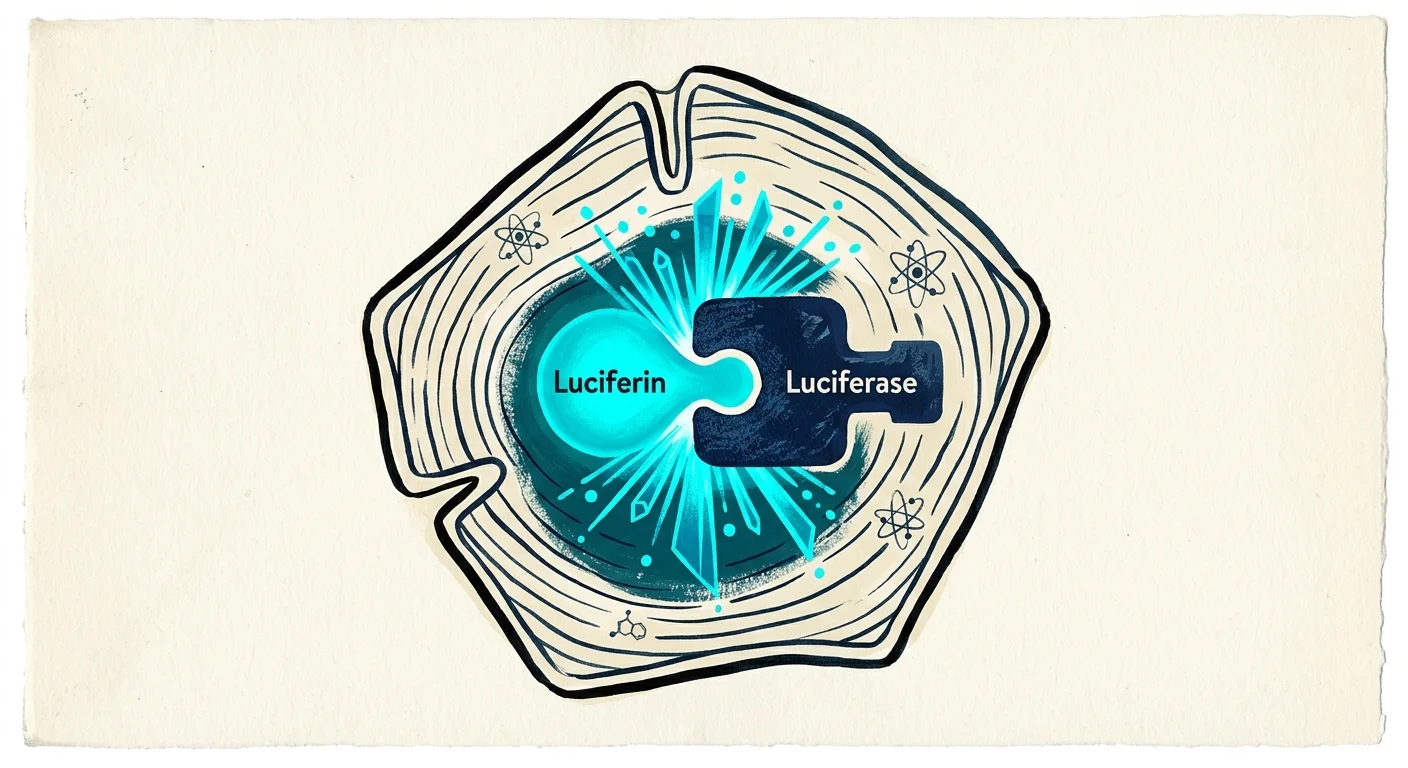
Bioluminescence is the biological production and emission of light by living organisms. Across both marine and terrestrial ecosystems, this natural chemical reaction requires two fundamental components: a light-emitting molecule called luciferin and an enzyme catalyst called luciferase. When luciferase interacts with luciferin in the presence of oxygen and cellular adenosine triphosphate; it triggers an oxidation process that releases visible light photons. Because this chemical pathway produces light without thermal radiation, scientists classify it as cold light. Organisms utilize this mechanism for diverse survival strategies; including predator evasion, prey attraction, optical camouflage, and species communication.
In marine environments, single-celled microalgae known as dinoflagellates produce the vast majority of bioluminescent displays. When physical force—such as a breaking wave, a swimming fish, or a moving kayak paddle—distorts the organism’s cell membrane, it opens ion channels that flood the cell interior with protons. This sudden acidification activates the internal luciferase enzyme, creating a brilliant micro-flash of blue-green light. Blue and green light wavelengths travel farthest through seawater, making this spectral band ideal for marine communication and defense. Exploring the best places to see bioluminescence offers you a direct window into these complex biological systems.
Mosquito Bay, Vieques, Puerto Rico
Mosquito Bay stands as the ultimate benchmark among natural bioluminescent phenomena locations. Situated on the southern coast of Vieques Island, Puerto Rico, this shallow bay creates a perfect natural incubator for the dinoflagellate species Pyrodinium bahamense. The bay features a narrow, shallow channel that connects to the Caribbean Sea, flanked by dense red mangrove forests. These mangroves shed nutrient-rich organic matter into the calm water while physically restricting water exchange with the open ocean. Consequently, dinoflagellates multiply rapidly within the bay, reaching staggering densities between 700,000 and 2,100,000 organisms per gallon of water.
To safeguard this fragile ecosystem, local environmental regulations strictly enforce conservation rules. Authorities ban swimming in Mosquito Bay because human skin oils, sunscreens, and insect repellents damage dinoflagellate cell structures. Furthermore, motorized vessels with gas-powered engines are completely prohibited to prevent fuel spills and mechanical turbulence. You can explore the glowing bay exclusively by booking guided tours in clear-bottom non-motorized kayaks or quiet electric boats. Local operators guide small groups through the mangroves during new moon phases, allowing you to watch the water ignite into brilliant turquoise light with every stroke of your paddle.
Toyama Bay, Toyama Prefecture, Japan
Located along the coast of the Sea of Japan, Toyama Bay presents a bioluminescent spectacle driven not by microscopic plankton, but by deep-sea cephalopods. Every spring, millions of firefly squid—known scientifically as Watasenia scintillans—ascend from deep oceanic trenches into the bay’s shallow surface waters. Measuring just three inches in length, these squid possess tiny light-producing organs called photophores located at the tips of their tentacles and across their bodies. When stimulated, the photophores emit a radiant deep-blue light that illuminates the shoreline and coastal fishing nets.
The firefly squid phenomenon occurs within a strict seasonal window running from mid-March through late May. During this brief period, local fishing vessels offer early-morning sightseeing cruises departing from Namerikawa Port around 2:30 AM. Tickets for these adult night boat tours cost 5,000 JPY per person and provide an unforgettable look at commercial fishermen hauling illuminated squid nets from the dark ocean. If you prefer land-based viewing, the nearby Hotaruika Museum offers educational exhibits and live squid light demonstrations; entry costs 820 JPY for adults between March 20 and May 31.
Waitomo Glowworm Caves, Waikato, New Zealand
Hidden beneath the rolling green hills of New Zealand’s North Island, the Waitomo Glowworm Caves host one of the world’s most spectacular subterranean living light displays. Unlike marine bioluminescence, this terrestrial phenomenon is generated by Arachnocampa luminosa, a species of glowworm larvae endemic exclusively to New Zealand. These tiny larvae line the vaulted limestone ceilings of damp, dark caves, hanging thousands of sticky silk threads designed to snare flying insects. The larvae produce a cool blue-green light within specialized abdominal organs to lure unsuspecting midges and moths upward into their traps.
Tourists explore these ancient limestone formations through organized guided excursions. The standard 45-minute guided cave tour culminates in a silent boat ride along the subterranean Waitomo River, where you glide under a cavern ceiling covered in thousands of glowing larvae. The operator-published gate price for the standard adult tour is NZ$81. Conservation managers strictly enforce a complete ban on all photography and videography inside the main Glowworm Cave; artificial flash photography disturbs the sensitive larvae, while ambient display screens ruin the dark adaptation required for visitors to view the light clearly.
Luminous Lagoon, Falmouth, Jamaica
Stretching along the northern coastline of Jamaica near Falmouth, Luminous Lagoon offers one of the most accessible bioluminescent beaches and lakes in the Caribbean region. This unique body of water sits at the exact marshy estuary where the fresh waters of the Martha Brae River meet the salty Caribbean Sea. The mixing of fresh and salt water creates a warm, shallow, brackish environment enriched with natural nutrients shed by surrounding mangrove trees. These specific conditions foster an exceptionally high concentration of Pyrodinium bahamense dinoflagellates.
Nightly boat tours depart year-round from local docks starting around dusk at 7:00 PM. Ticket prices for basic boat tours range between $25 and $30 USD per adult, while comprehensive packages including round-trip hotel transfers generally start around $65 USD. Unlike Puerto Rico’s Mosquito Bay, guided swimming is explicitly permitted during designated stops in Luminous Lagoon. As you slip into the warm, shallow water, your physical movements trigger instant biochemical reactions, causing bright blue halos to trail behind your hands, feet, and body.
Vaadhoo Island, Raa Atoll, Maldives
Vaadhoo Island, located in the northern Raa Atoll of the Maldives, is globally famous for its ethereal “Sea of Stars” phenomenon. Along these remote tropical beaches, lapping waves roll onto soft white coral sand while emitting bright blue speckles of light. This stunning display is generated by massive aggregations of Noctiluca scintillans dinoflagellates, commonly referred to as sea sparkle. When gentle ocean currents sweep these single-celled organisms into breaking surf or wet sand, physical pressure activates their defensive luminescence, creating the illusion of a starry sky mirrored on the ocean water.
Timing your visit to the Maldives is critical if you want to witness this natural marine display. The phenomenon reaches its peak intensity between July and December, driven by the seasonal southwest monsoon. During these summer and autumn months, warm oceanic currents transport nutrient-rich deep water upward toward the shallow coral reefs, spurring explosive dinoflagellate blooms. You can stroll along dark beaches at night, leaving glowing blue footprints in the wet sand as pressure from your steps forces the stranded plankton to flash brightly.
Tomales Bay and the San Juan Islands, USA
For travellers exploring North America, the sheltered coastal waters of northern California and Washington State offer premier opportunities to experience natural bioluminescent phenomena locations. In California, Tomales Bay—a narrow inlet situated along the San Andreas Fault in Point Reyes National Seashore—provides ideal conditions for summer dinoflagellate blooms. Similarly, the protected bays around Friday Harbor in Washington’s San Juan Islands harbor rich seasonal concentrations of glowing microalgae. Kayaking through these calm inlets under a pitch-black night sky reveals radiant blue wakes behind your vessel.
Guided night-kayaking excursions in both regions operate strictly during warm-weather months from June through October. Commercial operators carefully structure their tour schedules around the lunar calendar, offering trips almost exclusively during new moon phases when celestial light is minimal. Navigating quiet coastal inlets during absolute darkness ensures that every paddle stroke, splashing fish, and dripping water droplet generates maximum visual contrast against the dark sea water.
Jervis Bay, New South Wales, Australia
Located roughly three hours south of Sydney, Jervis Bay is famous for possessing some of the whitest sand beaches in the world. However, during specific periods of the year, these pristine white shores transform into radiant, glowing blue coastlines. The phenomenon occurs when dense populations of single-celled Noctiluca scintillans gather in the calm, sheltered bay waters. During daytime, these microscopic algae blooms appear as reddish-pink slicks on the water surface; at night, mechanical stimulation from gentle shoreline waves turns the water into a brilliant neon electric blue.
The bioluminescent blooms along Australia’s eastern coast occur most predictably during the southern hemisphere’s spring and early summer, spanning September through December. As coastal water temperatures rise and nutrient upwelling events feed the inner bay, dinoflagellate populations surge dramatically. Local beachgoers and photographers flock to popular spots such as Plantation Point and Hyams Beach to capture long-exposure photographs of electric blue waves breaking against pitch-black night sands.
Interesting Connections
The presence of natural bioluminescence in diverse ecosystems highlights remarkable evolutionary connections across aquatic and terrestrial species. Although firefly squid, glowworm larvae, and marine dinoflagellates belong to entirely different biological kingdoms, each group independently evolved luciferin-luciferase metabolic pathways to produce cold light. This phenomenon—known as convergent evolution—demonstrates how living light solves universal ecological challenges. While single-celled dinoflagellates use light flashes as a startle response to blind approaching copepod predators; firefly squid use ventral photophores for counterillumination, matching downwelling moonlight to blend seamlessly into background lighting when viewed from below.
Furthermore, human lunar tracking links directly to your success when visiting glowing water travel destinations. Because celestial moonlight dramatically reduces visual contrast, observing subtle bioluminescent marine displays requires deep ambient darkness. Tour operators worldwide align their peak operating windows with the new moon phase, when the lunar disk is entirely shaded. Understanding this astronomical relationship allows you to plan trips around dark skies, maximizing your chances of seeing brilliant glowing waves and vivid underwater wakes.
Bioluminescent organisms have also revolutionized modern medical science and biological research. Molecular biologists isolated the genes responsible for producing luciferase and green fluorescent protein, utilizing them as luminous cellular markers. Scientists insert these bio-luminescent tags into living cells to monitor gene expression; trace the pathways of dangerous bacterial infections; and observe the real-time growth of cancerous tumors in laboratory settings. The delicate plankton floating in tropical bays directly powers medical breakthroughs that save human lives worldwide.
Frequently Asked Questions
What is the best time of month to see bioluminescent phenomena?
The optimal time to view bioluminescence is during the new moon phase, or during nights when the moon sets before dusk. Ambient moonlight washes out the faint blue light produced by dinoflagellates and glowworms, so selecting dates with zero celestial light ensures maximum contrast and visibility.
Can you swim in all bioluminescent locations?
No, swimming is strictly prohibited in protected ecosystems like Mosquito Bay in Puerto Rico to prevent chemical pollution from sunscreens and body oils. However, designated locations like Luminous Lagoon in Jamaica allow guided swimming under regulated conditions.
Why do dinoflagellates glow when the water is disturbed?
Dinoflagellates glow as a mechanical defense mechanism against predators. Physical motion stretches the organism’s cell membrane, triggering a rapid electrical signal that activates luciferase enzymes and produces a sudden flash of light to startle grazers.
How do you photograph bioluminescence effectively?
To capture living light with a camera, set your camera on a sturdy tripod and use a manual mode with a long exposure time between two and fifteen seconds. Use a wide aperture such as f/1.8 or f/2.8 along with an ISO setting between 1600 and 3200 while disabling your flash completely.
Are glowing water travel destinations safe for eco-tourists?
Yes, visiting bioluminescent destinations is safe when you book tours through licensed, environmentally conscious operators. Following established conservation guidelines—such as using clear-bottom kayaks and refraining from applying harsh chemical lotions—ensures your safety while protecting these delicate marine environments.
