

You interact with dozens of everyday items without considering the radical shifts that brought them into your home. The history of everyday objects reveals that many ubiquitous tools began as surgical procedures, penal labor devices, or industrial waste products. Learning these everyday item origin stories gives you a practical perspective on modern problem-solving and corporate pivots; innovation rarely follows a predictable path. By examining surprising object history, you will see how accidental discoveries and clever marketing transformed specialized tools into household items. Here is the remarkable history behind ten ordinary objects you likely encounter every single week.
Fast Facts
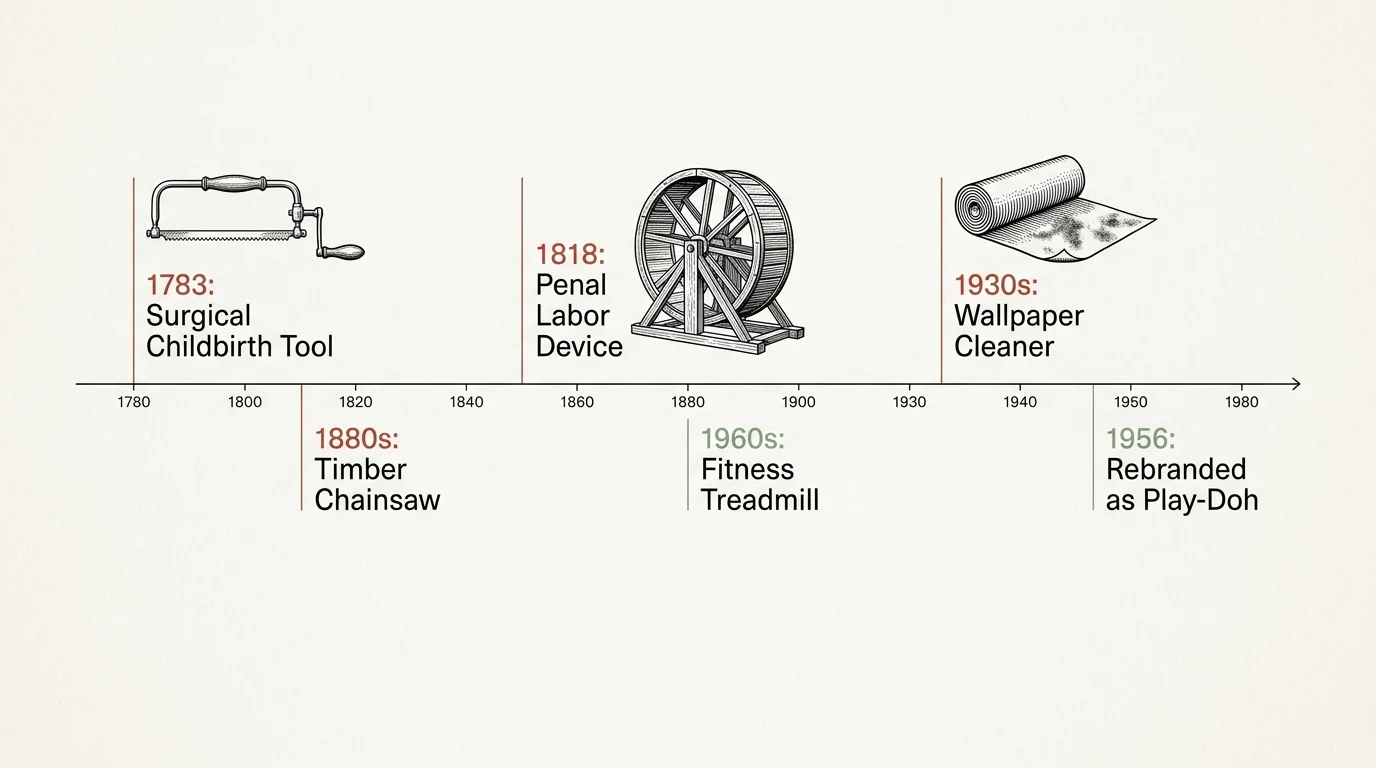
In 1783, Scottish surgeons Dr. John Aitken and Dr. James Jeffray invented the flexible hand-cranked saw to perform symphysiotomies during difficult childbirths. Timber companies only adapted this surgical tool into the modern mechanical chainsaw during the late nineteenth century.
Civil engineer Sir William Cubitt designed the treadmill in 1818 as a penal labor machine called a treadwheel to reform idle British prisoners. Inmates stepped continuously on wooden blades for long hours to power grain mills, long before fitness culture embraced the device.
English chemist John Walker accidentally invented friction matches in 1826 while scraping a chemical-coated stirring stick across his stone hearth. Recognizing its practical utility, he began selling his invention commercially as Friction Lights on April 7, 1827.
Chef George Crum created potato chips in 1853 at Moon’s Lake House in Saratoga Springs, New York, after a diner complained that his fried potatoes were too thick. Crum sliced the potatoes paper-thin and fried them crisp, unintentionally creating a massive snack industry.
Formulated by Dr. Joseph Lawrence in 1879, Listerine originally served as a surgical antiseptic and heavy-duty floor cleaner. The Lambert Pharmaceutical Company transformed it into a commercial mouthwash during the 1920s by popularizing the Latin-derived medical term halitosis in national ad campaigns.
Roberta Lawson and Mary McLaren patented an early tea filter in 1901, but tea merchant Thomas Sullivan popularized tea bags by accident in 1908. Sullivan shipped loose tea in small silk pouches, and customers mistakenly dropped the entire pouch directly into boiling water.
Noah McVicker formulated Play-Doh during the 1930s for Kutol Products to wipe coal soot off household wallpaper. After cleaner natural gas heating reduced soot in homes, nursery school teacher Kay Zufall suggested rebranding the non-toxic clay as an art toy in 1956.
General Electric chemist James Wright invented Silly Putty in 1943 while attempting to synthesize a rubber substitute for World War II supplies. Marketer Peter Hodgson bought the production rights in 1949 and began selling the bouncing material packaged inside plastic eggs for one dollar.
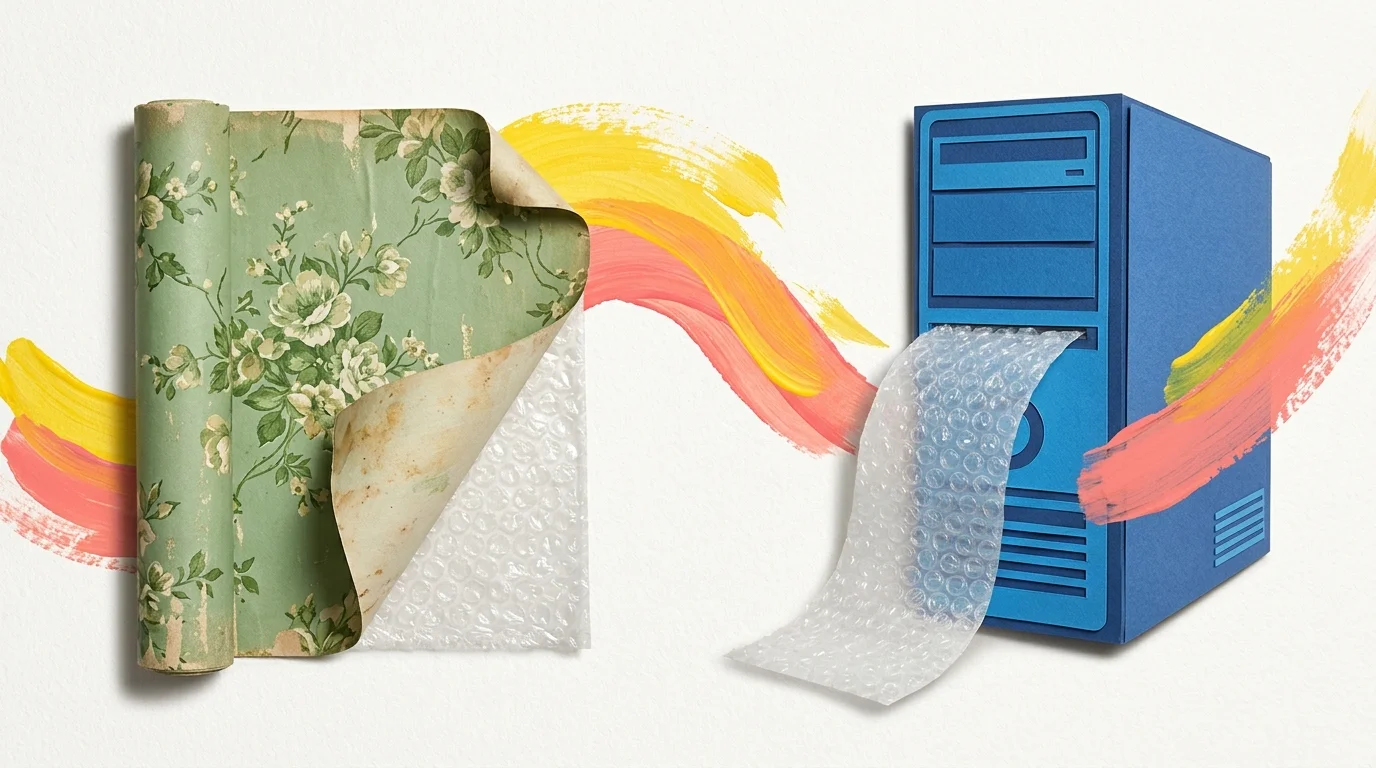
Engineers Alfred Fielding and Marc Chavannes created Bubble Wrap in 1957 by sealing two shower curtains together in an attempt to make textured wallpaper. After that market failed, they founded Sealed Air Corporation in 1960 and sold the material in 1961 to IBM as computer packing.
3M scientist Dr. Spencer Silver invented a low-tack, reusable adhesive in 1968 that executive leadership initially dismissed for its weak holding power. In 1974, fellow 3M researcher Art Fry realized the adhesive could anchor sticky bookmarks in his church hymnal, leading to Post-it Notes in 1980.
Context and Background
The Chainsaw: Surgical Roots in Childbirth
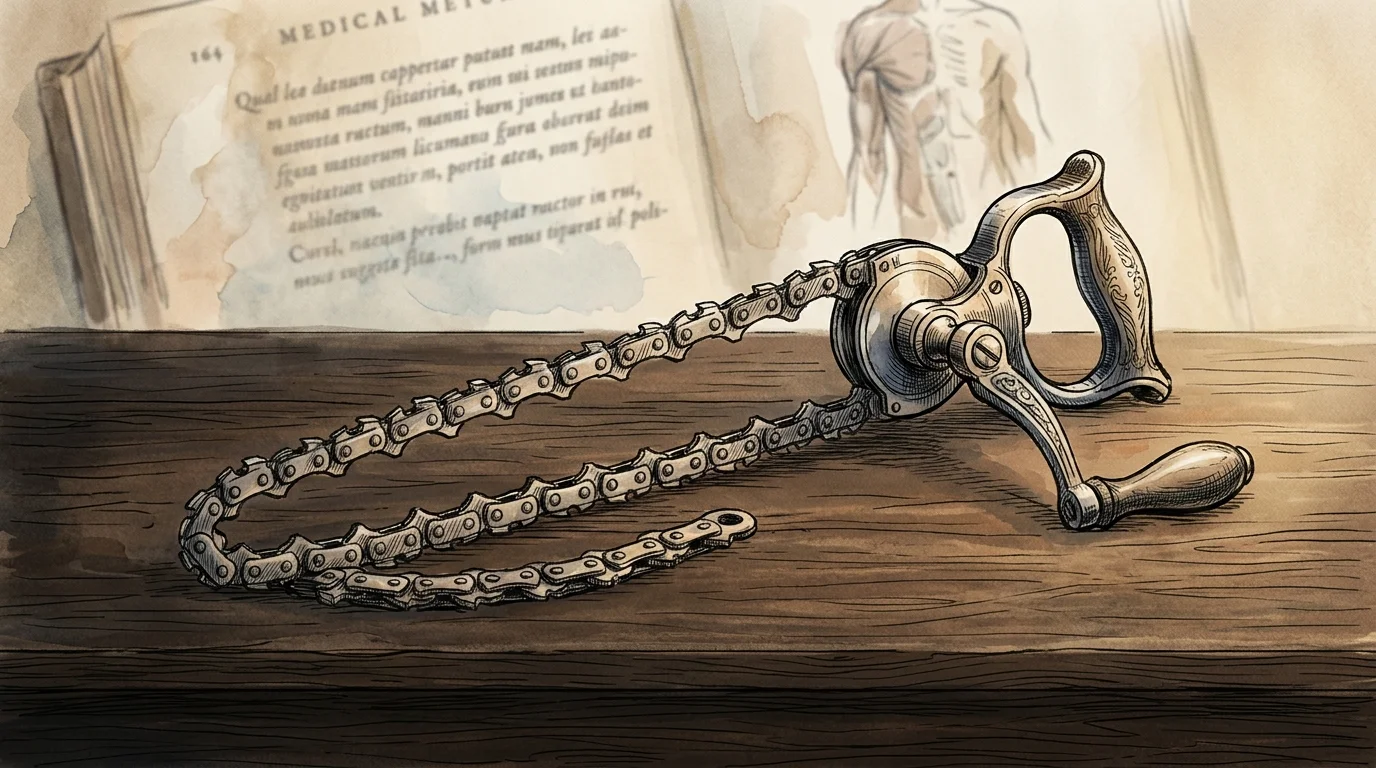
When you picture a chainsaw, you likely imagine forestry workers felling massive trees or landscape crews clearing heavy branches. However, the machine’s mechanical ancestor emerged in the medical field during the late eighteenth century. Between 1783 and 1785, Scottish surgeons Dr. John Aitken and Dr. James Jeffray developed a flexible, hand-cranked chain saw specifically for symphysiotomy—a surgical procedure used to widen the pelvic bone during obstructed childbirth. Before modern caesarean sections became safe, doctors used this fine-toothed chain mechanism to cut through cartilage and bone quickly, minimizing soft-tissue damage during emergency deliveries.
The medical community utilized hand-cranked bone saws throughout much of the nineteenth century. It was not until the late 1800s that timber entrepreneurs recognized the mechanical potential of scaling up this chain-driven cutting principle. In 1926, German engineer Andreas Stihl patented the first electric chainsaw for wood, followed closely by gas-powered mobile forestry saws. The transformation from a delicate surgical tool to a rugged industrial machine highlights how specialized biomechanical tools often seed heavy industrial innovation.
The Treadmill: Penal Labor and Treadwheel Engineering
Today, millions of people use treadmills to track steps, burn calories, and improve cardiovascular health. Yet the original device targeted prisoner discipline rather than personal wellness. In 1818, English civil engineer Sir William Cubitt designed the treadwheel to solve what British penitentiaries perceived as widespread inmate idleness. Cubitt’s design consisted of a long stepped wooden cylinder mounted horizontally; prisoners stepped continuously on external paddle blades, using their body weight to rotate the wheel while holding onto an overhead stability bar.
Inmates routinely walked the equivalent of 5,000 to 14,000 vertical feet per day on these penal machines. Wardens harnessed this kinetic energy to pump water, crush rocks, or drive grain mills—giving birth to the term treadmill. The British Prison Act eventually abolished penal treadwheels in 1902 due to their extreme physical cruelty. The concept lay dormant until the mid-twentieth century, when Dr. Kenneth Cooper published research on aerobic exercise in 1968, sparking a commercial fitness revolution that repositioned the treadmill as an essential health tool.
Friction Matches: Accidental Chemistry in a Hearth
Before the mid-1820s, starting a fire required tinderboxes, flint, steel, or dangerous chemical mixtures containing sulfur and phosphorus. In 1826, English chemist and pharmacist John Walker worked in his Stockton-on-Tees laboratory, mixing potassium chlorate, antimony sulfide, and starch with a wooden stick. As he scraped the stick against his stone hearth to remove a dried globule of the mixture, the tip suddenly burst into flame. Walker realized that friction generated sufficient thermal energy to ignite the unstable chemical coating instantly.
Recognizing the immediate practical value of his accidental discovery, Walker produced the first commercial friction matches—dubbed Friction Lights—and began selling them on April 7, 1827. Each wooden stick came packaged with folded sandpaper for striking. Although Walker deliberately chose not to patent his invention so that society could benefit freely, competitor Samuel Jones copied the formula and sold them as Lucifers. Subsequent chemical refinements, including the introduction of red phosphorus by Swedish inventor Gustaf Erik Pasch in 1844, led to the modern safety match you use today.
Potato Chips: Retaliatory Cooking at Moon’s Lake House
The origin story of the potato chip is a classic example of culinary retaliation yielding an iconic global snack. In the summer of 1853, Native American and African American chef George Crum (born George Speck) worked at Moon’s Lake House, an upscale resort in Saratoga Springs, New York. A wealthy restaurant customer repeatedly returned his French-fried potatoes, complaining that they were cut too thick, felt soggy, and lacked adequate salt. Frustrated by the diner’s insistence, Crum decided to teach the customer a lesson in passive aggression.
Crum sliced a batch of potatoes paper-thin, fried them in scorching oil until they were completely stiff and brittle, and generously covered them in salt. Instead of being offended, the patron loved the crispy treats. The restaurant added Saratoga Chips to its standard menu, and they quickly became a signature regional delicacy. By the 1920s, traveling salesman Herman Lay began marketing pre-packaged potato chips throughout the American South, establishing the distribution pipeline that turned a kitchen spite-invention into a multi-billion-dollar international snack market.
Listerine: Floor Antiseptic to Oral Health Breakthrough
In 1879, Dr. Joseph Lawrence developed a powerful chemical antiseptic named Listerine, honoring English physician Sir Joseph Lister, who pioneered sterile surgery techniques. Lawrence designed the formula—a potent mixture of menthol, eucalyptol, thymol, and methyl salicylate—as a broad-spectrum surgical disinfectant. Over the next forty years, distributors sold Listerine as an all-purpose industrial cleaner, floor scrub, hair tonic, and treatment for gonorrhea and sore throats. However, its sales remained modest until a targeted marketing campaign altered consumer behavior in the 1920s.
Gerard Lambert and the Lambert Pharmaceutical Company took over marketing in the post-World War I era and identified an untapped market niche. They combed medical journals and resurrected an obscure Latin term: halitosis, meaning bad breath. Lambert launched aggressive, fear-driven advertising campaigns depicting young singles failing to secure marriage proposals or corporate promotions due to their hidden halitosis. By framing bad breath as a socially catastrophic medical condition that required daily treatment, Listerine’s revenues grew by over 4000% between 1922 and 1929, transforming an industrial floor cleaner into a daily bathroom standard.
Tea Bags: The Shipping Sample Misunderstanding
While inventors Roberta Lawson and Mary McLaren obtained a patent in 1901 for a stitched mesh tea leaf holder, the mass commercialization of tea bags stemmed from an unexpected distribution mistake. In 1908, New York tea merchant Thomas Sullivan sought a cost-effective method to send product samples to high-profile clients. Instead of shipping traditional, expensive metal tins filled with loose leaves, Sullivan packed small portions of tea inside tiny hand-sewn silk pouches. He intended for customers to cut open the bags and pour the contents into hot water.
Many of Sullivan’s clients misunderstood the packaging. Rather than removing the loose tea leaves, they dropped the sealed silk pouches directly into hot teapots, discovering that the hot water infused the tea while keeping the messy leaves contained inside the fabric. When customers began demanding more pouched tea, Sullivan realized he had stumbled upon a game-changing product. Manufacturers soon replaced expensive silk with porous heat-sealed paper filters, creating the modern tea bag that dominates global tea logistics today.
Play-Doh: Wallpaper Soot Remover Turned Toy
During the 1930s, Cincinnati-based Kutol Products was a struggling soap company seeking a product to keep its manufacturing plant operational. Cleo McVicker secured a contract with Kroger grocery stores to supply a pliable, non-toxic cleaning putty developed by his brother, Noah McVicker. Homeowners used coal furnaces to heat their houses, which accumulated thick layers of black soot on delicate wallpaper. Rollers of Kutol’s soft dough lifted coal residue off wallpaper without tearing the paper or using water.
By the early 1950s, home heating transitioned rapidly from coal to clean-burning natural gas and electricity, destroying the market for wallpaper cleaning dough. Kutol faced bankruptcy until Kay Zufall, a nursery school teacher and sister-in-law to Kutol manager Joe McVicker, read an article about using wallpaper cleaner for children’s craft projects. She tested the pliable putty with her pre-school students, who shaped it into creative figures. Zufall persuaded Joe McVicker to strip the detergent scent, add bright colors, and rebrand the product. In 1956, Kutol introduced Play-Doh to the toy market, turning an obsolete industrial cleaner into one of the most celebrated toys in history.
Silly Putty: Synthetic Rubber and Novelty Packaging
During World War II, the Axis powers cut off crucial Allied supply lines to Asian natural rubber plantations. The United States government challenged industrial researchers to invent an effective synthetic rubber substitute for military tires, boots, and gas masks. In 1943, General Electric chemist James Wright combined silicone oil with boric acid in his New Haven laboratory. The reaction produced an unusual substance that bounced higher than natural rubber, stretched without snapping, melted into a liquid state when left idle, and transferred newsprint ink onto its surface.
Despite these fascinating physical traits, the material lacked the structural strength required for military gear or vehicle tires. Wright stored the bouncing silicone compound away as a practical failure. In 1949, toy store owner Ruth Fallgatter and copywriter Peter Hodgson spotted the material at a party. Hodgson recognized its entertaining nature, borrowed $147, purchased rights to the compound, and packaged one-ounce globs inside bright plastic egg containers. He named it Silly Putty and launched it in time for Easter, creating a lasting pop-culture phenomenon out of a strategic wartime failure.
Bubble Wrap: Failed 3D Wallpaper to IBM Protection
In 1957, Swiss engineer Marc Chavannes and American engineer Alfred Fielding attempted to design a stylish, easily washable textured wallpaper for contemporary homes. They ran two plastic shower curtains through a heat-sealing machine, intending to trap a layer of decorative pattern between them. Instead, the machine trapped small air pockets throughout the sealed plastic sheets. When home decor markets rejected three-dimensional air-bubble wallpaper, the inventors tried selling the lightweight material as greenhouse insulation, which also failed to gain traction.
Refusing to abandon their patent, Fielding and Chavannes founded Sealed Air Corporation in 1960. The turning point arrived in 1961 when IBM announced its new mass-produced electronic computers and delicate mainframe components. Realizing that the trapped air pockets absorbed kinetic shocks exceptionally well, Sealed Air pitched the material to IBM as custom protective cushioning for sensitive freight shipments. IBM adopted Bubble Wrap immediately, triggering a revolution in fragile freight shipping and establishing a protective material that now underpins global e-commerce.
Post-it Notes: Weak Adhesive and Hymnal Bookmarks
In 1968, Dr. Spencer Silver, a senior research chemist at 3M, worked to synthesize a super-strong adhesive for aircraft construction. Instead, his experiments yielded microspheres that held onto surfaces gently without forming a permanent physical bond. The weak adhesive stuck easily to surfaces, peeled away cleanly without leaving chemical residue, and could be reused multiple times. Silver promoted his removable adhesive internally at 3M for five years, but company executives saw no commercial market for a glue that lacked high tensile strength.
The breakthrough occurred in 1974 thanks to Art Fry, another 3M scientist who attended Silver’s internal seminars. Fry sang in his local church choir and grew frustrated when paper bookmarks repeatedly fell out of his hymnal during services. Remembering Silver’s weak adhesive, Fry coated small strips of paper with the substance to anchor his bookmarks. The markers stayed firmly in place yet peeled off easily without damaging the delicate hymnal pages. After a successful trial run in Boise, Idaho, known as the Press ‘n Peel campaign, 3M released Post-it Notes nationally in 1980, creating an indispensable organizational tool.
Interesting Connections
When you analyze these ten origin stories side by side, common patterns emerge that reveal how real-world innovation actually unfolds. First, failure and pivot are recurring themes in invention history. Major commercial breakthroughs like Post-it Notes, Silly Putty, and Bubble Wrap were initially cataloged as technical or commercial failures. In each case, creators achieved success not by forcing an original, flawed concept, but by observing the unique physical characteristics of their materials and identifying entirely new markets.
Second, consumer behavior often redefines a product’s primary intended function. Thomas Sullivan shipped tea samples in silk bags purely for packaging economy, but consumers redefined the pouch as an extraction device. Similarly, Dr. Joseph Lawrence created Listerine as a floor cleaner and surgical scrub, but Lambert Pharmaceutical reshaped public perception by positioning it as an indispensable defense against bad breath. In both instances, practical user habits and behavioral marketing eclipsed the original design intent.
Finally, these historical examples underscore the surprising crossover between heavy industry, healthcare, and everyday household items. The mechanical principles behind surgical instruments designed for childbirth paved the way for industrial timber clearing; materials created to scrub coal soot off walls transitioned into childhood art supplies. Understanding these fun history trivia examples gives you a fresh perspective on modern products; the items sitting on your desk or in your kitchen cabinet today may very well evolve into completely unrecognizable tools tomorrow.
Frequently Asked Questions
Why did so many modern toys originate from failed industrial materials?
Industrial development processes routinely generate materials with unexpected physical properties—such as extreme flexibility, non-toxic elasticity, or low adhesion—that fail to meet strict industrial or military specifications. However, those exact traits, such as non-toxicity, malleability, and vibrant tactile feedback, make ideal characteristics for children’s toys. Marketers like Peter Hodgson (Silly Putty) and Joe McVicker (Play-Doh) recognized that changing the target demographic from factory floors to playrooms could turn an industrial failure into an engaging toy.
How did early marketing campaigns change consumer behavior around household items?
Early twentieth-century marketing shifted from presenting basic product utility to solving perceived social anxieties. Listerine provides a quintessential example by introducing the medicalized term halitosis to convince consumers that natural body odors were socially unacceptable. By positioning their product as an essential remedy for personal acceptance and professional success, manufacturers transformed niche chemical formulas into daily personal hygiene rituals.
Why were so many famous inventions discovered by accident?
Accidental discoveries—such as John Walker’s friction match or Thomas Sullivan’s tea bag—happen because real-world chemical reactions and human user behaviors often bypass original theoretical assumptions. Scientists and inventors working in laboratories regularly produce unexpected byproducts. The key to successful innovation is not avoiding mistakes, but recognizing when an unintended outcome offers greater practical value than the original target objective.
What practical lessons can modern entrepreneurs learn from these origin stories?
These historical origin stories demonstrate that product versatility and market flexibility are more important than sticking rigidly to an initial design. When developing new products or solutions, pay close attention to unexpected side effects, alternative user habits, and feedback from outside industries. As demonstrated by Spencer Silver’s weak adhesive at 3M or Alfred Fielding’s failed wallpaper, a product’s greatest commercial strength often lies in the exact characteristic you initially viewed as a flaw.
