

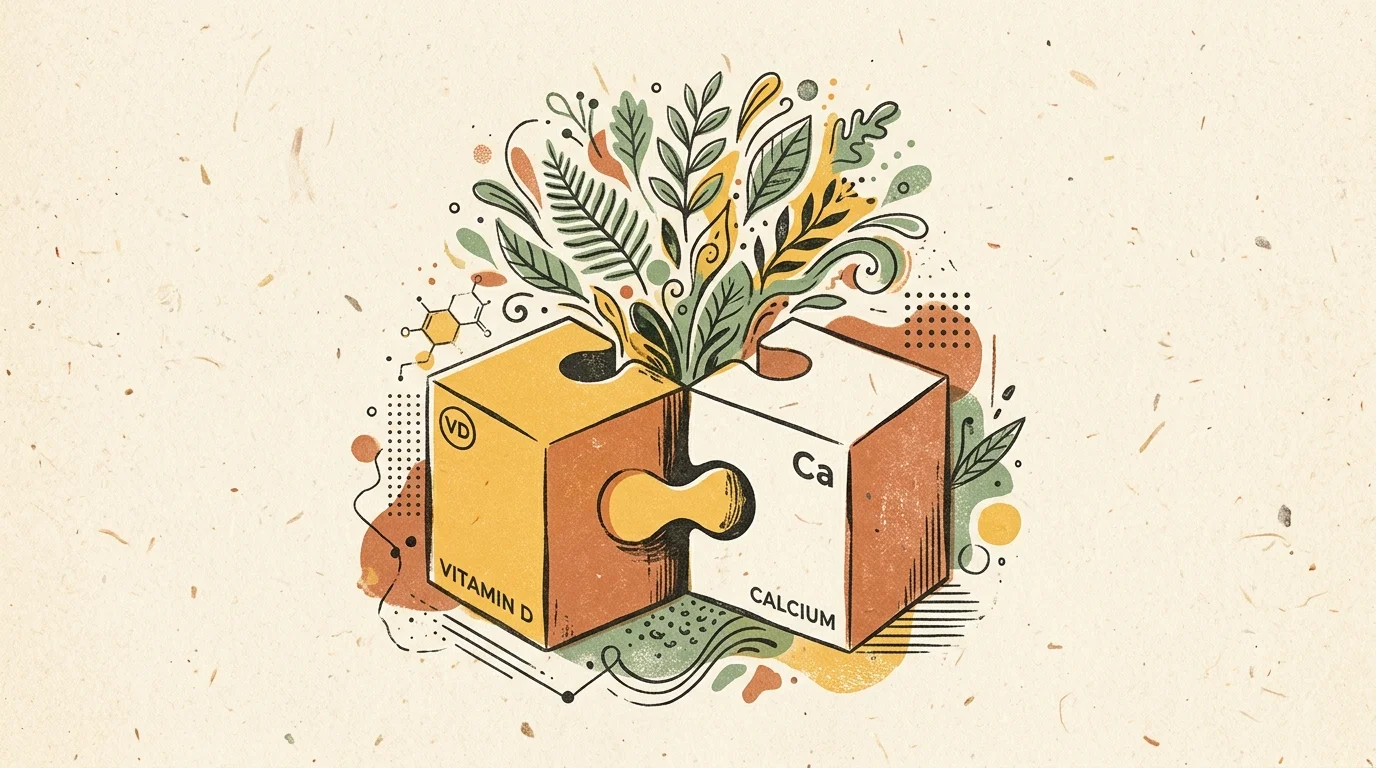
Combining specific vitamins and minerals dramatically transforms how your body absorbs and utilizes essential nutrients. When you pair complementary nutrients together—such as vitamin D with calcium or non-heme iron with vitamin C—you unlock biochemical synergies that can increase absorption rates by over three hundred percent. Taking supplements in isolation often leads to wasted nutrients or gastrointestinal excretions, whereas strategic nutrient pairs optimize cellular uptake, support bone density, and enhance metabolic health. Understanding these key nutrient absorption pairs allows you to make smarter dietary choices and build a targeted supplement routine that delivers maximum biological benefits.
Fast Facts
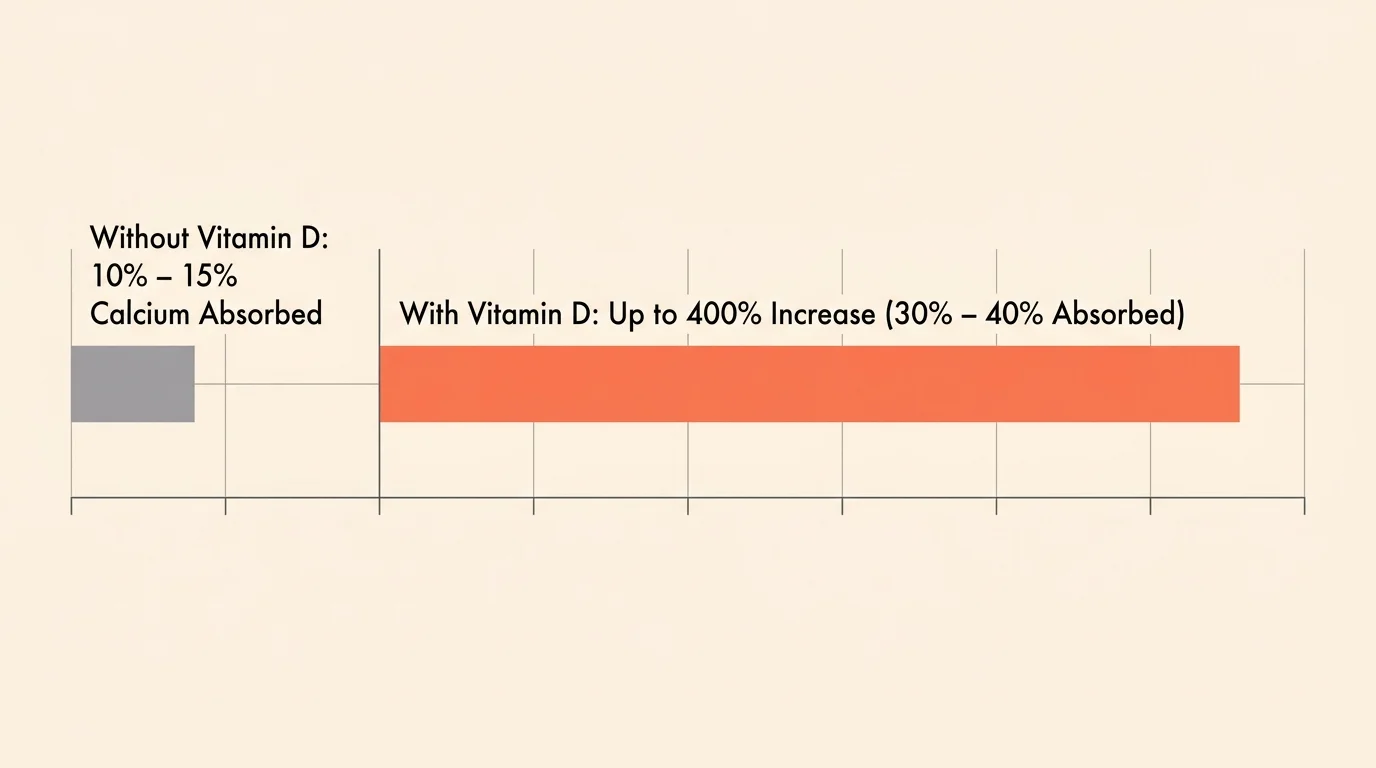
Vitamin D elevates intestinal calcium uptake by up to four hundred percent. Without adequate active vitamin D in your system, your small intestine absorbs a mere 10% to 15% of the calcium you consume. Maintaining optimal vitamin D status upregulates calbindin synthesis in your enterocytes, raising your calcium absorption efficiency to roughly 30% to 40% while supporting structural bone mineralization.
Vitamin D3 and vitamin K2 direct calcium into your skeleton while protecting your arteries. While vitamin D mobilizes calcium from your gut into circulation, vitamin K2 activates matrix Gla protein to inhibit arterial calcification; simultaneously, K2 carboxylates osteocalcin, anchoring calcium directly into your bone matrix rather than letting it accumulate in soft vascular tissues.
Vitamin C multiplies plant-based non-heme iron absorption by up to four hundred percent. Plant foods contain non-heme iron in its insoluble ferric form (Fe3+), which your body struggles to take up. Ascorbic acid donates an electron to convert ferric iron into soluble ferrous iron (Fe2+), while simultaneously forming a soluble chelate that protects iron from binding with dietary phytates.
Magnesium acts as an indispensable enzymatic cofactor needed to convert vitamin D into its active hormone form. Unprocessed vitamin D from sunlight or supplements remains biologically inactive until liver and kidney enzymes convert it into circulating 25-hydroxyvitamin D and active 1,25-dihydroxyvitamin D; because these key enzymes depend entirely on magnesium, unaddressed magnesium deficits severely impair vitamin D activation.
Vitamin C continuously regenerates oxidized vitamin E to maintain your cellular antioxidant defenses. When fat-soluble vitamin E quenches free radicals inside cell membranes, it undergoes oxidation and loses its protective capability. Water-soluble vitamin C steps in at the membrane boundary, donating an electron to regenerate vitamin E back into its active form so it can repeatedly defend lipid structures.
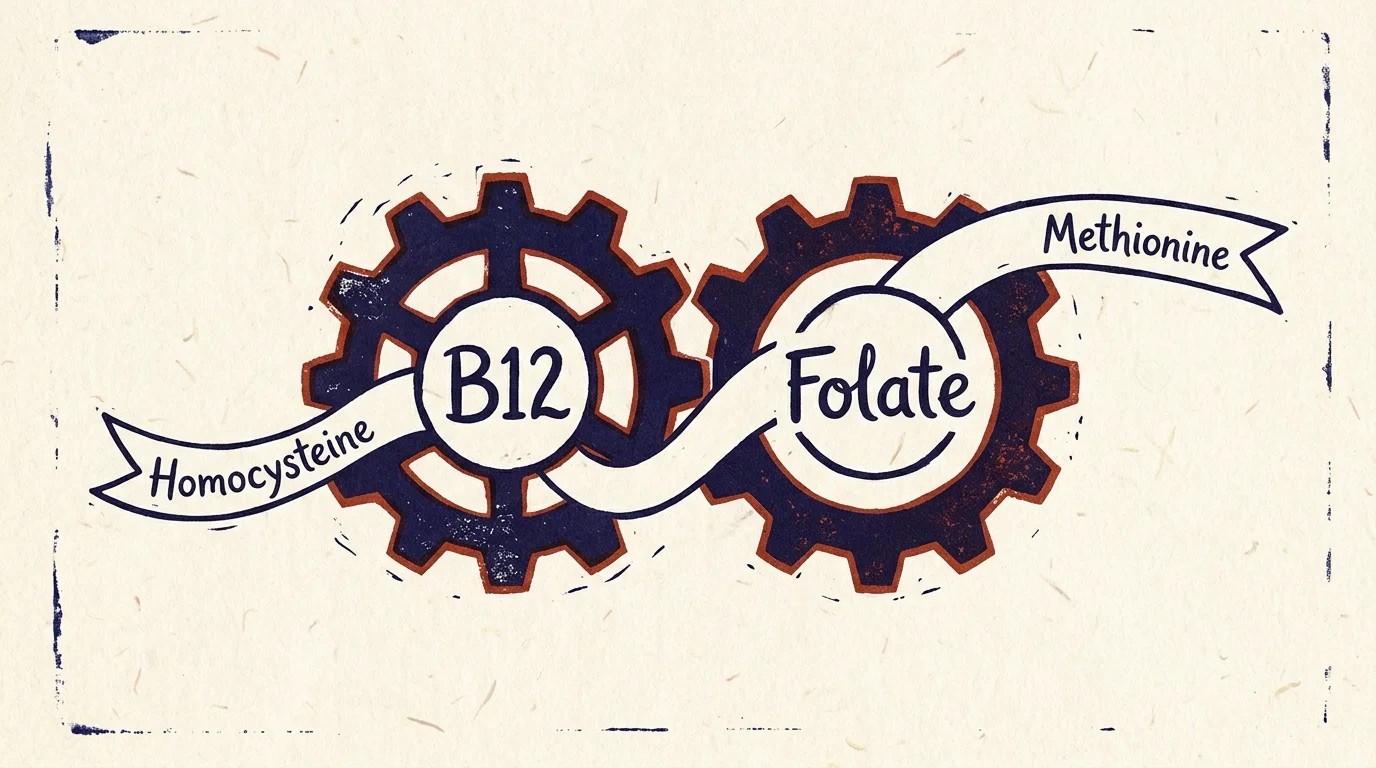
Vitamin B12 and folate work together in a tightly coupled metabolic loop to control homocysteine. Both nutrients serve as crucial cofactors for methionine synthase, an enzyme that converts cardiovascular-damaging homocysteine into essential methionine. Deficiencies in either vitamin stall cell division, disrupt DNA synthesis, and trigger macrocytic anemia alongside elevated cardiovascular risks.
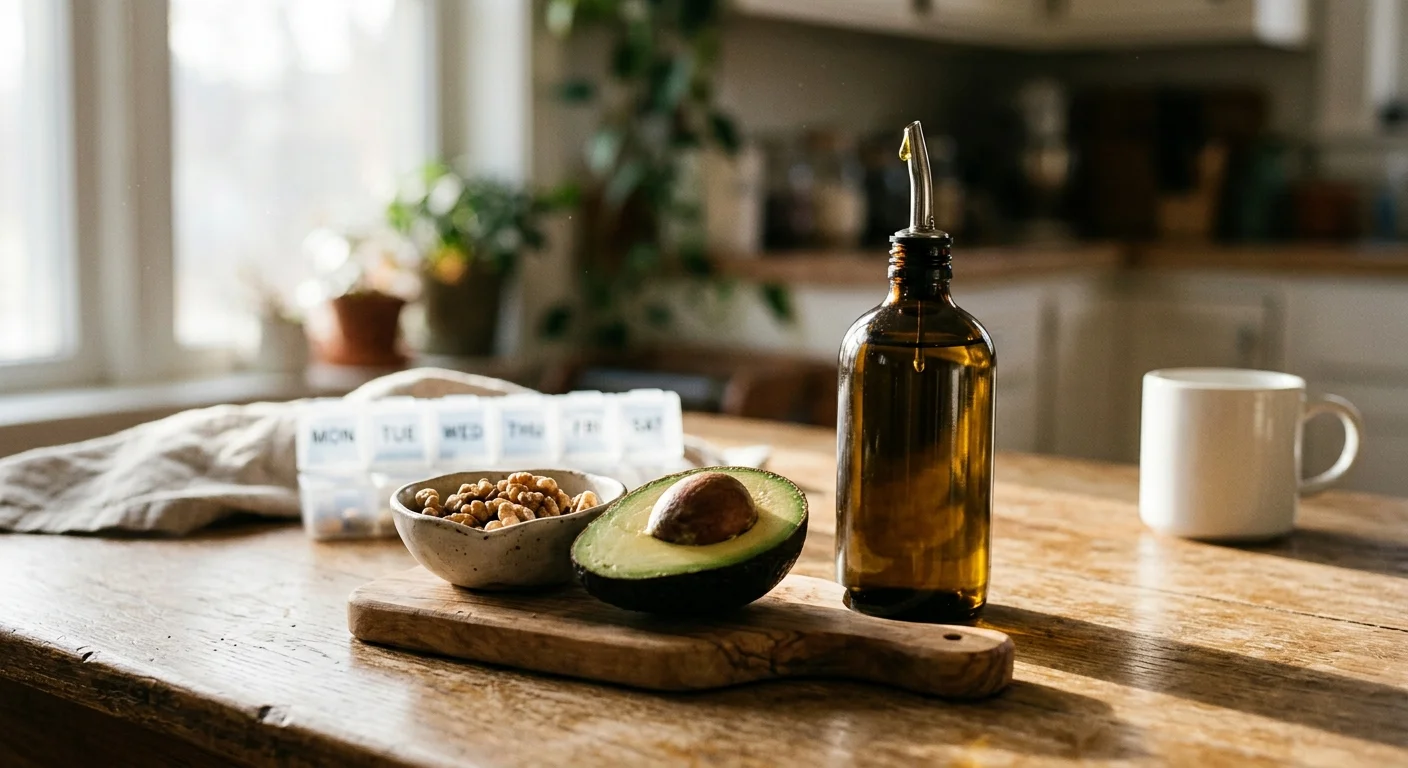
Consuming fat-soluble vitamins alongside healthy lipids increases nutrient uptake up to fivefold. Vitamins A, D, E, and K require dietary fat to trigger cholecystokinin secretion and bile acid release. Ingesting these vitamins with just three to five grams of healthy fats creates mixed micelles in your intestine, enabling enterocytes to absorb fat-soluble compounds efficiently.
Zinc produces the primary transport proteins required to mobilize and activate vitamin A. Your liver relies on zinc-dependent enzymes to synthesize retinol-binding protein, which carries stored vitamin A through your bloodstream. Additionally, zinc fuels the enzymatic reaction converting retinol into retinal, the exact molecular compound your retina requires for low-light vision and cellular differentiation.
Piperine from black pepper extract boosts the oral bioavailability of curcumin by two thousand percent. Curcumin undergoes rapid metabolic breakdown through glucuronidation in your liver and intestinal wall, resulting in low system availability. Piperine temporarily inhibits these specific glucuronidation enzymes, allowing active curcuminoids to enter your bloodstream intact and exercise systemic antioxidant actions.
Zinc and copper share the same intestinal transporter, making balanced mineral intake essential. Excessive zinc supplementation stimulates enterocytes to synthesize metallothionein, a specialized protein that binds copper tightly and prevents its absorption. Maintaining a balanced ratio of roughly ten parts zinc to one part copper ensures robust antioxidant enzyme activity without triggering induced copper deficiency.
Potassium counterbalances sodium to regulate cellular membrane potential and vascular health. Your cellular membranes rely on sodium-potassium ATPase pumps, moving three sodium ions outward for every two potassium ions drawn inward. Maintaining adequate potassium alongside moderate sodium stabilizes vascular smooth muscle tension, supports normal blood pressure, and preserves fluid distribution across intracellular compartments.
Vitamin C acts as an obligatory co-substrate for enzymes that assemble structural collagen. The enzymes prolyl hydroxylase and lysyl hydroxylase require ascorbic acid alongside iron to convert proline and lysine into hydroxyproline and hydroxylysine. Without adequate vitamin C, your body produces defective collagen molecules, leading to fragile blood vessels, joint instability, and impaired wound healing.
Context and Background
Understanding how nutrients interact inside your digestive tract and cellular machinery changes how you approach daily nutrition. When you consume foods or dietary supplements, your body does not view nutrients as isolated chemicals. Instead, complex biochemical pathways determine how effectively your enterocytes absorb each compound, transport it through your bloodstream, and convert it into active hormonal or enzymatic forms. Exploring the principles behind nutrient absorption pairs reveals why combining targeted vitamins yields dramatically superior health outcomes compared to random supplementation.
The Physiology of Intestinal Bioavailability
Bioavailability refers to the proportion of a nutrient that successfully enters your systemic circulation and reaches its intended biological site of action. Intestinal enterocytes utilize distinct transport mechanisms, ranging from simple passive diffusion to energy-dependent active transport proteins. For instance, the combination of vitamin d and calcium highlights how active transport dominates mineral uptake; vitamin D triggers genomic transcription of calbindin-D9k, a cytosolic protein that carries calcium across enterocytes into your capillaries. Without this active transport cascade, your body relies on inefficient passive diffusion, leaving most dietary calcium unabsorbed in your digestive tract.
Chemical Reduction and Competitive Binding in the Gut
Inside your stomach and small intestine, nutrients constantly interact with dietary inhibitors and promoters. Non-heme iron offers a classic example of chemical reduction in action. Plant-based iron enters your digestive system in the oxidized ferric state, which precipitates easily in the alkaline environment of the duodenum. When you pair non-heme iron with ascorbic acid, vitamin C reduces ferric iron into the highly soluble ferrous form while forming a protective chelate. This chelate prevents anti-nutrients like phytic acid in whole grains and polyphenols in tea from binding to iron. Consequently, understanding vitamin combinations that work together prevents dietary antagonists from blocking vital mineral uptake.
Enzymatic Activation and Systemic Conversion Pathways
Many vitamins arrive in your body as inactive precursor molecules that require multi-stage enzymatic processing. Sunlight exposure or oral supplementation provides cholecalciferol, but your liver must first convert it into 25-hydroxyvitamin D, followed by renal conversion into 1,25-dihydroxyvitamin D. Every step in this activation pipeline requires magnesium-dependent hydroxylase enzymes. If your system lacks sufficient magnesium, intermediate vitamin D molecules remain trapped without converting into their biologically active hormone form. Similarly, zinc-dependent enzymes govern the conversion of retinol into retinal in visual pathways. These biochemical relationships underline why systemic health demands precise nutrient co-factors rather than megadoses of single compounds.
Transporter Saturation and Mineral Inhibition
While proper nutrient pairing accelerates absorption, unguided high-dose supplementation can inadvertently cause nutrient competitive inhibition. Trace minerals such as zinc, iron, copper, and calcium often rely on shared transport receptors, including divalent metal transporter 1 (DMT1). Flooding your intestinal lumen with massive single doses of calcium can temporarily block iron binding sites, while excessive zinc triggers intracellular metallothionein production that traps dietary copper. Learning how to navigate these shared pathways allows you to implement smart timing strategies and achieve the best vitamin pairings without triggering unintended nutritional deficits.
Interesting Connections
The intricacies of nutrient synergy extend far beyond simple digestion; they reflect deep evolutionary biology and intricate cellular recycling mechanisms. By examining how natural food matrices supply integrated co-factors, you can optimize your routine using practical supplement synergy tips. These broader biological connections demonstrate why targeted vitamin pairings protect long-term metabolic, skeletal, and cardiovascular health.
Evolutionary Diets and Natural Food Matrices
Human physiology evolved to thrive on whole foods that naturally supply complementary nutrient networks. Fatty fish such as wild salmon contain a perfect combination of vitamin D3, omega-3 fatty acids, and selenium, which together optimize lipid-soluble uptake and cellular membrane integration. Similarly, dark leafy greens pair non-heme iron with vitamin C and magnesium, while organ meats provide a rich complex of preformed vitamin A, zinc, copper, and B vitamins. Modern food processing strips away these synergistic co-factors, making deliberate food pairing and strategic supplementation essential for recreating optimal nutrient delivery.
The Calcium Paradox: Balancing Vitamin D3, K2, and Vascular Health
For decades, nutrition science emphasized taking high-dose calcium alongside vitamin D to prevent osteoporosis. However, clinical studies revealed an unexpected phenomenon known as the calcium paradox: excess calcium intake without sufficient vitamin K2 can increase arterial plaque formation without meaningfully improving bone mineral density. Vitamin D stimulates calcium absorption and increases production of osteocalcin and matrix Gla protein. Yet, these proteins remain functionally inactive until vitamin K2 adds a carboxyl group to their structure. Activated matrix Gla protein inhibits vascular smooth muscle calcification, while carboxylated osteocalcin draws calcium directly into the hydroxyapatite matrix of your bones and teeth.
The Cellular Antioxidant Recycling Cascade
Antioxidant protection in your body relies on a continuous electron-transfer network rather than isolated nutrients working alone. When lipid-soluble vitamin E quenches reactive oxygen species within cell membranes, it undergoes oxidation to become a tocopheryl radical. Water-soluble vitamin C residing in the adjacent intracellular fluid donates an electron to reduce the tocopheryl radical back into functional vitamin E. Subsequently, intracellular glutathione reduces the oxidized vitamin C, and NADPH regenerates glutathione. This biochemical relay race preserves cellular membranes, prevents lipid peroxidation, and maximizes antioxidant efficiency using minimal nutrient quantities.
Gut Microbiome Modulation and Nutrient Bioavailability
Your gut microbiome acts as an active metabolic organ that influences nutrient absorption and converts dietary precursors into active forms. Intestinal bacteria synthesize significant amounts of natural vitamin K2 (menaquinones) and various B vitamins, including folate and biotin. Furthermore, beneficial gut bacteria metabolize dietary polyphenols into smaller bioavailable molecules, while short-chain fatty acids like butyrate lower luminal pH, increasing the solubility and absorption of minerals like calcium and magnesium. Maintaining a healthy microbiome through dietary fiber intake directly enhances the efficacy of your daily vitamin pairing strategies.
Frequently Asked Questions
Can you take vitamin D and calcium together at the exact same meal?
Yes, taking vitamin d and calcium together at the same meal is highly beneficial and recommended. Vitamin D stimulates enterocytes in your small intestine to produce calcium transport proteins, raising calcium absorption from 10-15% up to 30-40%. To maximize safety and cardiovascular protection, pair this combination with vitamin K2 and take it alongside a meal containing healthy dietary fats.
Should you always take fat-soluble vitamins with meals containing fat?
You should always take fat-soluble vitamins—specifically vitamins A, D, E, and K—with a meal that contains at least three to five grams of dietary fat. Lipids trigger your gallbladder to release bile acids, forming mixed micelles that transport these vitamins across your intestinal mucosa. Taking fat-soluble vitamins on an empty stomach drastically reduces their absorption efficiency by up to five hundred percent.
How do coffee and tea affect nutrient absorption pairs?
Coffee and tea contain polyphenols, tannins, and chlorogenic acids that bind to dietary minerals and inhibit their absorption. Tannins bind tightly to non-heme iron, reducing its absorption by up to 60% to 90%, while caffeine can mildly interfere with vitamin D receptor expression and calcium conservation. To protect your nutrient uptake, drink coffee or tea at least one hour before or two hours after taking mineral supplements.
Will high doses of zinc trigger a copper deficiency over time?
Chronic high-dose zinc supplementation exceeding 50 milligrams per day stimulates intestinal enterocytes to synthesize metallothionein, a binding protein with a high affinity for copper. Metallothionein traps dietary copper inside enterocytes, which are subsequently sloughed off and excreted, leading to induced copper deficiency, anemia, and neurological issues. Maintain a zinc-to-copper ratio of roughly 10:1 to keep both minerals balanced safely.
What is the best way to separate competing mineral supplements?
To avoid competitive inhibition at shared intestinal receptor sites like DMT1, separate large doses of competing minerals by at least two hours. For example, take your iron supplement in the morning with citrus juice containing vitamin C, and reserve high-dose calcium or magnesium supplements for your afternoon or evening meal. Spacing out competing minerals ensures maximum receptor availability and optimal absorption efficiency.
