

Discovering the hidden mechanisms of the natural world transforms how you perceive everyday wildlife encounters and deepens your appreciation for Earth’s biodiversity. Learning these thirty astonishing animal facts provides you with a rich understanding of evolutionary biology and practical ecological insights. You will explore remarkable survival strategies, uncover bizarre anatomical anomalies, and examine complex social behaviors that challenge conventional scientific wisdom. Grasping these intricate details allows you to comprehend the delicate balance of global ecosystems and the relentless innovation of natural selection. Equip yourself with this specialized knowledge to better advocate for conservation efforts and recognize the profound complexity thriving in every corner of the planet.
Fast Facts
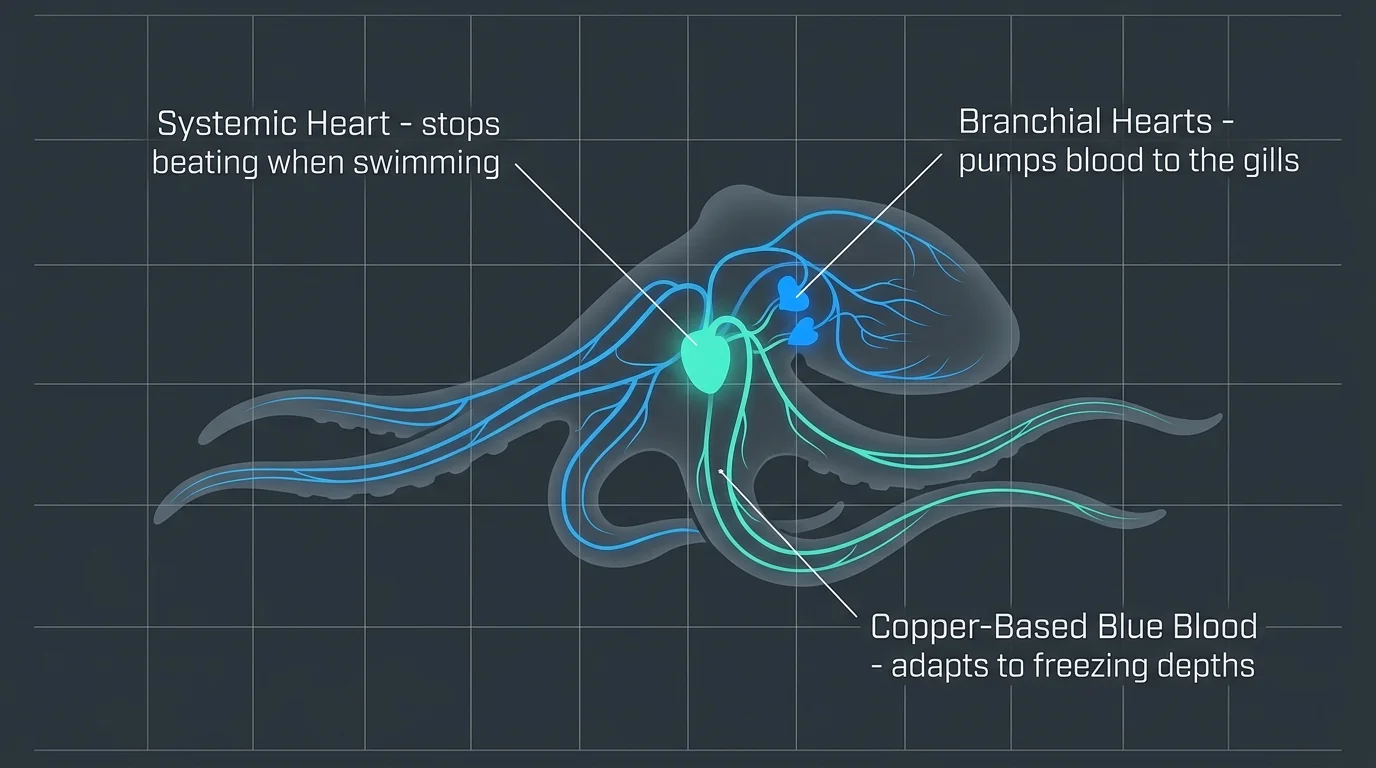
Octopuses possess three hearts and pump copper-based blue blood through their bodies to survive in freezing, oxygen-depleted ocean depths. Two of these hearts exclusively pump blood to the gills for oxygenation, while the third circulates the enriched blood to the rest of the body; however, this systemic heart actually stops beating when the animal swims, which explains why they prefer crawling to conserve energy.
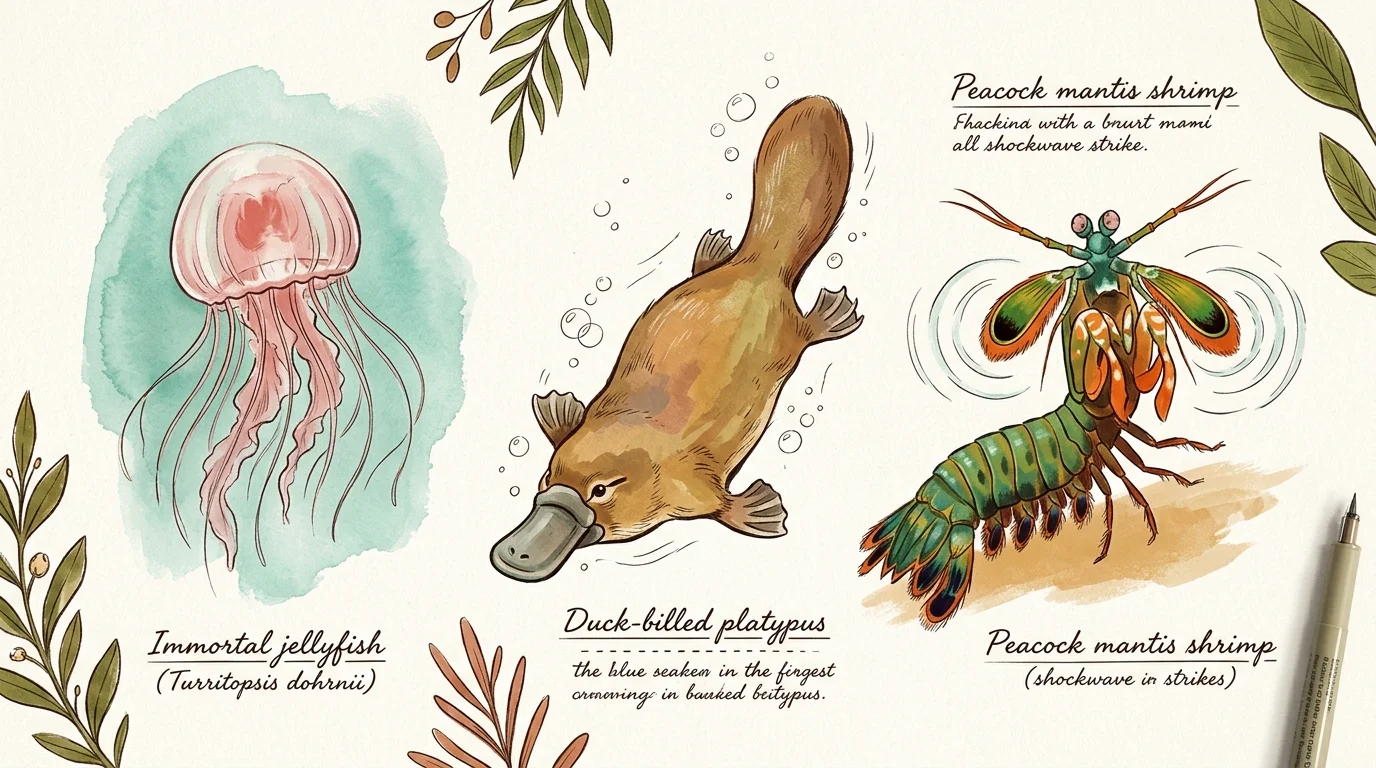
The peacock mantis shrimp strikes its prey with club-like appendages that accelerate faster than a bullet fired from a handgun. This astonishing underwater punch boils the surrounding water and creates cavitation bubbles that collapse with a flash of light, delivering a secondary shockwave that stuns crabs and snails even if the initial physical strike misses its target.
Wombats are the only known creatures on the planet that excrete cube-shaped feces, a unique biological quirk resulting from the highly elastic nature of their intestinal tracts. Because these nocturnal marsupials use their droppings to mark territory on rocks and logs, the cubic shape prevents the dung from rolling away, ensuring their communicative scent markers remain exactly where intended.
Turritopsis dohrnii, widely recognized as the immortal jellyfish, can biologically reverse its aging process when faced with physical damage, starvation, or environmental stress. Instead of dying, the adult medusa transforms its cells back into a youthful polyp stage and restarts its life cycle from the beginning, offering scientists incredible insights into cellular regeneration and theoretical biological immortality.
A platypus does not have a stomach; its esophagus connects directly to its intestines. Evolutionary biologists believe this bizarre digestive layout emerged because the modern platypus consumes a simple diet of soft-bodied aquatic invertebrates, rendering the complex, acid-producing stomach of its ancient ancestors completely unnecessary for breaking down its daily meals.
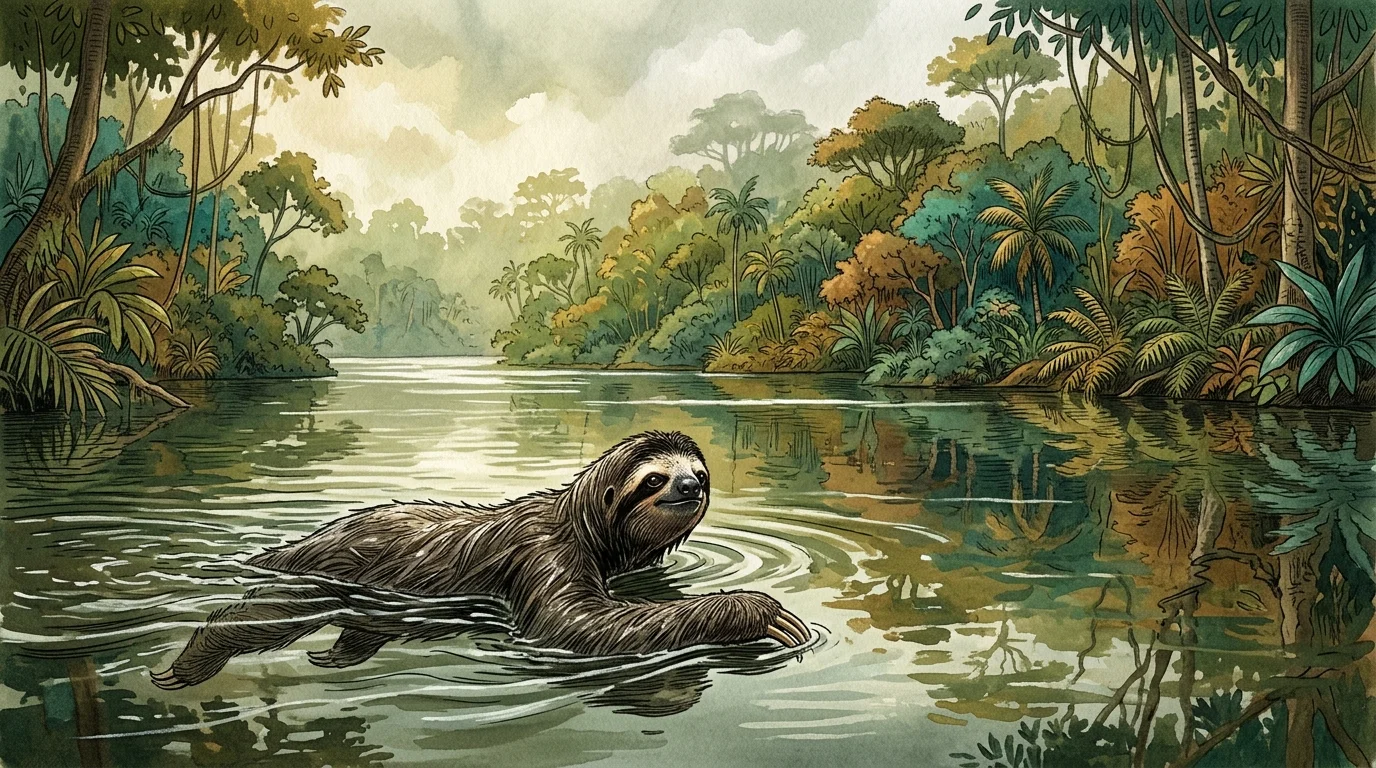
Three-toed sloths can hold their breath underwater for up to forty minutes, which is astonishingly longer than many marine mammals, including dolphins. By intentionally slowing their exceptionally sluggish heart rates down to one-third of their normal resting pace, sloths significantly reduce their oxygen consumption, allowing them to swim effortlessly across tropical rivers to find new foraging grounds.
Elephants remain the only mammals completely incapable of jumping because of their massive body weight and the unique bone structure of their heavily muscled legs. Unlike other animals, all four of an elephant’s legs point downward and lack the flexible ankle joints required to push off the ground, but they compensate for this by maintaining at least one foot on the earth at all times while walking.
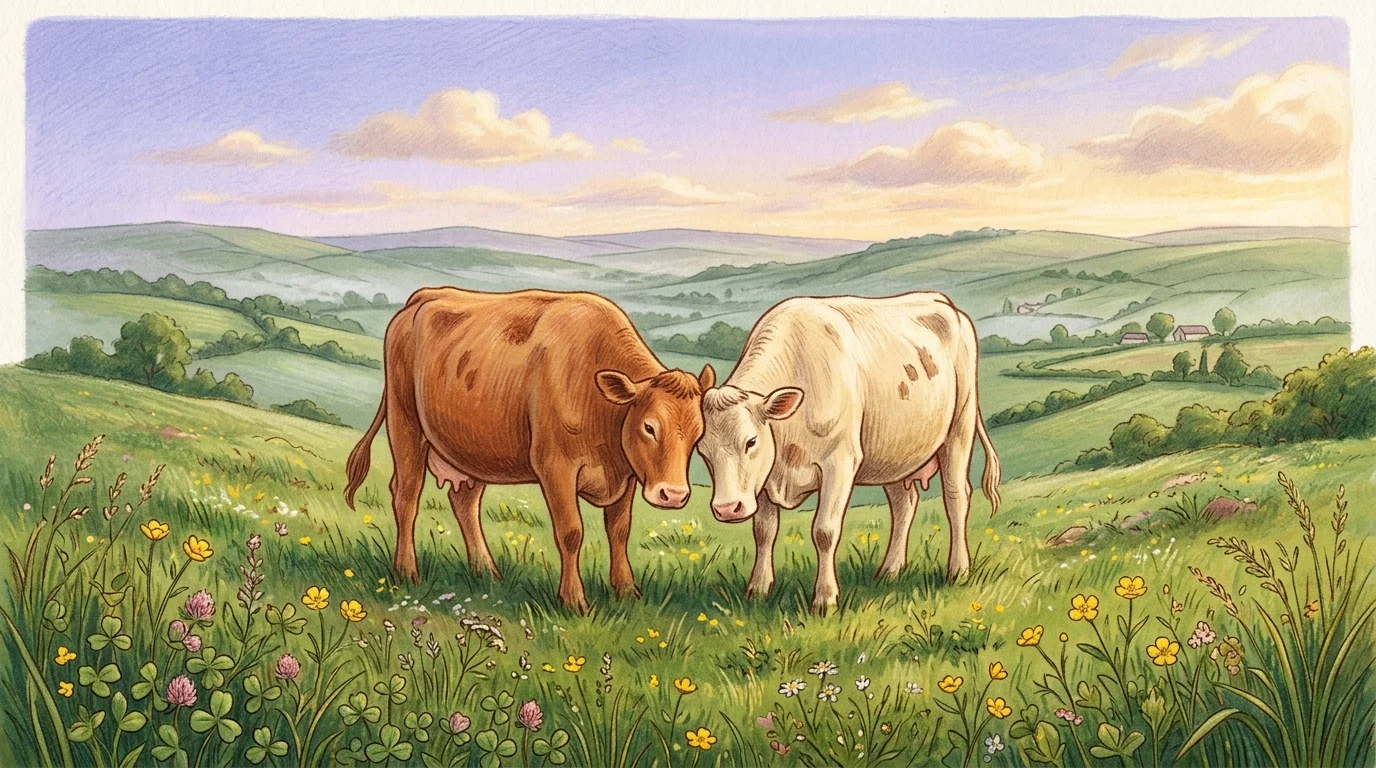
Cows form deep, lifelong friendships and experience severe physiological stress when separated from their preferred social companions. Heart rate monitoring and cortisol tests demonstrate that bovine stress levels drop significantly when they graze alongside their best friends, highlighting a complex emotional capacity that demands better ethical considerations in modern agricultural practices.
Axolotls exhibit an unparalleled capacity for regeneration, easily regrowing severed limbs, crushed spinal cords, and even missing pieces of their heart and brain without any permanent scarring. Medical researchers study these neotenic salamanders extensively to unlock the genetic secrets behind tissue regeneration, hoping to eventually apply these biological mechanisms to human wound healing and complex organ repair.
The snapping claw of the pistol shrimp closes with such extreme velocity that it shoots a jet of water at sixty miles per hour. This rapid movement generates a low-pressure cavitation bubble that, upon imploding, produces a localized temperature briefly rivaling the surface of the sun and a sharp acoustic crack loud enough to instantly kill small fish.
Context and Background
Examining the anatomical and physiological adaptations of species provides profound insights into wildlife facts that frequently defy human intuition. For instance, despite having a neck that can reach up to six feet in length, a giraffe possesses exactly seven cervical vertebrae—the exact same number found in the human neck. The structural difference stems from the massive elongation of each individual bone, allowing giraffes to browse leaves from towering acacia trees while maintaining the fundamental mammalian skeletal blueprint.
In the freezing forests of North America, the wood frog survives the brutal winter by allowing nearly seventy percent of the water in its body to turn into solid ice. It floods its bloodstream with high concentrations of glucose, which acts as a natural biological antifreeze, protecting its vital organs from cellular damage even while its heart completely stops beating for months. Once the spring thaw arrives, the frog simply thaws out and resumes its normal activities, providing cryobiologists and researchers at the National Geographic Society with vital data for organ preservation technologies.
Avian intelligence constantly forces researchers to reevaluate how animals process their environments, particularly when studying corvids. Crows possess highly advanced facial recognition abilities and will explicitly remember a human face associated with a threatening event for several years. Furthermore, they communicate this danger to their flock, passing generational grudges down to younger birds who will scold and dive-bomb the specific individual without ever having directly interacted with them.
When looking at the complex communication systems of insects, honeybees perform a highly intricate waggle dance to relay geographic coordinates to their hive mates. By moving in a figure-eight pattern and vibrating their bodies, scout bees communicate the precise distance, direction, and quality of a nectar source relative to the position of the sun. You can observe how this decentralized decision-making process ensures the survival of the colony by efficiently allocating foraging resources without central leadership.
Marine environments foster equally fascinating survival behaviors, such as the endearing habits of sea otters. To prevent themselves from drifting apart in turbulent ocean currents while sleeping, sea otters hold hands, forming large communal rafts that sometimes consist of hundreds of individuals. They also utilize rocks as primitive tools to crack open hard-shelled prey, wrapping themselves tightly in dense kelp forests to anchor their bodies securely against the surging coastal tides.
In the realm of physical anomalies, koalas share an astonishing anatomical similarity with humans: they possess unique fingerprints. Under an electron microscope, the friction ridges on a koala’s hands are virtually indistinguishable from human fingerprints, an evolutionary trait likely developed to enhance their grip on rough eucalyptus branches. Police forensics experts have historically noted how easily a koala’s prints could contaminate a human crime scene, illustrating a remarkable instance of convergent evolution across vastly different mammalian lineages.
The life cycles of marine bivalves reveal staggering flexibility, specifically in how oysters manage their reproductive strategies. Oysters regularly change their biological sex back and forth throughout their lives, usually starting as males before transitioning into females as they grow larger and can carry more eggs. This dynamic reproductive fluidity allows oyster populations to quickly adapt to environmental shifts and maximize their spawning efficiency within ever-changing estuarine ecosystems.
Often referred to as the unicorns of the sea, narwhals sport a long, spiraled tusk that is actually an overgrown canine tooth protruding directly through their upper lip. Embedded with millions of sensitive nerve endings, this sensory organ helps the narwhal detect subtle changes in water temperature, salinity, and barometric pressure, allowing them to navigate the treacherous ice floes of the Arctic Ocean with unparalleled spatial precision.
When you examine the resilience of microscopic life, tardigrades—commonly known as water bears—stand out as the ultimate survivors of the animal kingdom. They can enter a state of suspended animation called cryptobiosis, surviving extreme radiation, boiling liquids, the crushing pressure of the deep ocean, and even the freezing vacuum of outer space. By retracting their legs and expelling almost all their body water, they synthesize specialized proteins that protect their DNA until favorable environmental conditions return.
Finally, analyzing the absolute limits of animal speed brings us to the peregrine falcon, the undisputed fastest creature on the planet. When executing its characteristic hunting stoop, this agile raptor folds its aerodynamic wings and tucks its body into a tight teardrop shape, reaching terminal velocities that easily exceed two hundred and forty miles per hour. Bony baffles inside their nostrils effectively prevent the high-speed air from bursting their lungs, showcasing an extraordinary predatory design refined through millions of years of natural selection.
Interesting Connections
Ecosystems thrive on the bizarre and incredible relationships that forge the foundation of nature facts. You might be surprised to learn that sharks are older than trees, having patrolled the world’s oceans for over four hundred million years. They survived four of the five mass extinction events on Earth, evolving millions of years before the first woody plants ever rooted themselves onto dry land, making them an ancient keystone species essential for regulating marine biodiversity.
On land, complex agricultural societies are not exclusive to humans; several species of ants actively farm aphids for daily sustenance. The ants protect these tiny insects from predatory ladybugs and herd them onto healthy plant stems, milking them for the sugary honeydew they secrete by gently stroking their abdomens with their antennae. This symbiotic mutualism guarantees a steady, carbohydrate-rich food supply for the ant colony while providing the vulnerable aphids with an impenetrable security force.
Vampire bats demonstrate one of the most remarkable examples of reciprocal altruism in the animal kingdom, challenging the traditionally selfish nature of survival. If a bat fails to find a blood meal during its nocturnal hunt, it faces a high risk of starvation within forty-eight hours; however, a successful roost-mate will regurgitate a portion of its own meal to feed the starving bat. This biological insurance policy relies on a strict buddy system where bats remember exactly who helped them and return the favor in the future.
American alligators engineer their environments to sustain vast aquatic communities during severe seasonal droughts. They dig deep depressions in the mud, known as gator holes, which retain vital water long after the surrounding wetlands completely dry up. These miniature oases provide crucial refuges for fish, turtles, and wading birds, proving that these intimidating apex predators act as vital ecosystem engineers that support local biodiversity during harsh environmental shifts.
When discussing animal trivia related to interspecies mingling, the capybara reigns supreme as nature’s ultimate pacifist. These giant South American rodents emit a remarkably calming presence, prompting birds, monkeys, turtles, and even crocodiles to rest comfortably alongside or directly on top of them. Their semi-aquatic lifestyle and completely herbivorous diet make them entirely non-threatening, turning them into a biological gathering point for a wide variety of wild species seeking safety in numbers.
In the deep underground ecosystems of Africa and South America, macrotermitine termites cultivate sophisticated fungal gardens to break down tough plant material. They construct massive, naturally ventilated mounds that precisely regulate internal temperature and humidity, providing the ideal climate for their symbiotic fungi to grow. The termites feed dead wood to the fungus, which digests the tough cellulose and produces nutrient-rich biological nodules that the insect colony then consumes for energy.
Deep inside tropical coral reefs, moray eels possess a terrifyingly efficient hunting mechanism straight out of a science fiction film: a second set of internal jaws. Known as pharyngeal jaws, this hidden skeletal structure rests deep in the eel’s throat and lunges forward to grab prey once the primary outer jaws have clamped down. It forcefully pulls the struggling fish directly into the eel’s digestive tract, ensuring that highly slippery prey cannot escape the initial ambush.
For aerial wanderers like the wandering albatross, touching the solid ground is a rare occurrence that mainly happens during their brief mating seasons. To sustain journeys spanning thousands of miles across the open ocean, these amazing animals can actually sleep while flying. They utilize dynamic soaring to ride wind currents with locked wing joints, occasionally shutting down half of their brain at a time to catch vital micro-naps without ever losing altitude or altering their navigational course.
In the freezing depths of the Arctic Ocean, the Greenland shark claims the official title of the longest-living vertebrate on the planet. Radiocarbon dating of their eye lens proteins reveals that these lethargic scavengers can easily live for over four hundred years, remarkably not reaching sexual maturity until they are roughly one hundred and fifty years old. Their incredibly slow metabolism allows them to endure in nutrient-poor, frigid waters where speed and aggression consume far too much precious energy.
Finally, observing wild chimpanzees provides a fascinating window into early medicinal practices and animal self-medication. When suffering from severe intestinal parasites, wild chimps intentionally seek out and swallow whole, rough leaves from specific plants that they do not typically consume for nutritional value. The bristly texture of these leaves physically scours their digestive tract, successfully expelling parasitic worms and proving that zoopharmacognosy—the instinctual use of natural medicine—is deeply ingrained in our closest genetic relatives.
Frequently Asked Questions
What is the rarest animal fact currently known to modern science?
Pinpointing the absolute rarest fact remains highly subjective, but the discovery of the loriciferan stands out as incredibly unique. These microscopic marine animals live deep in the Mediterranean Sea entirely without oxygen, relying on specialized organelles called hydrogenosomes instead of mitochondria to generate their cellular energy. They represent the only known complex animals that thrive in an entirely anoxic environment, radically shifting our fundamental understanding of the strict requirements for eukaryotic life.
How do researchers accurately verify these astonishing wildlife facts?
Scientists deploy a vast array of sophisticated technology to observe and validate animal behavior in their natural, undisturbed habitats. They use satellite GPS telemetry collars to track vast migratory patterns, deploy motion-activated infrared camera traps to capture elusive nocturnal behaviors, and analyze environmental DNA from water samples to detect the presence of unseen species. Peer-reviewed field studies and strict biological sampling protocols ensure that these initial observations transition from anecdotal rumors into empirically proven scientific data.
Can animal trivia actually aid in global wildlife conservation?
Absolutely; engaging the general public with fascinating details about amazing animals builds crucial emotional connections and fosters widespread environmental empathy. When you understand that cows have best friends or that mother pigs sing to their piglets while nursing, you begin to see these creatures as complex sentient beings rather than just agricultural resources. This positive shift in public perception drives funding for vital conservation programs, encourages sustainable farming policies, and promotes active habitat protection across the globe through groups like the World Wildlife Fund.
Why do so many animals possess traits that seem biologically impossible?
Natural selection drives species adaptation based entirely on intense environmental pressures and the immediate necessity for survival, rather than human aesthetic logic. Over millions of years, minor genetic mutations that provide a slight reproductive advantage are successfully passed down, eventually compounding into extreme biological traits. Whether it involves shooting boiling water from a specialized claw or surviving the freezing vacuum of space, these seemingly impossible features simply represent the most efficient evolutionary solutions to highly specific ecological challenges.
Keywords: animal facts, amazing animals
Meta Description: Discover 30 astonishing animal curiosities, from immortal jellyfish to cube-pooping wombats. Explore incredible wildlife facts and evolutionary marvels.
