

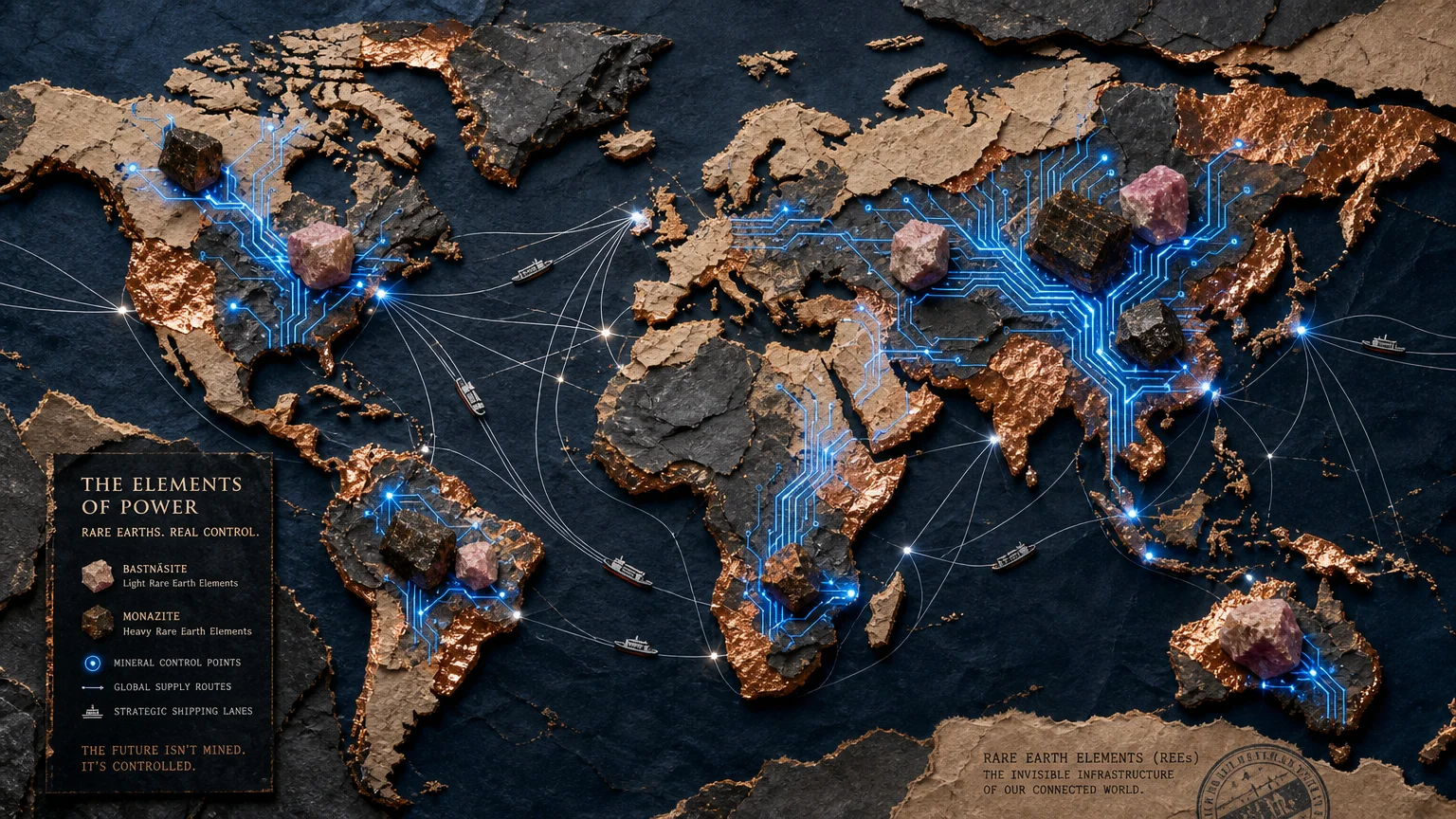
Rare earth elements act as the invisible engine of the global economy, powering everything from electric vehicles to advanced military technology. China currently controls the largest share of the world’s rare earth mineral reserves, holding an estimated 44 million metric tons. This staggering geological volume gives the nation unparalleled leverage over international supply chains. Following China, countries like Brazil, India, Australia, and Russia also harbor massive unmined deposits, though they lag significantly in complex processing capacity. Understanding where these critical materials naturally occur helps you grasp the geopolitical shifts happening today as rival nations race to secure independent supply lines. While these elements remain quite abundant in the crust, finding commercially viable ore concentrations is incredibly difficult.
Fast Facts
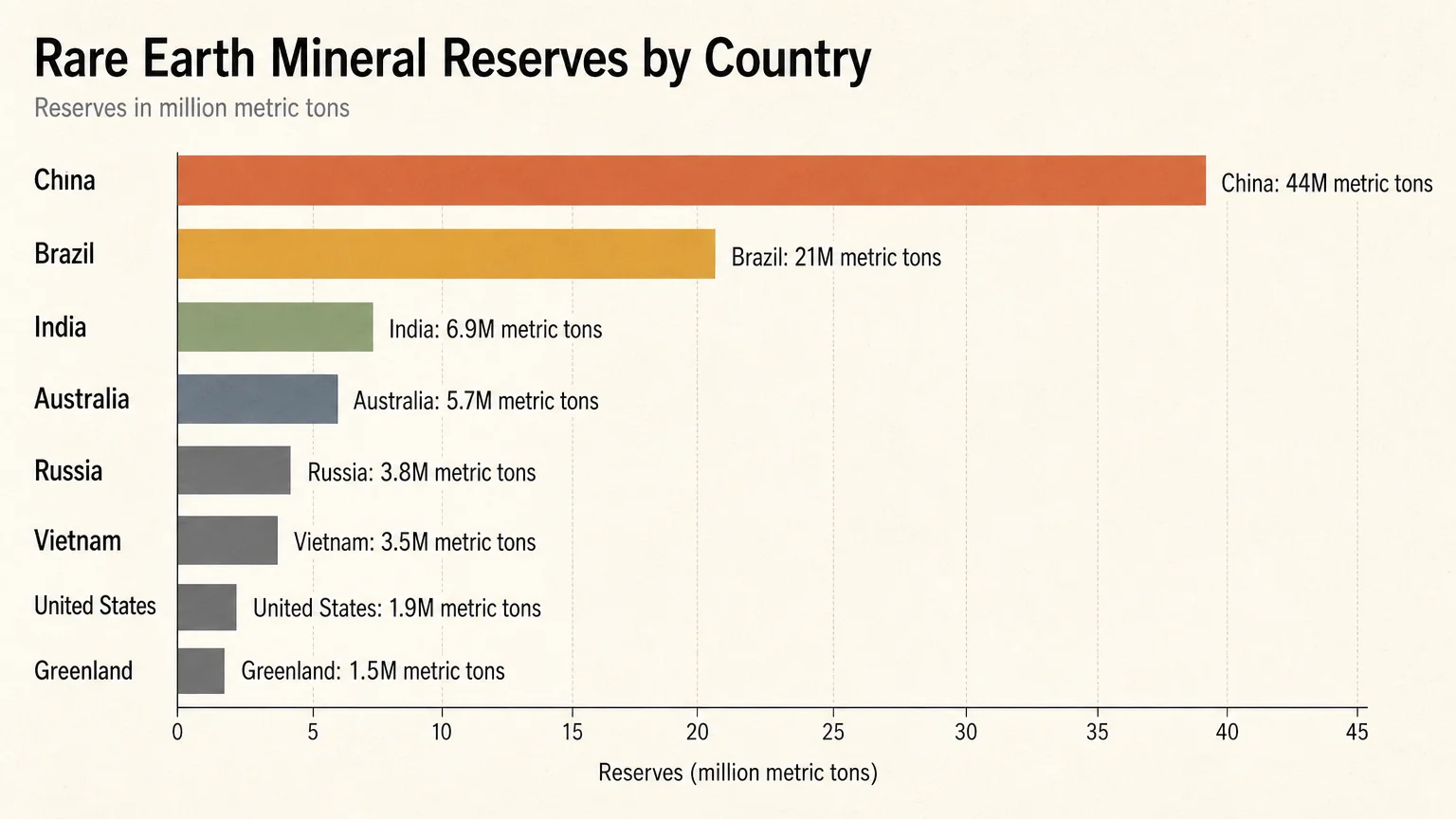
China’s overwhelming lead: China holds roughly half of all known global reserves. At 44 million metric tons, its domestic deposits dwarf those of any other nation. This massive geological advantage is backed by decades of state-sponsored investment in mining and processing infrastructure, firmly securing its spot as the undisputed leader in the global resources market.
Brazil’s untapped potential: Brazil boasts the second-largest reserves in the world, holding an estimated 21 million metric tons. Despite sitting on this immense natural wealth, the South American nation currently mines only a tiny fraction of its potential because it lacks the necessary domestic processing infrastructure to refine the complex ores.
India’s coastal wealth: India ranks third globally with roughly 6.9 million metric tons of unmined rare earth resources. Most of these valuable materials sit within expansive coastal placer deposits, though the country is still aggressively working to develop the complex domestic industrial base required to separate and utilize them at scale.
Australia’s robust independence: Australia secures the fourth spot globally, harboring 5.7 million metric tons in natural reserves. The country stands out in the current geopolitical landscape because it actively mines and processes these materials, serving as one of the most crucial independent supply chain alternatives for Western technology manufacturers.
Russia’s isolated deposits: Russia controls an estimated 3.8 million metric tons of rare earth reserves hidden beneath its vast landscape. Recent geopolitical isolation and severe international economic sanctions have effectively crippled the country’s ability to secure the foreign investment required to develop new, technologically advanced extraction projects.
Vietnam’s recent downgrade: Vietnam recently saw its official reserve estimates drastically slashed from 22 million tons down to just 3.5 million metric tons. This major downward revision occurred after international geological authorities updated their assessments based on newly scrutinized government extraction data and current economic feasibility metrics.
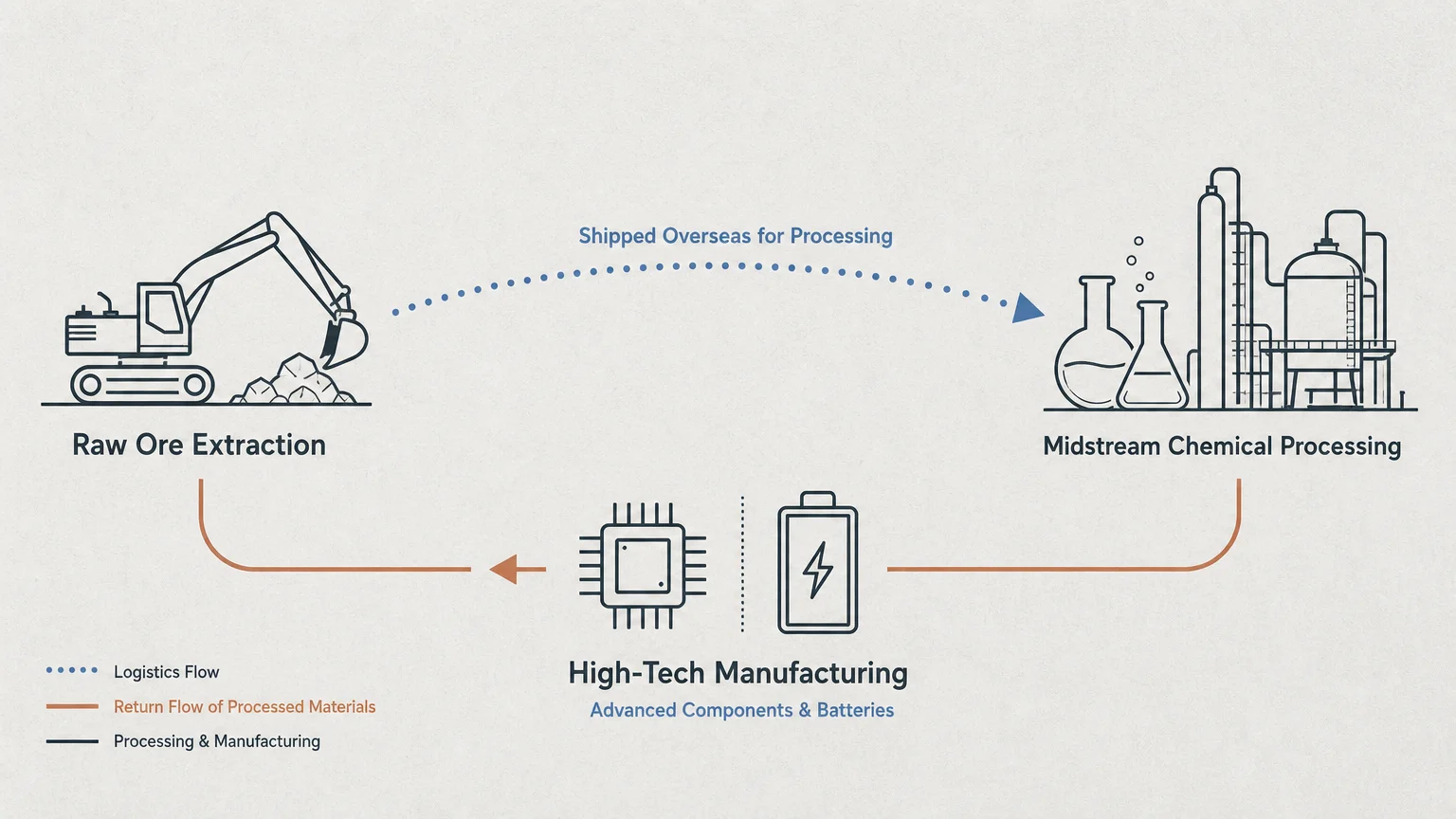
America’s supply chain gap: The United States holds a relatively modest 1.9 million metric tons of these crucial reserves. Because fully integrated domestic refinement facilities remain somewhat limited, American companies currently extract thousands of tons of raw ore only to ship it overseas for complex midstream chemical processing.
Greenland’s emerging frontier: Greenland is rapidly emerging as an unexpected and highly lucrative frontier for rare earth exploration, harboring an estimated 1.5 million metric tons of reserves. Receding ice sheets have made these northern mineral deposits increasingly accessible, drawing significant long-term interest from global mining conglomerates.
A unique chemical family: The term rare earths specifically refers to a unique group of 17 chemical elements. This group encompasses the 15 lanthanides found on the periodic table, alongside scandium and yttrium, all of which share remarkably similar, highly valuable electromagnetic and luminescent properties.
The abundance paradox: Rare earth elements are not actually rare in terms of their overall planetary abundance. The core challenge for the mining industry lies in the fact that these elements spread very thinly across the Earth’s crust and almost never clump together in easily minable, high-concentration ore veins.
Context and Background
The concept of a mineral reserve goes far beyond a simple geological tally; it represents a strict economic and technological threshold. When geologists categorize rare earth deposits as formal reserves, they are confirming that the ore can be legally and profitably extracted using current technology. This distinction explains why the total volume of global reserves fluctuates from year to year. As extraction technologies improve or global market prices rise, previously uneconomical deposits suddenly become viable reserves. Conversely, if new environmental regulations make extraction too costly, massive deposits can be downgraded to mere resources. According to the most recent data published by the United States Geological Survey, the world currently holds approximately 90 million metric tons of viable rare-earth-oxide equivalent reserves. This staggering volume is not distributed evenly across the globe; instead, it is highly concentrated in a handful of nations that now hold the keys to the future of high-tech manufacturing.
To fully understand the global landscape of these critical minerals, you must recognize the stark difference between mining the raw ore and refining it into a usable commercial product. Extracting rare earth minerals from the ground is only the first, and arguably the easiest, step in a massively complex supply chain. The 17 elements of the rare earth group are almost always found jumbled together in the exact same mineral deposits. Because they share nearly identical atomic structures and chemical properties, separating them requires a painstaking sequence of solvent extraction processes. Industrial facilities must repeatedly wash the crushed ore in strong, highly specialized acids; this continuous chemical bath gradually pulls out specific elements based on minute differences in their solubility. This process is not just technically demanding, but it also carries severe environmental risks. Natural rare earth ores frequently contain radioactive elements like thorium and uranium. When mining operations mishandle the highly toxic wastewater generated during separation, they risk causing catastrophic, long-term ecological damage to local groundwater systems.
China leverages this exact metallurgical complexity to maintain its iron grip on the global market. Beginning in the late twentieth century, the nation heavily subsidized the massive environmental and financial costs of chemical separation. This strategic maneuver allowed Chinese facilities to produce finished rare earth products at prices that foreign competitors simply could not match, forcing many Western mines out of business. Today, China controls 44 million metric tons of natural reserves, but its true power stems from possessing the world’s most advanced and expansive processing infrastructure. The Asian powerhouse essentially acts as a massive funnel for the global mining industry, processing not only its own raw ores but also heavy volumes of unrefined material shipped in from other nations.
Brazil represents one of the most fascinating paradoxes in the modern mining industry. The South American nation holds an estimated 21 million metric tons of rare earth oxides, representing a massive geological goldmine. Yet, its actual production output remains remarkably low, often hovering under 100 metric tons per year. This massive discrepancy exists because the country currently lacks the highly specialized, capital-intensive midstream infrastructure required to refine the raw ore into usable industrial materials. Without domestic separation plants, Brazil cannot fully capitalize on its vast natural wealth, leaving its massive deposits largely dormant while global demand skyrockets.
Western nations are currently scrambling to rebuild their domestic supply chains and reduce their overwhelming reliance on foreign imports. Australia actively leads this diversification effort, leveraging its 5.7 million metric tons of reserves. Australian mining conglomerates not only extract the raw ore but have also successfully built complex processing facilities abroad to bypass established monopolies. Meanwhile, the United States holds a relatively modest 1.9 million metric tons of rare earth reserves, primarily centered around a single major active mine in California. Despite mining tens of thousands of tons of raw ore each year, the United States historically exported this material overseas for heavy processing. American manufacturers essentially buy back their own natural resources in the form of finished permanent magnets and specialty alloys. Federal initiatives are now aggressively funding domestic processing plants to finally close this critical vulnerability in the international supply chain.
Interesting Connections
The global transition toward a green energy economy relies entirely on the steady, uninterrupted supply of these critical minerals. You simply cannot build a modern wind turbine without utilizing massive permanent magnets containing neodymium and praseodymium. A single megawatt of wind power capacity requires hundreds of pounds of these powerful rare earth magnets to efficiently convert kinetic energy into electricity. Electric vehicle motors share this exact same structural dependency. Automotive engineers rely on heavy elements like dysprosium and terbium to ensure EV motor magnets retain their magnetic fields at extremely high operating temperatures. If access to these specific rare earth reserves is suddenly cut off, the production lines for sustainable energy infrastructure around the world would instantly grind to a halt.
Beyond heavy industrial applications, your everyday consumer electronics deeply depend on the unique electromagnetic properties of these materials. The vivid, glowing red colors you see on your smartphone screen and high-definition television are created directly by europium and yttrium phosphors. Without these specific elements, modern digital displays would look incredibly dull and washed out. Furthermore, the precise vibrations you feel from your phone’s haptic feedback engine require tiny, ultra-strong rare earth magnets to function correctly. Even traditional gasoline-powered vehicles rely heavily on cerium, which serves as a key catalytic component used in exhaust systems to dramatically reduce harmful emissions. From advanced camera lenses utilizing lanthanum to fiber-optic cables doped with erbium, these hidden reserves touch almost every single aspect of your daily digital life.
The defense sector views rare earth reserves as an urgent, uncompromising matter of national security. Advanced military hardware requires substantial volumes of these highly specialized materials to function properly on the modern battlefield. A single modern fighter jet, such as the F-35 Lightning II, requires over 900 pounds of rare earth materials seamlessly integrated into its advanced radar systems, targeting lasers, and electronic warfare suites. Nuclear submarines rely heavily on them for highly sensitive sonar equipment. Guided munitions use samarium-cobalt magnets to maintain precise fin control at supersonic speeds. Because these military applications cannot easily substitute other materials without sacrificing life-saving performance, Western defense departments are actively investing in domestic mining projects to aggressively decouple their military supply chains from foreign adversaries.
The geopolitical implications of centralized reserves became glaringly obvious to the world during the 2010 Senkaku boat collision incident. Following a heated territorial dispute, China temporarily restricted its vital rare earth exports to Japan. This sudden embargo served as a massive historical turning point, violently waking up the global industrial sector to the severe dangers of concentrated supply chains. Before this disruptive event, technology manufacturers rarely considered the precise geographical origin of their raw materials. Today, multinational corporations actively monitor global resources and invest heavily in supply chain diversification. This single geopolitical event spurred a frantic international race to re-open abandoned mines across North America and aggressively explore new deposits in emerging markets.
Frequently Asked Questions
Why are rare earth minerals considered so important for modern technology?
Rare earth minerals possess unique magnetic, luminescent, and electrochemical properties that cannot be easily replicated by other naturally occurring materials. Manufacturers rely heavily on these elements to miniaturize technology while simultaneously increasing its overall efficiency. For example, neodymium allows engineers to build incredibly powerful, lightweight permanent magnets that fit perfectly inside compact smartphone speakers and electric vehicle motors. Without these specific elements, many of the advanced technologies you use every single day would be significantly larger, heavier, and far less energy-efficient. Their irreplaceable nature makes them the foundational building blocks of the entire digital age.
Are rare earth elements actually rare in nature?
Despite their highly misleading name, rare earth elements are quite abundant throughout the Earth’s crust. Elements like cerium are actually more naturally plentiful than common metals like copper or lead. However, the true rarity lies in finding them grouped together in commercially viable concentrations. Unlike gold or silver, which occasionally form pure veins, rare earths disperse very thinly into surrounding rock formations. Mining operations must excavate and chemically process massive amounts of raw earth just to extract a tiny fraction of usable material, making the economic hurdle for launching new mines exceptionally high.
Does the United States mine its own rare earth minerals?
Yes, the United States actively mines these critical materials, primarily at the Mountain Pass mine located in Southern California. This massive facility extracts tens of thousands of metric tons of raw ore annually. However, physically mining the dirt is only the first step in the supply chain. Historically, the United States lacked the specialized midstream processing facilities needed to separate the complex ores into pure, individual elements. As a result, American companies often ship the raw mined concentrates overseas for chemical refinement, though significant federal investments are currently working to rapidly rebuild total domestic processing capabilities.
How does China maintain its dominance over the global market?
China maintains its market dominance through a relentless, decades-long strategy of state-sponsored investment across the entire mining supply chain. Beginning in the late twentieth century, the nation heavily subsidized the complex and environmentally taxing chemical separation processes required to refine the raw ore. This aggressive approach allowed Chinese facilities to produce finished rare earth products at prices that foreign competitors simply could not match, successfully forcing many Western mines out of business. Today, China’s true leverage comes not just from digging the ore out of the ground, but from possessing the world’s most advanced and expansive chemical processing infrastructure.
Why is it so difficult to recycle rare earth elements from old electronics?
Recycling these critical materials presents an enormous engineering challenge because they are almost always used in microscopic quantities within highly complex consumer devices. Unlike an easily recyclable aluminum can or a solid copper pipe, rare earths are intricately bonded into tight alloys, layered microscopically into digital displays, or sealed deep inside hard drive magnets. Extracting a fraction of a gram of neodymium from a discarded smartphone requires a highly sophisticated, energy-intensive chemical separation process. Currently, the sheer financial cost and logistical difficulty of gathering, dismantling, and chemically processing electronic waste makes widespread recycling far more expensive than simply mining fresh ore.
What is the difference between light and heavy rare earth elements?
Geologists divide the rare earth family into two distinct categories based on their atomic weight: light rare earth elements (LREEs) and heavy rare earth elements (HREEs). Light rare earths, such as cerium and lanthanum, are generally more abundant in the crust and significantly easier to extract. Manufacturers use them heavily in petroleum refining, glass polishing, and basic battery manufacturing. Heavy rare earths, like dysprosium and terbium, are significantly scarcer and much more difficult to chemically isolate. These heavy elements are incredibly valuable because they provide superior heat resistance and magnetic strength, making them absolutely essential for high-performance military hardware and modern electric vehicles.
Keywords: critical minerals, rare earth reserves
Meta Description: Discover which countries control the world’s largest rare earth mineral reserves, featuring the latest USGS data, geopolitical shifts, and market insights.
