

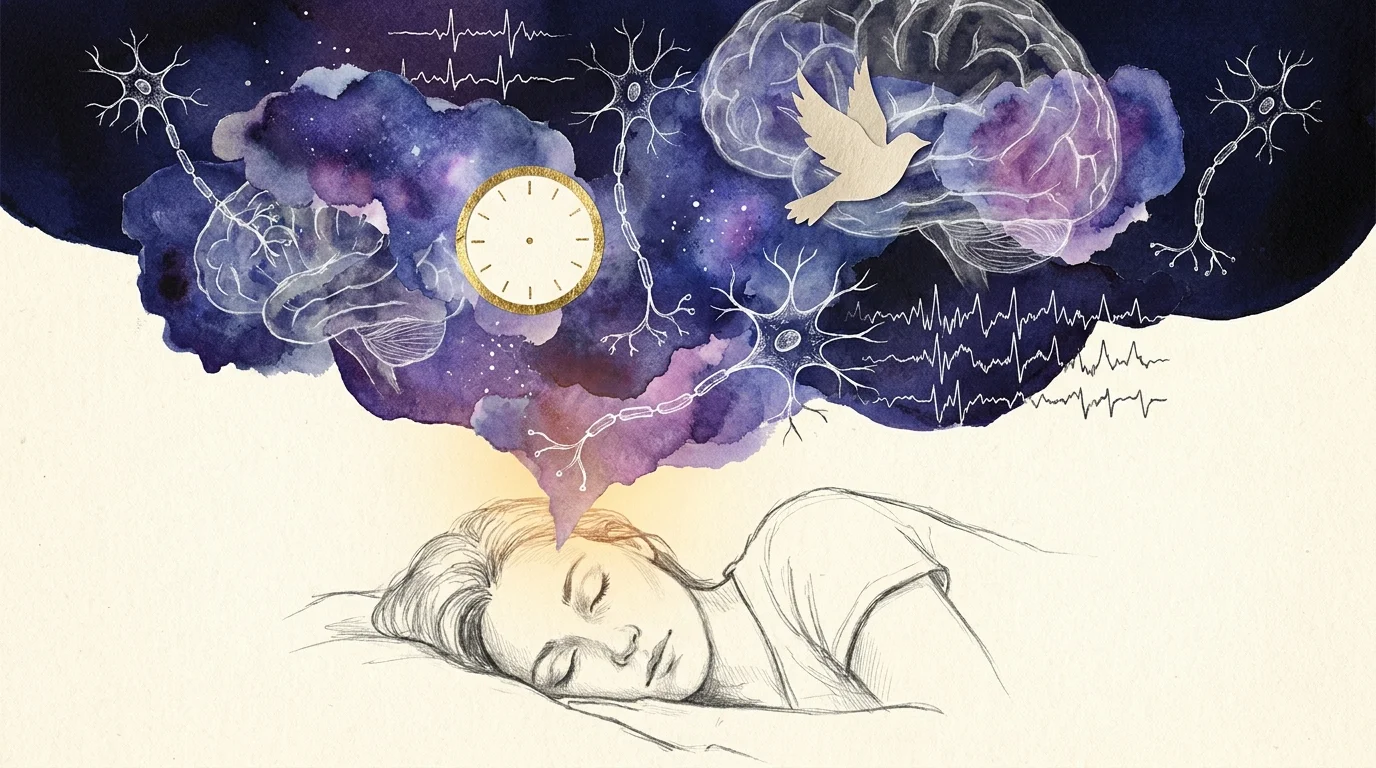
Humans spend a third of their lives unconscious, yet researchers still struggle to pinpoint exactly why we need this vulnerable state to survive. You might think sleep is just a simple resting phase; however, modern health science reveals a complex, active brain state filled with profound mysteries. Scientists map brain waves and track eye movements, but they cannot definitively explain why we dream, why sleep deprivation is fatal, or how our brains perfectly sync cellular repairs overnight. Exploring these sleep facts uncovers the limits of current human knowledge and offers practical insights into your daily rest. Understanding what experts still do not know helps you appreciate the deep biological necessity of your nightly recharge.
Fast Facts
Fact One: The exact evolutionary purpose of sleep remains a profound mystery, as scientists cannot agree on a single reason why animals evolved to enter such a dangerous, unconscious state every single day. Even though staying awake would permanently prevent predation and drastically increase available foraging time, every known animal species requires some form of sleep to survive. Evolutionary biologists suspect sleep provides a universally critical cellular benefit; however, identifying that specific, foundational baseline function currently eludes modern health science completely.
Fact Two: Researchers do not fully understand why human beings dream or what precise biological function these vivid, nightly hallucinations ultimately serve for our cognitive development. While some prominent experts firmly believe dreams help process complex daytime emotions or consolidate fragile new memories, empirical sleep research has yet to prove a universal neurological purpose for dreaming. You might occasionally experience hyper-realistic dreams that feel profoundly meaningful, yet neurobiologists still debate whether these narratives are functional biological processes or just random neural static.
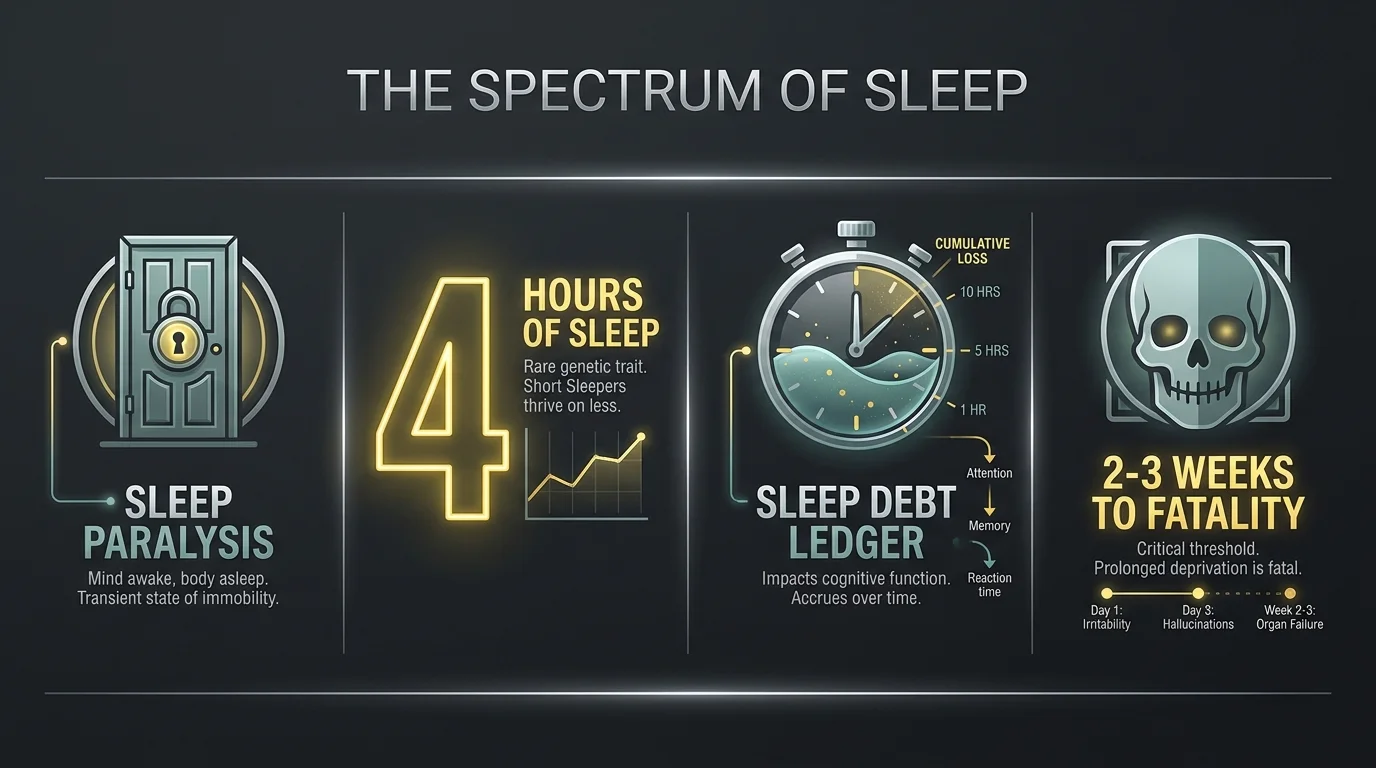
Fact Three: The terrifying phenomenon of sleep paralysis—where you wake up fully conscious but cannot move a single muscle in your body—lacks a complete, unified physiological explanation. Health science identifies the rapid eye movement phase as the origin of this motor suppression, designed to stop you from physically acting out your dreams. Nevertheless, the exact neurological trigger that causes this paralytic mechanism to malfunction and outlast the natural sleep cycle remains entirely unknown to contemporary sleep medicine.
Fact Four: Scientists still fiercely debate why profound sleep deprivation inevitably leads to death in animal models, such as rats and fruit flies, within a matter of mere weeks. Although researchers routinely observe massive immune system failure, sudden weight loss, and catastrophic metabolic collapse in these severely sleep-deprived subjects, the specific lethal mechanism remains an unsolved puzzle. Biologists can track the cascading organ failures step by step, yet they cannot definitively pinpoint the exact cellular threshold where prolonged wakefulness becomes functionally toxic.
Fact Five: The physiological mechanism dictating how the human brain precisely tracks accumulated sleep debt and subsequently forces you to catch up on lost rest continues to baffle neurologists. Your body meticulously records every single missed hour of sleep, aggressively increasing your sleep drive until you finally surrender to unconsciousness to balance the ledger. Unfortunately, the physical anatomical location and the specific neurochemical counter of this internal biological tally system remain entirely invisible to the most advanced brain imaging technologies available.
Fact Six: A rare segment of the population naturally requires only four hours of sleep without suffering any measurable cognitive decline, presenting a genetic anomaly that experts cannot broadly replicate. While geneticists have successfully isolated specific gene mutations—such as the DEC2 mutation—in these extraordinary short sleepers, the underlying biological pathways that allow such rapid cellular recovery remain opaque. If you naturally sleep eight hours, scientists currently possess no safe pharmacological method to artificially compress your sleep cycle to match these genetic outliers.
Fact Seven: The fundamental reason we experience sudden hypnotic jerks—those startling, full-body muscle spasms that jolt you awake just as you drift off—has no definitive scientific consensus. Evolutionary biologists often hypothesize these involuntary twitches are vestigial survival reflexes inherited from ancient primate ancestors who slept high in trees and needed to prevent fatal falls. Conversely, modern neurological studies suggest these jerks simply represent a harmless misfire in the reticular activating system as your brain transitions between wakefulness and sleep, providing no concrete evidence for the evolutionary theory.
Fact Eight: The extraordinary way your sleeping brain selectively filters environmental sounds, ignoring loud traffic but waking you instantly to a baby’s soft cry, represents a major gap in sensory processing science. Researchers directly observe the thalamus actively gating these auditory inputs, deciding which frequencies penetrate your unconscious state and which are safely discarded. Yet, the exact, highly sophisticated sorting algorithm your unconscious mind continuously utilizes to evaluate threat levels while you sleep remains completely unexplained by current neurobiology.
Fact Nine: Contagious yawning is universally associated with profound tiredness and sleep preparation; however, no scientist knows exactly why seeing someone yawn forces you to uncontrollably mimic the action. Theories range from primitive brain cooling mechanisms to deep-seated social synchronization behaviors designed to keep tribal groups operating on the exact same sleep schedule. Despite decades of dedicated behavioral observation, empirical data stubbornly refuses to support one single, comprehensive answer that explains the physiological benefit of this bizarre reflex.
Context and Background
To fully grasp why sleep remains such an enigma, you must first look at the historical trajectory of sleep research and the limitations of our current scientific instruments. For centuries, physicians viewed sleep merely as a passive state of dormancy—a time when the brain simply shut down to rest, much like turning off a machine. The discovery of rapid eye movement in the mid-twentieth century shattered this simplistic model, revealing that a sleeping brain often exhibits more electrical activity than an awake one. Neuroscientists suddenly faced a baffling reality; the brain consumes roughly the same amount of energy while you dream as it does when you solve mathematical equations. This high energy expenditure contradicts the long-held evolutionary theory that sleep primarily serves to conserve calories during the dark, colder hours of the night.
In recent years, the National Institutes of Health have funded extensive studies into the glymphatic system, a macroscopic waste clearance pathway in the brain. During deep non-REM sleep, your brain cells literally shrink by up to sixty percent, allowing cerebrospinal fluid to wash away toxic metabolic byproducts like amyloid-beta. You can apply this knowledge directly to your own routine; prioritizing uninterrupted deep sleep gives your brain the necessary time to flush out these neurotoxins, significantly reducing your risk of cognitive decline. Despite this monumental discovery, the glymphatic system alone does not solve the fundamental mystery of sleep. Scientists cannot explain why the brain must render you unconscious and unaware of predators just to perform this routine cellular maintenance.
Another prominent theory driving modern health science is the synaptic homeostasis hypothesis, which proposes that sleep exists to manage the billions of neural connections formed throughout your waking hours. Every time you learn a new skill, remember a name, or navigate a new environment, your brain physically alters its synaptic weights, consuming cellular space and energy. Researchers argue that sleep acts as an essential pruning mechanism; it scales down the less critical synapses while preserving the most important memories. If you study for an exam, getting a full night of rest literally rewires your cognitive architecture to solidify that newly acquired information. Nevertheless, the biological algorithm that determines which memories your brain saves and which it deletes remains completely hidden from contemporary science.
The sheer diversity of sleep requirements across the animal kingdom further complicates our understanding of this biological imperative. Some bat species sleep for twenty hours a day, whereas elephants thrive on barely two hours of rest in the wild. If sleep serves a singular, universal biological function—such as cellular repair or memory consolidation—scientists struggle to explain these massive discrepancies in required sleep duration. You might wonder why a large mammal with an enormous brain requires less sleep than a tiny rodent, but metabolic rate and brain size do not perfectly correlate with sleep quotas. This lack of a clear, predictive model constantly baffles evolutionary biologists and highlights the immense, unresolved gaps in our foundational physiological knowledge.
Ultimately, the scientific community recognizes that sleep likely serves multiple interlocking functions rather than one definitive evolutionary purpose. Your body utilizes this extended offline period to balance hormones, repair damaged muscle tissue, organize scattered memories, and calibrate the immune system simultaneously. However, identifying the original evolutionary driver—the root biological cause that forced the first complex organisms to embrace unconsciousness—remains an elusive goal. Every new technological advancement in high-resolution brain imaging simply unveils deeper layers of neurological complexity, ensuring that the rigorous study of sleep will continue to captivate inquisitive minds for decades to come.
Interesting Connections
The mysteries surrounding human slumber directly intersect with fascinating survival adaptations observed in other intelligent species, offering unique perspectives on how evolution handles the extreme dangers of unconsciousness. Marine mammals, such as dolphins and orcas, overcome the threat of drowning by engaging in unihemispheric slow-wave sleep. They literally put one isolated half of their brain to sleep while the other half remains awake, allowing them to swim and surface for air. This extraordinary neurological adaptation forces scientists to question why human beings must experience global brain unconsciousness; if localized sleep is biologically possible, our universal loss of environmental awareness seems inefficient. You can observe similar phenomena in certain migrating birds, which sleep while actively flying across oceans, constantly monitoring their surroundings with one open eye.
Beyond the animal kingdom, clinical connections exist between our unresolved sleep mysteries and the alarming global rise of modern metabolic syndromes. Studies consistently demonstrate that chronic sleep deprivation alters the way your body processes glucose, increasing insulin resistance within just a few days. The pancreas and the liver operate on internal circadian clocks; when you stay awake past your natural biological boundaries, these vital organs entirely lose their hormonal synchronization. Practical health science dictates that maintaining a consistent sleep schedule acts as an effective metabolic shield, protecting you from weight gain and hormonal imbalances. Yet, endocrinologists cannot fully articulate the exact molecular signals that link a tired brain to a dysfunctional pancreas, leaving a critical gap in our understanding of systemic human metabolism.
Your immune system also shares an intertwined and poorly understood physiological relationship with the architecture of your nightly sleep cycles. When you fall sick, you naturally feel a powerful urge to sleep for hours; this lethargy is orchestrated by cytokines, specific defensive proteins your activated immune system releases to fight invading infections. While rendered unconscious, your body effectively redirects cellular energy away from physical movement and conscious cognitive processing, channeling those limited resources into generating antibodies and T-cells. If you consistently cut your rest short, your natural vaccine responses weaken and your susceptibility to environmental viruses skyrockets. Immunologists trace these negative health outcomes through empirical data, but the biochemical triggers that command your brain to initiate sleep upon detecting a pathogen remain mysterious.
Mental health represents another critical frontier where the unexplained aspects of sleep carry life-altering implications for millions of people worldwide. Every major psychiatric disorder—from clinical depression to schizophrenia—features profound sleep disruptions as a central core symptom, not merely a secondary side effect. Sleep research indicates that rapid eye movement sleep specifically calibrates the amygdala, the emotional processing center of your brain, acting as overnight emotional therapy. When you experience a traumatic event, a healthy sleep cycle actively strips away the emotional charge from that specific memory, safely allowing you to recall the event later without experiencing panic. Psychologists meticulously observe this vital emotional uncoupling happening every night, but the neurological mechanics driving this unconscious therapeutic process defy complete medical explanation.
Finally, the modern epidemic of artificial light pollution consistently forces our ancient, mystery-laden sleep biology to confront unprecedented environmental challenges. Your retina contains specialized photosensitive ganglion cells that detect blue light, rapidly sending chemical signals to the suprachiasmatic nucleus to suppress natural melatonin production and keep you awake. Before the invention of electric lighting, the setting sun naturally initiated this chemical cascade; today, glowing smartphone screens and LED streetlights constantly trick your brain into believing it is perpetually daytime. To protect your circadian health, you must actively manage your nightly light exposure by dimming digital screens two hours before bed and utilizing warm-toned ambient lighting throughout your home. Understanding the delicate, unexplained nature of your internal biological clock empowers you to build a sleep environment that respects your evolutionary programming.
Frequently Asked Questions
Why do we spend so much time in rapid eye movement (REM) sleep? The intense brain activity during REM sleep puzzles researchers because it closely mimics full, conscious wakefulness, consuming vast amounts of vital glucose and oxygen. Experts theorize this high-energy phase plays a critical role in emotional processing and complex problem-solving, acting as a profound nightly psychological reset for your brain. You might notice that after a deeply restful night of vivid dreaming, your emotional responses to stressful events feel significantly more manageable and grounded. However, the precise chemical pathways translating these chaotic dream states into tangible emotional resilience remain fiercely debated within advanced sleep research communities.
Can you actually train your body to need less sleep? Despite numerous productivity gurus claiming you can permanently hack your biological clock, modern health science universally rejects the idea that you can successfully train yourself to require significantly less sleep. Your individual sleep need is a strictly hardcoded biological imperative driven by your unique genetic makeup; chronically restricting your rest merely builds a dangerous, compounding sleep debt. While you might temporarily acclimate to the subjective feeling of profound tiredness, your objective cognitive performance, reaction times, and immune function will steadily degrade over time. To maximize your daily energy and long-term health, you must discover your natural sleep duration—typically between seven and nine hours—and rigorously honor it every single night.
Why do humans forget almost all of their dreams immediately upon waking? The rapid evaporation of your dreams seconds after opening your eyes represents a fascinating quirk of your brain’s unique memory consolidation architecture. During the rapid eye movement phase, your brain aggressively suppresses the production of norepinephrine, a critical neurotransmitter specifically required for encoding new memories into long-term storage. Neuroscientists suspect this profound chemical suppression intentionally prevents you from confusing your bizarre, hallucinatory dream narratives with actual, waking reality. By maintaining a bedside journal and writing down fragments the exact moment you wake up, you can practically bypass this chemical blockade and slowly train your brain to retain more of its nocturnal adventures.
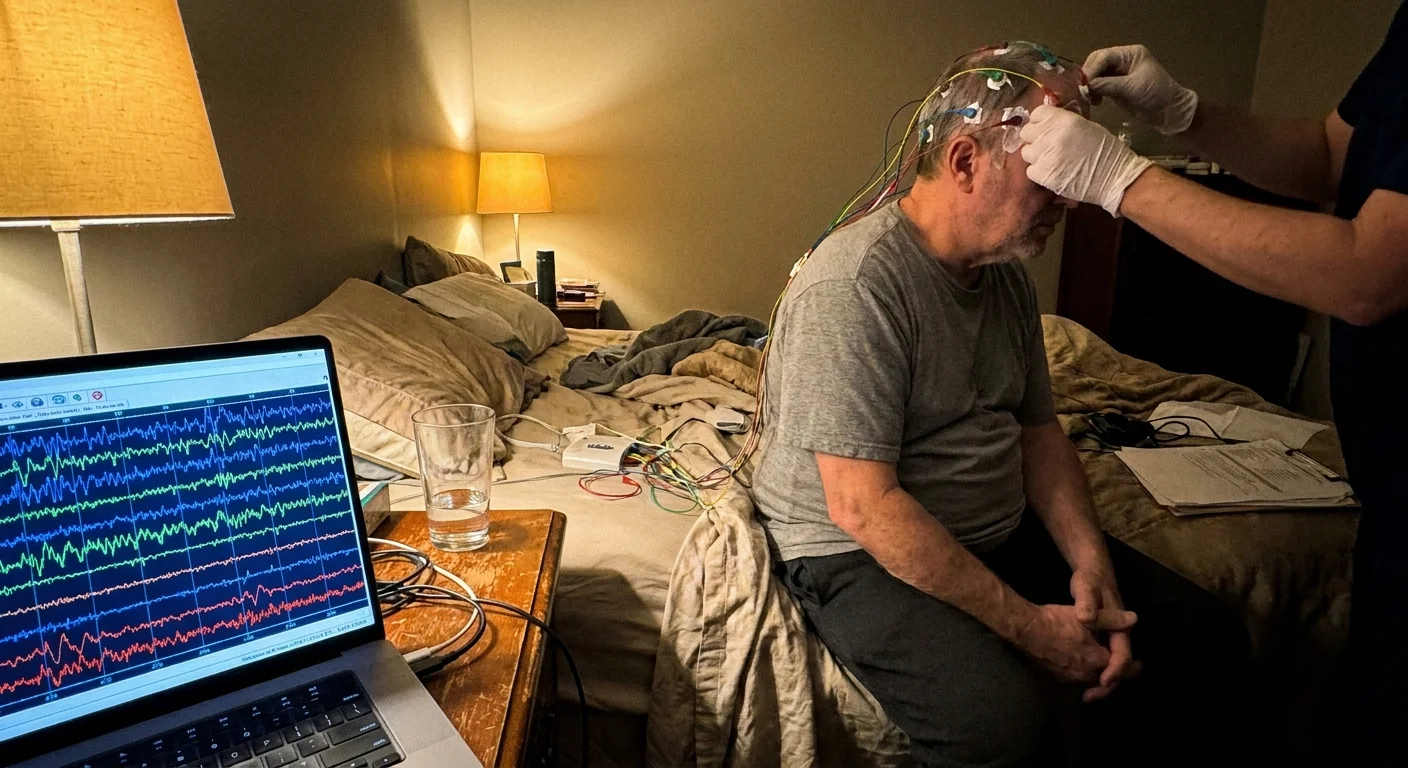
How do scientific instruments track and measure these complex sleep mysteries? Advanced sleep research heavily relies on polysomnography, a comprehensive testing method that simultaneously monitors your brain waves, blood oxygen levels, heart rate, and eye movements throughout the night. By utilizing highly sensitive electroencephalogram sensors, scientists can precisely track your neurological transitions between light sleep, deep slow-wave sleep, and vivid REM stages. These complex, data-rich electrical maps reveal exactly when your brain engages in critical memory consolidation or sudden physical paralysis, providing researchers with invaluable biological clues. Despite possessing these incredibly advanced technological tools, identifying the raw data patterns still does not fully explain the fundamental evolutionary reasons behind these bizarre physiological behaviors.
