

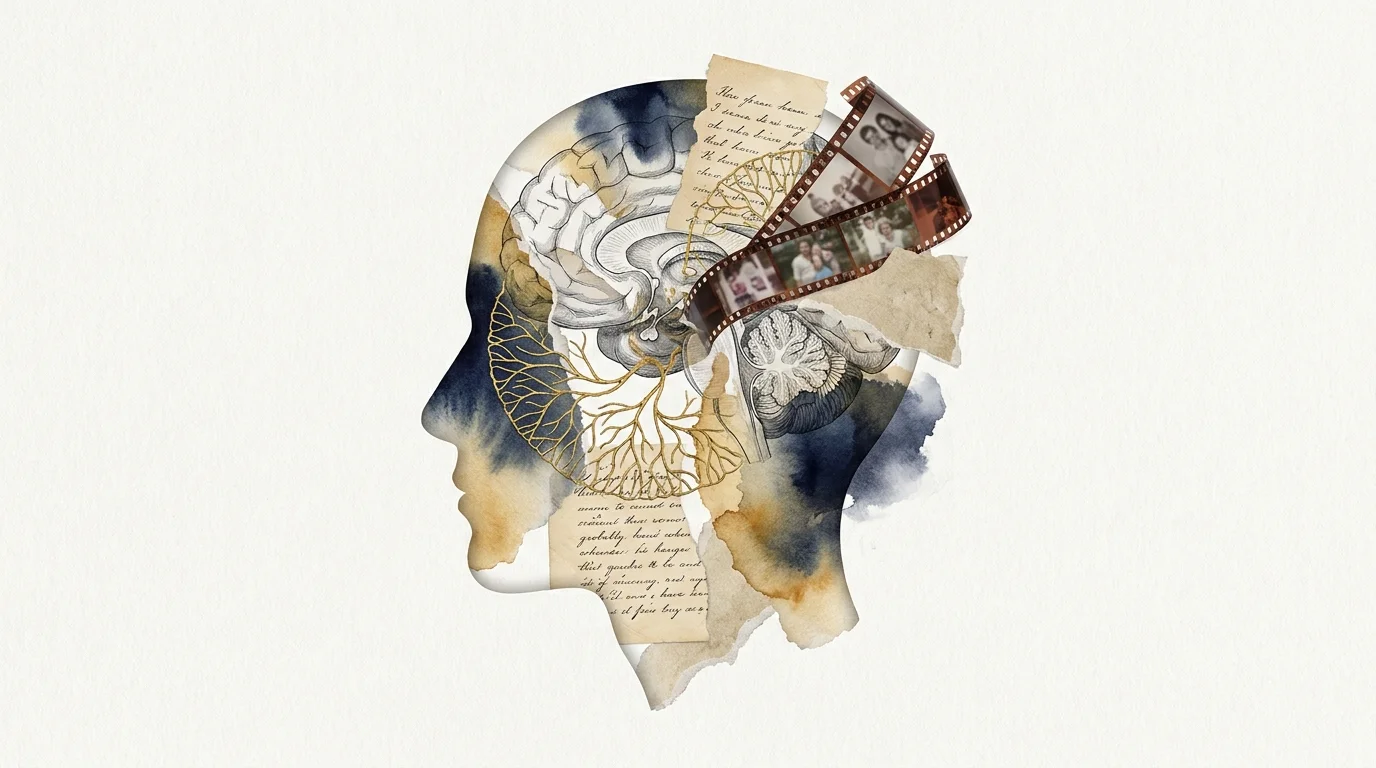
Your brain constantly reshapes reality through memory, blending fact with fiction in ways scientists still struggle to map. Researchers understand how neurons fire and synapses connect, but the precise mechanisms governing how you store, retrieve, and sometimes fabricate entire life events remain profound mysteries. You might think your mind works like a video camera, recording experiences precisely as they happen. Instead, you constantly edit your past. From the elusive physical location of a single thought to the strange phenomenon of infantile amnesia, exploring these blind spots in brain science reveals just how complex your mind truly is. Uncovering these psychology facts fundamentally changes how you view your own identity and everyday experiences.
Fast Facts
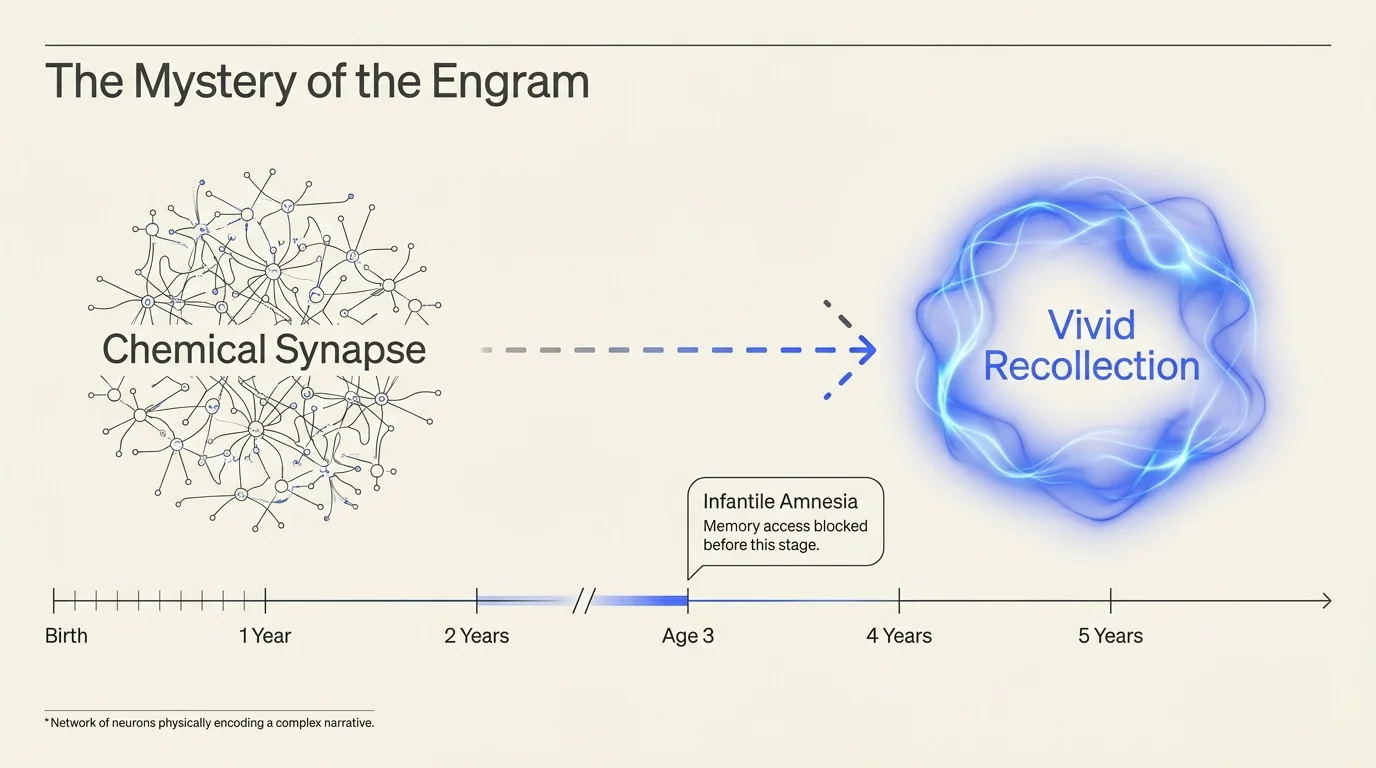
The physical trace of a memory—known as an engram—remains a highly debated concept in brain science. You might assume your memories sit neatly in a specific file cabinet inside your head; however, researchers still cannot pinpoint exactly how a network of neurons physically encodes a complex narrative. Scientists observe brain regions lighting up, but the exact translation from a chemical synapse to a vivid childhood recollection eludes standard measurement.
Infantile amnesia prevents you from remembering the first few years of your life, and the scientific community still argues over exactly why this happens. Some experts in psychology suggest your brain undergoes massive synaptic pruning that overwrites early data to make room for new development. Others believe you simply lack the language skills necessary to encode complex memories before age three, leaving those foundational experiences locked away or permanently erased.
The precise role of sleep in memory consolidation remains one of the most intriguing science facts you will ever encounter. You know that a good night of rest helps you remember what you studied, yet the exact mechanism dictating which memories your brain chooses to strengthen and which it decides to discard during REM sleep remains fundamentally unclear. Your brain acts as an autonomous editor while you sleep, using criteria scientists cannot yet fully map.
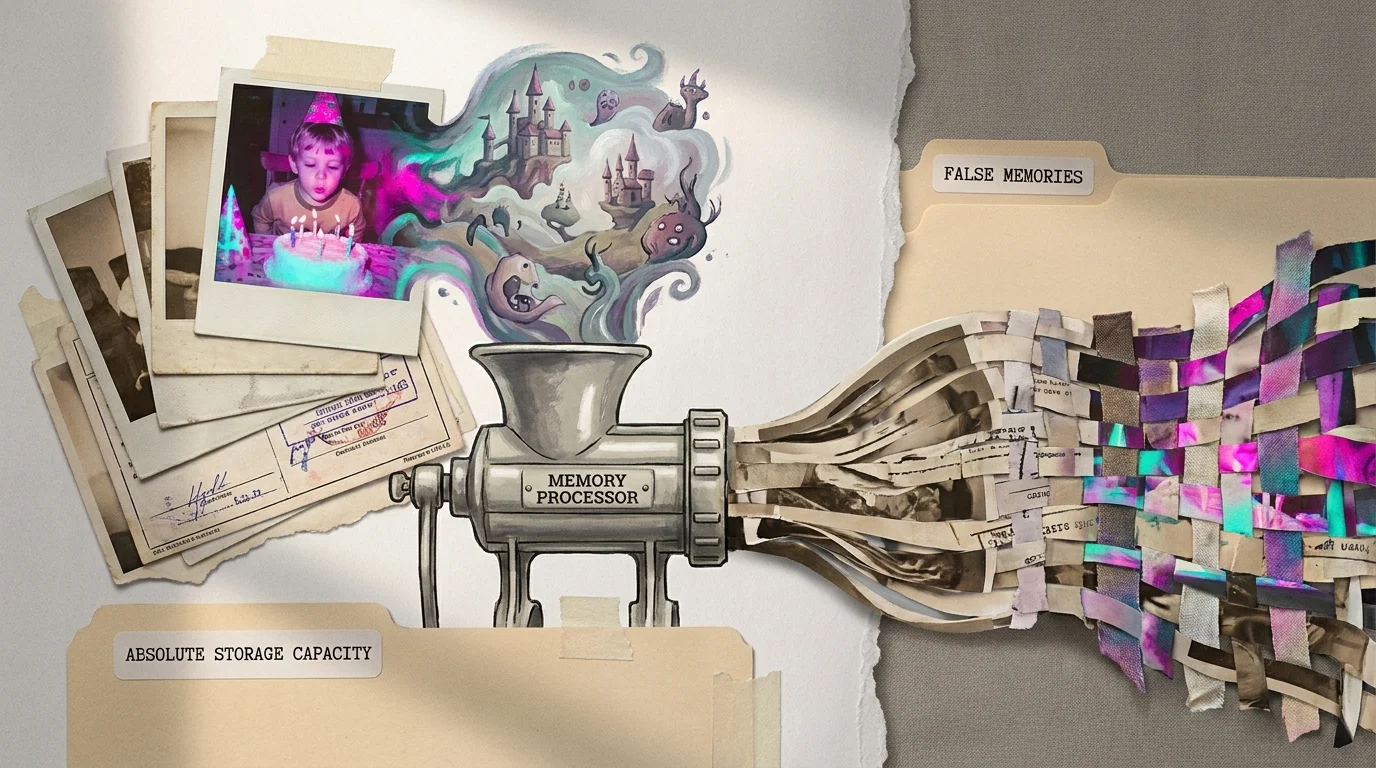
The absolute storage capacity of the human brain cannot be quantified by modern researchers. While computer scientists measure data in exact terabytes, neurologists can only guess at how many individual memories a human mind can hold before hitting a biological limit. The brain seems to compress, blend, and layer information rather than storing it linearly, creating a dynamic system that completely defies traditional mathematical capacity limits.
Your brain routinely generates false memories, seamlessly blending imagination with actual events without your conscious awareness. Experts researching memory facts find it terrifyingly easy to implant completely fabricated events into a person’s mind during clinical trials. Researchers do not fully understand why the brain prioritizes a coherent, emotionally satisfying narrative over strict factual accuracy, making your own autobiographical memory inherently unreliable.
Strong emotions amplify memory retention, but the exact biochemical tipping point where stress enhances a memory versus when it suppresses it remains a medical mystery. You probably remember exactly where you were during a major global crisis, thanks to the amygdala flooding your brain with adrenaline. However, in cases of extreme trauma, the brain sometimes fragments or completely blocks the memory, and the precise biological trigger for this defensive blackout still baffles neurologists.
Forgetting appears to be an active function of the brain rather than just a passive decay of information. Advanced brain science indicates your mind purposely erases outdated or irrelevant data to maintain cognitive efficiency and make room for new learning. Despite this knowledge, scientists currently struggle to isolate the specific cellular signals that tag a discrete piece of information for permanent deletion.
The sensation of déjà vu occurs when you feel absolutely certain you have experienced a brand-new situation before, yet its exact neurological origin remains entirely unproven. Some researchers theorize it results from a microsecond delay in how your brain processes sensory input, causing a strange mismatch between immediate perception and long-term memory. Because déjà vu happens spontaneously and fleetingly, capturing the phenomenon in a controlled laboratory setting proves nearly impossible.
The concept of cellular memory suggests that organs outside the brain might retain certain types of information or learned behaviors. Medical professionals occasionally report transplant patients inheriting specific cravings, tastes, or phobias from their organ donors. While traditional science facts dictate that only the central nervous system stores complex memories, these strange clinical anomalies continue to provoke fierce debate among researchers worldwide.
Context and Background
Understanding the vast landscape of brain science requires you to look back at how humanity has historically viewed the mind. For centuries, philosophers and early anatomists treated human memory as a literal wax tablet. They believed your experiences pressed themselves onto the brain, leaving rigid, permanent grooves. Today, modern psychology radically challenges that passive model. Scientists recognize that your brain acts as an aggressive, creative engine that constantly builds and rebuilds your reality. When you recall an event, you do not simply pull a dusty file from a mental cabinet. Instead, you actively reconstruct the experience from scratch, pulling sensory details, emotions, and context from different geographic regions of your cerebral cortex. This reconstructive process introduces small errors every single time you remember something. You literally alter the memory simply by observing it.
The pivotal shift in modern brain science arrived in the mid-twentieth century through the study of a man known as Patient H.M. Seeking relief from severe seizures, this patient underwent experimental surgery that removed portions of his brain, including the hippocampus. When he woke up, his seizures had stopped; however, he completely lost the ability to form new conscious memories. This tragic medical outcome handed researchers one of the most profound science facts in history: memory does not live in one single localized spot, but relies heavily on specific routing hubs. The hippocampus acts as a central sorting facility. It directs incoming sensory information, determines its importance, and ships it out to the cortex for long-term storage. Yet, the exact communication protocols between the hippocampus and the rest of the brain still contain massive gaps that neurologists cannot explain.
Moving down to the microscopic level, scientists focus heavily on a mechanism called long-term potentiation. When you learn something new, neurons communicate across gaps called synapses using chemical neurotransmitters. Repeated communication strengthens these specific synaptic connections. You can think of it like carving a fresh path through a dense forest; the more times you walk the trail, the wider and clearer it becomes. While researchers can observe this cellular strengthening in real time under a microscope, they stumble when trying to map this biological process to complex human thoughts. Knowing how two neurons bond does not explain how you remember the specific scent of your grandmother’s kitchen or the exact melody of a song you have not heard in twenty years. The bridge linking molecular chemistry to subjective conscious experience remains the ultimate frontier in psychology and neuroscience.
Furthermore, the sheer speed and efficiency of memory retrieval defy current biological explanations. Consider what happens when someone asks you a question. Your brain instantly sifts through decades of accumulated data, bypasses millions of irrelevant facts, and serves up the correct answer in milliseconds. Computer scientists try to replicate this associative memory in artificial intelligence, requiring massive server farms and incredible amounts of electricity. Your brain accomplishes the same feat running on roughly the same amount of power as a dim lightbulb. The biological algorithms that allow you to index, search, and retrieve information so flawlessly operate on principles that modern science has yet to mathematically quantify.
This complex indexing system also heavily involves sensory integration. Olfactory triggers—the smells you encounter daily—bypass the brain’s standard sensory routing centers and travel directly to the memory and emotion centers. This direct physical wiring explains why a sudden whiff of rain on hot asphalt or a specific brand of perfume can instantly transport you back to a childhood summer. You experience a visceral, full-body recollection before your conscious mind even registers what you are smelling. Researchers from organizations like the Society for Neuroscience understand the anatomical pathway, yet the way the brain translates simple chemical odor molecules into rich, emotionally complex, high-definition cinematic memories remains a deeply puzzling phenomenon.

Interesting Connections
The mysteries of human memory stretch far beyond the confines of basic anatomy, intersecting with rapidly evolving fields like artificial intelligence and digital technology. As engineers build increasingly complex neural networks, they look to your brain for inspiration. Yet, the stark differences between human memory and machine storage highlight exactly what scientists do not understand about our own biology. A computer saves a photograph precisely as a grid of pixels. Your brain saves a photograph as a feeling, a context, and a loose association of visual features. When an artificial intelligence model learns, it requires thousands of examples to recognize a pattern. You, on the other hand, can form a permanent, deeply ingrained memory from a single, brief exposure to a novel event. This capability—known as one-shot learning—showcases an efficiency in the human brain that computer scientists desperately want to reverse-engineer but currently cannot.
You must also consider the emerging and fascinating connection between your gut microbiome and your cognitive function. Recent breakthroughs in psychology and biology reveal that the millions of bacteria living in your digestive tract communicate directly with your brain via the vagus nerve. These microbes produce neurotransmitters, including dopamine and serotonin, which fundamentally influence your mood and your ability to form memories. Scientists observe that altering a subject’s gut bacteria can either severely impair or significantly boost their spatial memory and learning capabilities. The idea that microorganisms in your stomach dictate how well you remember information challenges the traditional view that memory exists solely within the skull. Researchers are now scrambling to map this gut-brain axis, hoping to understand how your diet actively rewires your neurological storage systems.
Another deeply intriguing connection lies in the realm of neuroplasticity and the aging process. Society generally accepts cognitive decline as a natural, unavoidable consequence of getting older, assuming the brain simply wears out like a mechanical engine. However, science facts show that the adult brain retains a remarkable ability to grow new neurons—a process called neurogenesis—well into old age. Certain individuals, known as super-agers, maintain the memory capacity and recall speed of people decades younger. Scientists cannot fully explain why neuroplasticity remains robust in these individuals while deteriorating in others. They study lifestyle factors, genetics, and environmental influences, but the exact formula that protects the physical integrity of memory networks from the ravages of time eludes the medical community. Unlocking this secret could fundamentally change how humanity approaches aging and cognitive health.
Finally, the relationship between collective memory and individual consciousness presents a profound psychological puzzle. You are deeply influenced by the cultural narratives, shared traumas, and historical events of your society. Psychologists note that humans sometimes internalize shared cultural memories so deeply that they experience them as personal, visceral recollections. This blending of societal narrative and personal identity blurs the line between what you actually experienced and what you absorbed from your environment. The mechanisms dictating how external storytelling physically reshapes internal neural architecture reveal just how porous and malleable human memory truly is. Your mind is not a sealed vault; it is a continuously evolving sponge, absorbing and integrating the world around you in ways scientists are only beginning to document.
Frequently Asked Questions
Can you run out of space in your brain to store new memories?
You do not need to worry about your brain filling up like a hard drive. The human brain boasts roughly eighty-six billion neurons, and each neuron can form thousands of connections with its neighbors. This creates a nearly infinite matrix of storage potential. Instead of running out of space, your brain manages capacity through an active filtering and compression system. It constantly overwrites trivial, unneeded data—like what you ate for lunch three weeks ago—while strengthening the pathways for important skills and emotional experiences. This dynamic pruning ensures you always have the cognitive bandwidth necessary to process new, vital information.
Why do I walk into a room and instantly forget what I needed?
Psychologists refer to this frustrating phenomenon as the doorway effect. Your brain naturally chunks information into discrete episodes based on your physical environment. When you pass through a doorway and enter a new room, your brain perceives a shift in context and essentially opens a new cognitive file. This sudden transition forces your working memory to reset, temporarily dropping the thought you held in the previous room. You did not actually lose the memory; your brain simply filed it away under the context of the previous location. Returning to the original room usually triggers the associative link and brings the memory rushing back.
Is it possible to completely erase a specific bad memory?
Currently, medical science cannot safely and cleanly target a single memory for permanent deletion without affecting surrounding cognitive functions. However, researchers experiment with a process called memory reconsolidation. Whenever you recall a traumatic event, the memory becomes temporarily unstable before your brain saves it again. During this brief window, certain clinical therapies and medications can interfere with the chemical restabilization of the memory. This process does not completely erase the facts of the event, but it effectively strips away the crippling emotional payload attached to it. You still remember what happened, but the memory no longer triggers a severe biological stress response.
How does physical exercise actually improve cognitive function and memory?
Engaging in regular cardiovascular exercise dramatically impacts your brain’s physical architecture. When you elevate your heart rate, you pump more oxygen-rich blood directly to your cerebral cortex. More importantly, physical exertion triggers the release of a specific protein called brain-derived neurotrophic factor. You can think of this protein as a powerful fertilizer for your mind. It actively stimulates the growth of new neurons in the hippocampus and strengthens the synaptic connections responsible for learning and memory consolidation. By maintaining a consistent exercise routine, you physically increase the volume of your brain’s memory centers, making your mind sharper and more resilient.
What is the most effective way to memorize new information permanently?
To lock information into your long-term memory, you must abandon passive reading and embrace active recall. Simply staring at a textbook or highlighting notes creates an illusion of competence; you feel familiar with the material, but you cannot independently retrieve it. Instead, you need to test yourself constantly. Flashcards, practice quizzes, and teaching the concepts to another person force your brain to struggle. That momentary struggle sends a powerful biological signal to your neurons, demanding that they reinforce the synaptic pathway for that specific information. Combining active recall with spaced repetition represents the most scientifically validated method for permanent memorization.
