

Nature flips the traditional script on size when you examine fascinating animal facts, revealing that female creatures bigger than males dominate across various species. From the ocean’s dark depths to expansive skies, sexual dimorphism in animals frequently favors the female form.
You will discover that evolutionary pressures—such as the need to carry numerous offspring or survive extreme environments—often drive this massive size disparity.
Grasping why these massive females outgrow their male counterparts gives you a deeper appreciation for evolutionary strategy and biological efficiency. As you explore these diverse ecosystems, you see firsthand how nature ruthlessly prioritizes reproductive success over uniform appearance.
Fast Facts
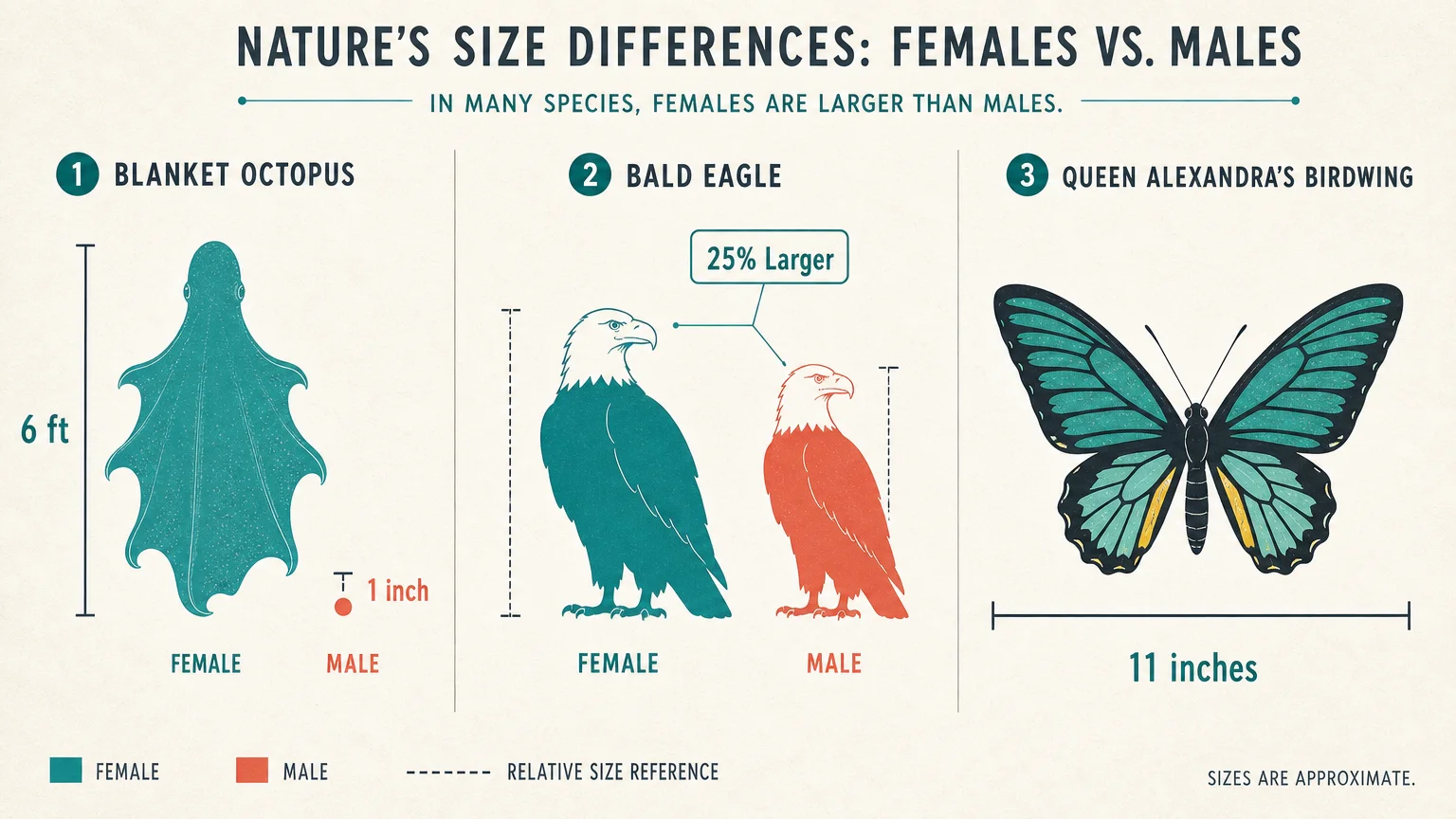
You can observe extreme size differences in the blanket octopus, where females reach six feet in length while males barely stretch past an inch.
This massive evolutionary gap allows the large females to produce tens of thousands of eggs while males remain tiny and agile.
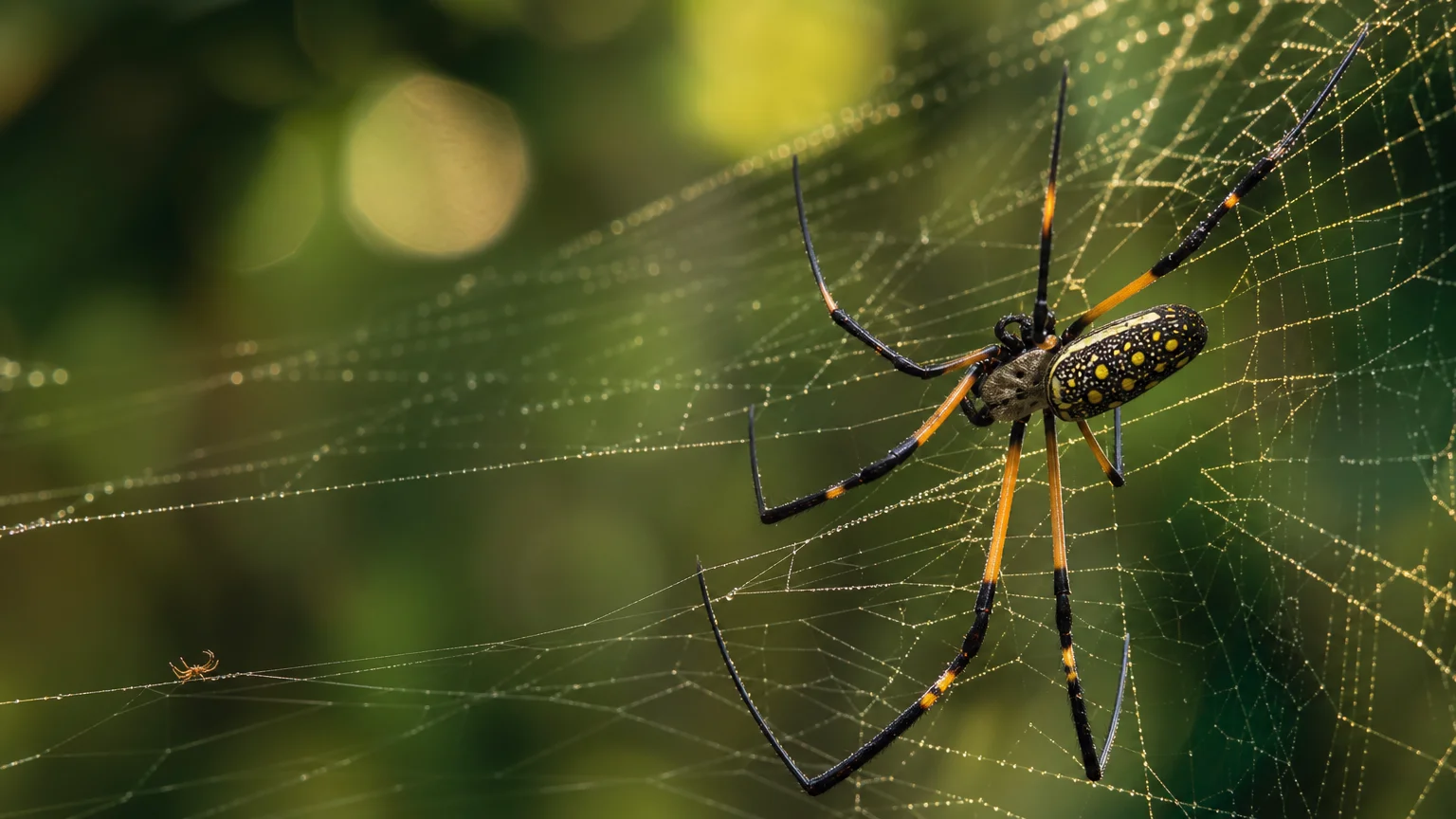
Golden orb-weaver spiders feature female arachnids that dwarf their male partners, often weighing up to one hundred times more. You will find these giant females aggressively guarding expansive silk webs while tiny males carefully navigate the perimeter to avoid becoming an afternoon meal.
Green anacondas hold the title of the heaviest snakes on Earth, but only the females achieve these record-breaking dimensions. The massive bulk of a female anaconda physically supports her ability to gestate dozens of live young over several dangerous months in the Amazon.
Female deep-sea anglerfish grow into imposing predators measuring several feet, whereas males exist merely as tiny parasites that fuse onto the female’s flesh. This biological adaptation ensures you never struggle to find a mate in the pitch-black abyss of the ocean floor.
Spotted hyenas live in fiercely matriarchal clans led by females that are physically larger and notably more aggressive than the males. You can quickly identify these dominant females by their increased muscle mass and the priority access they command over fresh food kills.
Queen Alexandra’s birdwing butterflies exhibit striking differences; females span up to eleven inches across, vastly out-measuring the brightly colored, smaller males. The enormous wingspan specifically helps the female carry large clusters of heavy eggs across the dense rainforest canopy.
Bald eagles command the skies, but you might not realize the powerful raptor you spot soaring above is likely a female, as they routinely grow twenty-five percent larger than males. Biologists believe this critical size advantage aids females in actively defending the nest and trapping heat over incubating eggs during freezing weather.
Northern map turtles showcase extreme size gaps, with females possessing heavy shells up to twice the length and ten times the volume of male shells. You will notice that these robust females crush thick snail shells with ease, while the smaller males must settle for softer aquatic insects.
Female praying mantises use their superior size and strength to overpower prey, which famously sometimes includes their much smaller mates. Their large, swollen abdomens require immense nutritional input to adequately support the development of a healthy, winter-proof egg case.
The paper nautilus features massive females that secrete delicate, shell-like egg cases up to ten inches across, completely overshadowing the shell-less, millimeter-long males. You can appreciate how this specific adaptation allows the female to protect her floating brood while drifting through the open ocean.
Great white sharks demonstrate pronounced sexual dimorphism where females easily reach twenty feet in length to accommodate carrying fully developed pups. You can track this distinct size advantage in marine biology databases, which consistently show females dominating the upper physical limits of recorded shark dimensions.
Giant weta insects of New Zealand feature heavily armored females that routinely grow significantly longer and heavier than the native males. You can easily see how the female’s massive size allows her the mechanical leverage needed to carry a heavy ovipositor to deposit eggs deep into solid ground.
