


Many older adults are redefining what their golden years look like by maintaining their careers well past traditional retirement age. You might assume that working longer is purely a financial necessity, but the reality is much more complex. Driven by increased life expectancy, a desire for social connection, and the rise of flexible work arrangements, a massive number of older individuals actively contribute to the modern economy. Whether you want to boost your savings, learn a new skill, or simply stay engaged with your community, exploring the current landscape of post-career employment offers practical insights. Understanding the shifting dynamics of senior work opportunities can help you make informed decisions about your own path.
Fast Facts
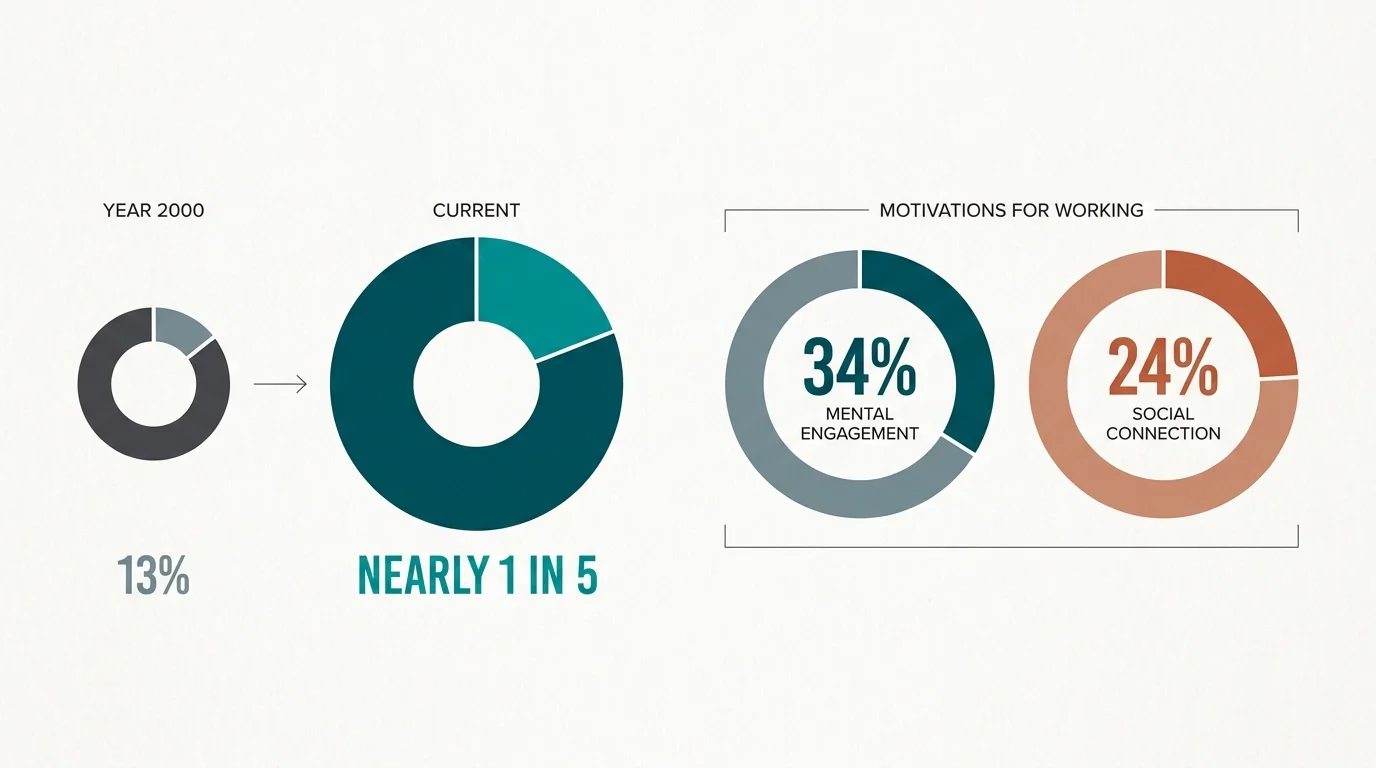
Nearly one in five Americans over the age of 65 are currently participating in the workforce. This represents a significant and permanent shift from the year 2000, when only 13 percent of older adults held jobs or actively sought employment. The steady upward trajectory indicates that working later in life is no longer an anomaly, but rather a standard phase of modern aging.
Financial necessity is not the only reason you might choose to work during retirement. Quality-of-life factors heavily influence this major life decision; roughly 34 percent of working seniors stay employed specifically to keep their minds engaged and busy. Another 24 percent report that they work primarily to maintain social connections, proving that the workplace serves as a vital community hub.
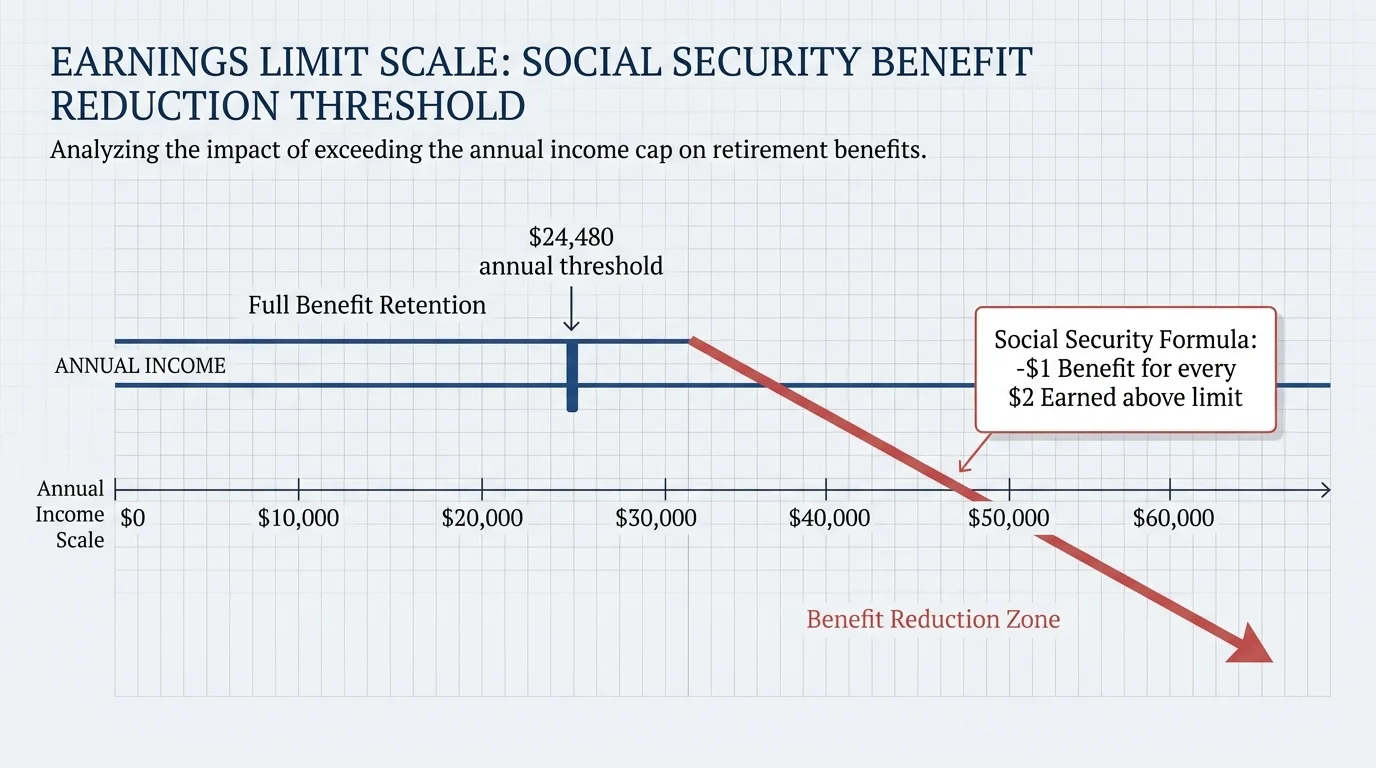
Your Social Security benefits face strict earnings limits if you decide to work before reaching your full retirement age. For the year 2026, the Social Security Administration reduces your monthly benefits by one dollar for every two dollars you earn above the $24,480 annual threshold. Understanding this mathematical formula allows you to optimize your part-time hours without unintentionally diminishing your safety net.
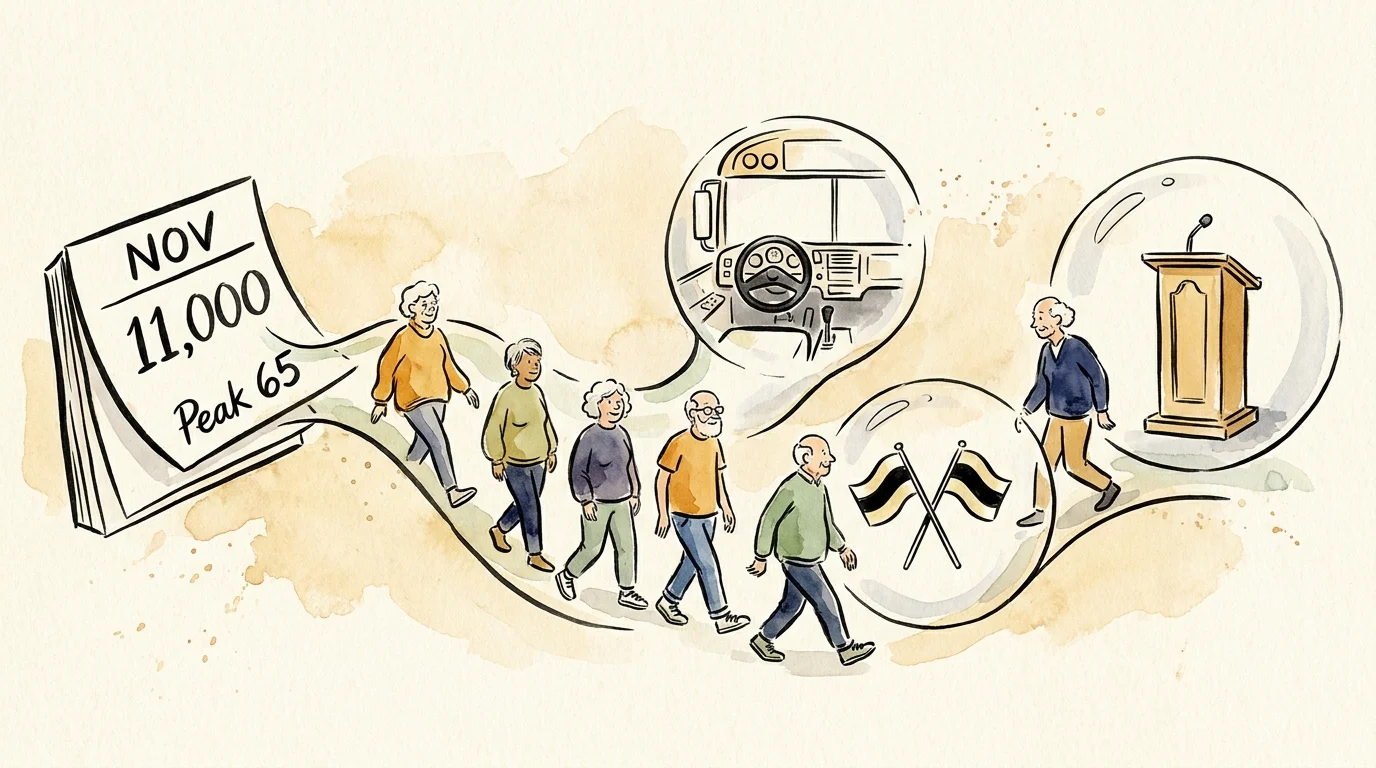
Specific industries lean heavily on the unmatched reliability and experience of older workers. Occupations like school bus driving, specialized psychology, crossing guard duties, and clergy roles report that more than one in five of their active workers are aged 65 or older. These sectors actively cultivate environments that value patience and life experience over raw physical output.
Wealthier metropolitan areas often boast the highest rates of senior employment across the country. Cities like Washington, D.C., and the Bridgeport-Stamford area in Connecticut show senior employment rates hovering around 25 to 27 percent. Because these areas have median household incomes well above national averages, this data proves that continued work is frequently an optional, lifestyle-driven choice rather than a desperation-driven mandate.
The demographic phenomenon known as Peak 65 brought an unprecedented surge in retirement-age individuals to the global market. Throughout 2024, approximately 11,000 Americans reached traditional retirement age every single day, creating a massive new pool of potential part-time workers and specialized consultants. This shift forces human resource departments to radically rethink how they recruit and retain older talent.
Continuing to work can actually increase your eventual Social Security payout if you have not yet reached full retirement age. Because the Social Security Administration recalculates your benefits annually based on your top 35 earning years, adding a new year of high earnings can permanently bump up your monthly checks. This hidden financial perk provides a powerful incentive to delay full retirement.
Taking on part-time jobs for seniors often provides substantial and measurable mental health benefits. Regular employment challenges your brain, requires consistent problem-solving, and offers a structured daily routine that staves off the cognitive decline frequently associated with long-term isolation. Health professionals increasingly prescribe active engagement as a primary defense against age-related memory issues.
Employers increasingly view older adults as crucial, irreplaceable mentors for younger generations entering the workforce. Businesses now actively recruit experienced seniors for flexible bridge jobs and advisory consulting roles. They aim to preserve institutional knowledge, stabilize turbulent project teams, and pass critical, hard-to-teach industry skills down to their junior employees.
Context and Background
Historically, the concept of retirement represented a sharp, permanent exit from the labor force. You worked diligently for four decades, received a gold watch, and spent your remaining years pursuing leisure activities. However, the economic and social realities of the modern era have entirely reshaped this narrative. Today, jobs after retirement represent a thriving and dynamic sector of the economy. The shift stems from a combination of extended life expectancies, the transition away from guaranteed corporate pensions, and a profound change in how society views aging.
If you observe demographic trends, you quickly realize the sheer scale of this transformation. In 2024, the United States experienced a phenomenon dubbed Peak 65, a demographic milestone where roughly 11,000 Americans reached traditional retirement age every single day. This massive wave of older adults did not simply vanish to golf courses and beaches. Instead, many opted to redefine their later years through continued employment. The Bureau of Labor Statistics projects that by 2032, more than one in five older adults will actively participate in the labor force. This statistic underscores a permanent cultural shift rather than a temporary economic anomaly.
The dynamic shift toward older workforces extends far beyond the borders of the United States. Across Europe and parts of Asia, governments actively implement policies designed to keep senior workers engaged in the economy. Countries facing rapidly aging populations and shrinking younger labor pools rely heavily on older adults to sustain their economic output. They offer robust technical support, continuous retraining programs, and government-subsidized workplace adaptations to ensure seniors can work safely and efficiently. By observing these global retirement jobs facts, you can see that integrating older adults into the modern economy is a worldwide imperative. Multinational corporations now design their human resource strategies with the explicit goal of retaining older talent as long as possible.
You must also consider the changing landscape of how work gets done. The rise of telecommuting, flexible scheduling, and the gig economy provides unprecedented senior work opportunities. In the past, older workers often left their careers because the physical toll of daily commuting and rigid nine-to-five schedules became unsustainable. Now, you can consult from your living room, manage e-commerce stores on your own schedule, or take on project-based freelance assignments. Employers, facing significant talent shortages, increasingly accommodate these flexible arrangements. They recognize that losing decades of institutional knowledge harms their bottom line. Consequently, progressive companies now offer phased retirement programs. These initiatives allow you to gradually reduce your hours over several years, ensuring you can train your replacements while maintaining a steady income.
Financial dynamics play a crucial but nuanced role in this trend. While inflation and rising healthcare costs force some older adults back into the workforce to make ends meet, data shows that a vast number of seniors work purely by choice. Working after retirement in affluent metropolitan areas exhibits incredibly high employment rates. In these regions, high-paying knowledge-worker roles allow individuals to transition into part-time consulting rather than completely severing their professional ties. When you strip away the financial desperation, you see that employment often fulfills a deep-seated human need for purpose, structure, and continuous learning.
Interesting Connections
The relationship between continued employment and personal well-being reveals fascinating insights about human longevity. Gerontologists and medical researchers consistently find strong correlations between active engagement in the workforce and delayed cognitive decline. When you work, you force your brain to navigate complex social interactions, solve novel problems, and maintain a structured routine. This daily mental workout helps preserve neural pathways. In fact, many health professionals equate the dangers of social isolation in older age to the physical risks of smoking. A job provides a built-in community, keeping you tethered to a network of colleagues and regular human interaction.
You can also trace an intriguing connection between geography and the types of work older adults pursue. Regions dominated by physical labor and manufacturing tend to see sharp drop-offs in employment after age 60, as workers retire to rest their bodies. Conversely, areas rich in knowledge-based industries—such as legal services, education, and psychology—see professionals extending their careers well into their seventies and eighties. Your ability to maintain part-time jobs for seniors heavily depends on the physical demands of your chosen industry. This geographic and industrial divide highlights why retraining and continuous education remain vital. Seniors who pivot toward tech-enabled or advisory roles find themselves in high demand, regardless of their zip code.
The modern office space now serves as a unique laboratory for intergenerational collaboration. For the first time in history, five distinct generations occupy the workforce simultaneously. This creates a powerful synergy where you can act as a modern elder, pairing your vast emotional intelligence with the technical acumen of younger colleagues. You bring decades of resilience, face-to-face communication skills, and crisis management experience to the table. In return, younger workers can help you master the latest software, artificial intelligence tools, and digital workflows. This reciprocal mentorship destroys outdated stereotypes about aging and fosters highly innovative corporate cultures.
Entrepreneurship provides another surprising connection to aging. While media narratives often glorify the twenty-something tech founder, statistical data paints a different picture. Older entrepreneurs exhibit significantly higher success rates when launching new businesses. You possess a massive advantage in your later years: a deep professional network, access to capital, and the patience required to weather early business setbacks. Many seniors leverage their retirement to launch small consultancies, turn lifelong hobbies into profitable ventures, or purchase existing franchises. By controlling their own businesses, older adults dictate their own hours and bypass the age discrimination that sometimes plagues traditional hiring processes.
You may also discover a fascinating pathway from community volunteering directly into paid employment. Many seniors begin their retirement by donating their time to local nonprofits, museums, or municipal governments. Because these organizations frequently operate on tight budgets and rely on dependable individuals, they often transition their most reliable older volunteers into paid, part-time staff positions. This organic transition allows you to secure working after retirement arrangements without ever enduring a formal, high-pressure job interview. You get to test the waters of an organization, ensure its culture aligns with your values, and then step into a paid role with total confidence.
Frequently Asked Questions
How much can I earn without reducing my Social Security benefits?
If you choose to claim Social Security before reaching your full retirement age, the Social Security Administration imposes an earnings limit. For the year 2026, you can earn up to $24,480 without facing any penalties. If your wages exceed that threshold, the government deducts one dollar from your benefit payments for every two dollars you earn above the limit. During the specific year you reach full retirement age, the limit jumps significantly to $65,160, and the penalty decreases to one dollar withheld for every three dollars earned. Once you hit your exact full retirement age month, the earnings cap vanishes completely. You can earn an unlimited amount of money from that point forward without any reduction to your monthly benefits. Furthermore, the money withheld during your early retirement years is not lost forever; the administration recalculates your benefits at full retirement age to account for those withheld funds, ultimately resulting in a higher monthly payout later in life.
Will working after retirement affect my Medicare premiums?
Yes, earning a substantial income can impact your Medicare costs through a mechanism known as the Income-Related Monthly Adjustment Amount. Medicare Part B and Part D premiums tie directly to your modified adjusted gross income from two years prior. If your post-retirement job pushes your income above specific brackets set by the government, you will pay a surcharge on your monthly premiums. You should consult with a financial advisor or a tax professional to strategically manage your withdrawals and earnings, ensuring that your part-time income does not inadvertently trigger massive spikes in your healthcare costs.
What are the most popular part-time jobs for seniors?
The market for senior work opportunities expands daily, catering to a wide variety of skills and physical abilities. Many experienced professionals transition into consulting, bookkeeping, or project management, allowing them to leverage their past career expertise on a part-time basis. If you prefer less stressful, community-focused roles, you might explore positions as a crossing guard, school bus driver, or substitute teacher. The gig economy also offers tremendous flexibility; roles like rideshare driving, pet sitting, and freelance writing allow you to set your own schedule entirely. Additionally, seasonal jobs at national parks or local botanical gardens remain highly sought after by active seniors who wish to spend their time outdoors while earning extra income.
How can you overcome age discrimination when applying for jobs?
While age discrimination officially violates federal employment laws, it remains a subtle hurdle in the modern job market. To combat this bias, you must proactively modernize your application materials. Remove graduation dates from your educational background and limit your resume’s experience section to the most recent ten to fifteen years. Highlight your proficiency with current industry software, digital communication tools, and remote work platforms. During interviews, focus your narrative on adaptability, a willingness to learn, and your enthusiasm for collaborating with diverse, multigenerational teams. Emphasize that your vast experience allows you to hit the ground running with minimal training, framing your extensive background as a cost-saving asset to the employer.
Can you negotiate a phased retirement with your current employer?
Absolutely. Many companies lack formal phased retirement policies but gladly accommodate individual requests to retain crucial talent. To successfully negotiate this transition, approach your manager with a clear, mutually beneficial proposal. Pitch a scenario where you gradually reduce your weekly hours while taking on the specific responsibility of training your eventual replacement. Highlight how this arrangement prevents a sudden loss of institutional knowledge and provides the company with a seamless, risk-free transition period. By positioning your reduced schedule as a strategic advantage for the business, you significantly increase the likelihood of securing a flexible, stress-free exit strategy.
Are there tax advantages or disadvantages to working while retired?
Your tax situation can become notably more complex when you combine standard wages with retirement income streams. Depending on your total combined income, a portion of your Social Security benefits may become subject to federal income taxes. If you pull money from traditional tax-deferred accounts while simultaneously earning a paycheck, those combined funds could push you into a higher marginal tax bracket. However, continuing to work also allows you to contribute to employer-sponsored retirement plans or individual retirement accounts, effectively lowering your taxable income for the current year. You can also take advantage of catch-up contributions permitted for workers over the age of 50. You must proactively monitor your total earnings and consult a certified tax professional to optimize your strategy, ensuring your jobs after retirement do not generate an unexpected tax burden.
Keywords: jobs after retirement, senior work opportunities
Meta Description: Discover 9 surprising facts about retirement jobs, including 2026 earning limits, part-time opportunities, and how working benefits your mental health.
